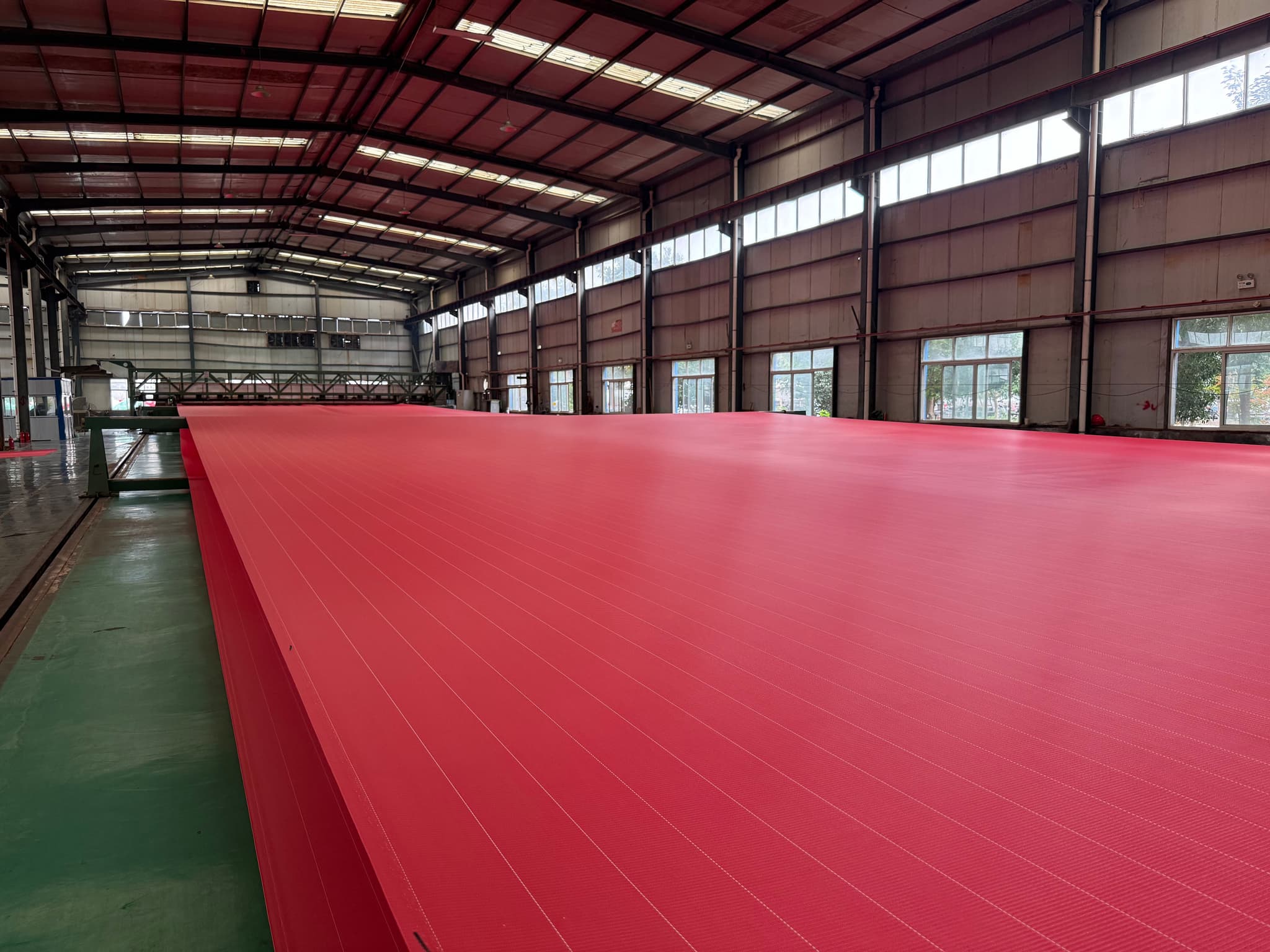
Whether a guiding movement is intermittent or continuous is more useful than how far the fabric moved. The pattern points towards different classes of review, but it can only be established from a repeatable record — a single observation at the console cannot separate a repeating movement from a steady drift. Capture the pattern over more than one observation before changing anything.
Why the pattern of movement is the first distinction
A continuous drift that develops in one direction and a movement that appears and disappears are different observations, even when the visible displacement looks similar. Treating them as one condition can lead to a single adjustment being applied to two different situations.
This is a working distinction for deciding which records to collect next, not a formal diagnostic classification. A repeating pattern makes rotation-related and context-bound conditions worth recording; a steady drift makes developing conditions and maintenance history worth recording. What actually explains an apparently intermittent movement is a specific mechanism, not the label applied to it.
For the full symptom-led workflow, see the forming fabric guiding overview.
Mechanisms that can make a movement look intermittent
Several documented conditions can produce a movement that appears and disappears, and they do not share one cause:
- A guide sensor set too sensitively can pick up normal fabric oscillation and pass it to the guide roll as an unnecessary correction. The movement then originates in the sensing and response system rather than in the fabric.
- A misaligned vacuum element, or a suction-box drill pattern that matches the fabric's twill pattern, can make the fabric guide one way before stock is applied and the other way once vacuum becomes effective. The behaviour is tied to a process condition, not to a random fault.
- A movement that appears only at a particular speed, grade, tension condition or guide-roll position is context-bound; it can look intermittent when those conditions change during a run.
Because these mechanisms differ, the useful record is the one that captures when the movement appears and what else changed at that moment. A label such as "intermittent" on its own does not tell the review team which of them to check.
What a continuous drift suggests about the review
A steady movement in one direction suggests a condition that is present consistently rather than one that comes and goes. The review therefore looks for conditions that develop or persist: changes in surface state across the width, an alignment condition that has moved over time, a cleaning practice that produces a consistent difference, or a guide response that has been progressively increased.
The key question is whether the movement progresses at a consistent rate, slows, or accelerates. That shape is more informative than the amount of displacement, and it can only be described if the same observation is repeated using the same method.
| Observation | What it helps distinguish |
|---|---|
| Direction held or reversed | A persistent condition versus a compensating response |
| Rate of change across the run | A developing condition versus a step change |
| Guide position over time | Whether adjustments accumulated or held |
| Production context at each point | A context-bound condition versus a general one |
| Maintenance or cleaning actions | Which variables changed before a step |
What a repeating movement tied to fabric rotation suggests
When a movement returns at a consistent point, the review turns towards conditions that travel with the fabric: seam behaviour, a local difference in surface condition, or a width-wise irregularity that reappears with each rotation. Such a pattern can look intermittent to an operator watching the console, even though it is regular.
The distinction that matters is repeatability, not frequency. A movement that recurs at a consistent point is a different observation from one that appears unpredictably. Photographs and records tied to the fabric's position, taken through the mill's approved inspection process, are usually more useful than a general description of how often the problem was noticed.
A repeating pattern still does not prove a fabric fault. Guide contact, roll surface state, shower coverage and installation details may all interact with it. A forming fabric range review can help frame which construction and seam details are relevant to the position.
Why operating context changes can look like intermittent faults
A movement that appears only during start-up, only after a grade change, or only when the machine returns from a stop can be mistaken for an intermittent fault. In these cases the pattern is tied to the operating context, not to a condition that comes and goes at random.
Record the context alongside each observation: whether the machine was starting, in steady state, or returning from a stop; which paper grade was being produced; and whether the pattern repeated on the following run. Without the context, a context-bound condition is indistinguishable from a sporadic one.
Why a single observation cannot separate the two
One reading tells you that the running line was somewhere at one moment. It cannot tell you whether the line was moving steadily, oscillating, or repeating at a fixed point. Teams often adjust the guide on the strength of that single observation, which removes the baseline needed to classify the pattern later.
Where tension or tracking readings exist, they are meaningful only with their measurement context — instrument, location, procedure, machine condition and date. Values collected under different procedures should not be compared as if equivalent. The paper machine fabric tension checks guide describes what to document before a reading is interpreted.
Records that make the pattern visible
- Machine section and exact forming position.
- Fabric identification and installation information.
- Paper grade and operating context for each observation.
- Direction, pattern and timing of the movement, recorded more than once.
- Whether the movement repeats at a consistent point in the rotation.
- Guide position and any adjustment, each with a timestamp.
- Comparable tension or tracking records with the measurement method.
- Recent changes to rolls, showers, cleaning practice, guides or fabric.
For a position-specific review, Send us your machine parameters through the engineering enquiry form. The knowledge centre and the fabric selection tool may help identify which details belong to the position.
Frequently asked questions
Can an intermittent guiding problem be corrected with one adjustment?
An adjustment may change the response, but it does not establish what produced the pattern. Record repeated observations first so a later review can tell whether the movement was continuous, repeating, or tied to a specific operating context.
Does a repeating movement mean the fabric should be replaced?
Not necessarily. A pattern that returns at a consistent point makes rotation-related conditions worth reviewing, but guide contact, roll state, shower coverage and installation details may all be involved. Replacement is a decision taken after the condition is documented.
Why does the problem seem to disappear during some runs?
A change between runs usually indicates that a condition changed with the operating context or during a stop. Which condition changed can only be identified if the context and the actions were recorded.
What should be sent to a supplier for an intermittent tracking review?
The eight records above, especially repeated observations with their timing and operating context. A single description of the movement is rarely enough to classify the pattern.