Paper Machine Knowledge
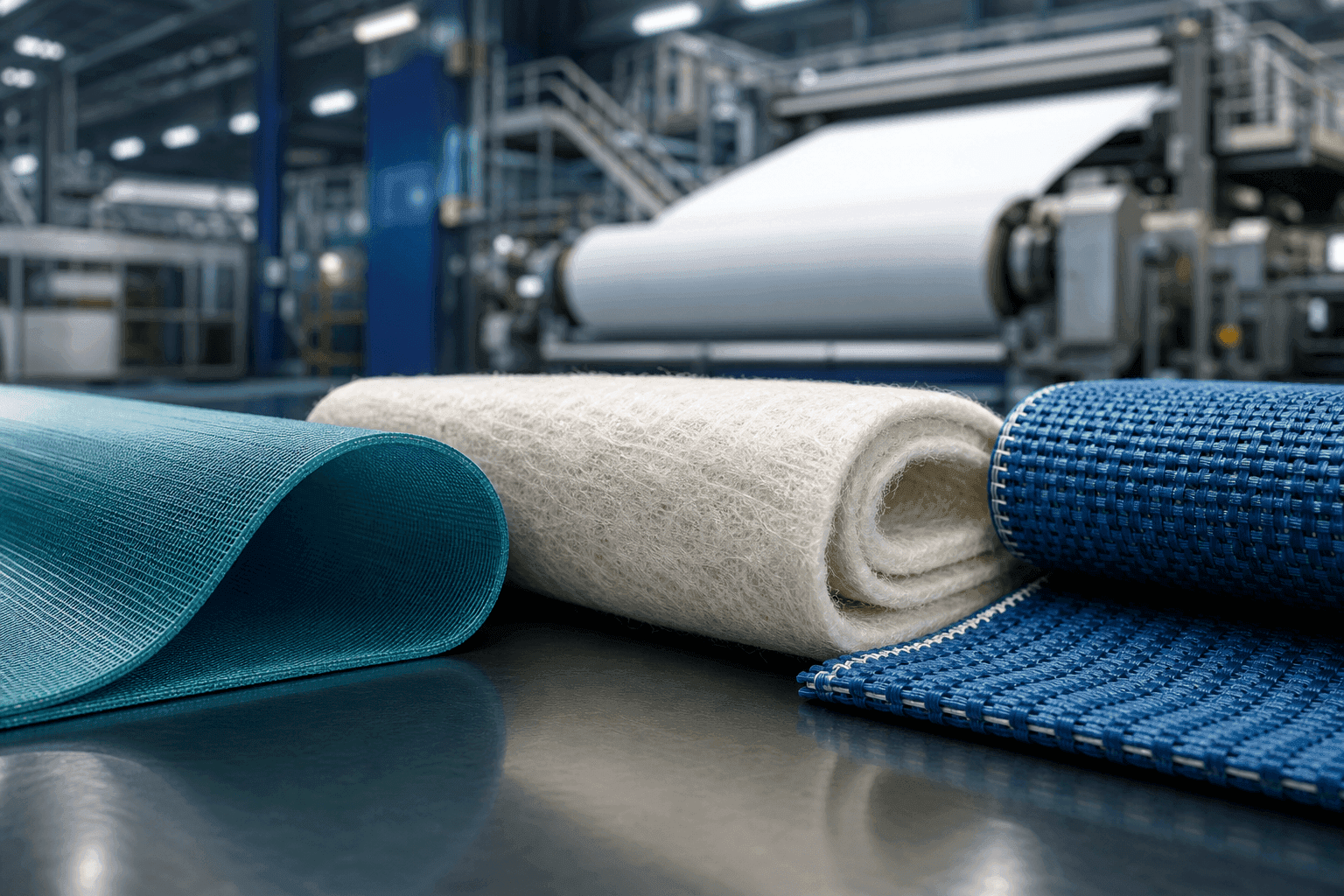
Paper Machine Three Sections: Structure and Working Principles
Paper machines are among the largest industrial equipment in the world, reaching over 100 meters in length with speeds up to 2200 m/min.
Section 1: The Forming Section — Where the Sheet is Born
The forming section receives stock at approximately 0.5-1.0% consistency and begins the process of water removal and sheet formation.
Fourdrinier (Long Wire)
- Traditional design: horizontal wire table
- Stock delivered from headbox onto moving forming fabric
- Dewatering elements: foils, table rolls, vacuum boxes, couch roll
- Typical speed range: 200-800 m/min
- 1% consistency in → 18-22% consistency out
Twin-Wire Former
- Stock injected between two forming fabrics
- Two-sided dewatering — higher capacity
- Shorter forming zone — less floor space
- Better formation symmetry
- Typical speed range: 600-1800 m/min
Hybrid / Gap Former
- Combination of fourdrinier and twin-wire elements
- Initial drainage on single wire, then twin-wire section
- Balances formation quality with drainage capacity
- Speed range: 400-1500 m/min
Forming Fabric Key Indicators:
- CFM (Air Permeability): 250-800 depending on grade
- FSI (Fiber Support Index): 50-200+ depending on structure
- Mesh Count: 25-95 threads/cm depending on basis weight
- Caliper (Thickness): 0.4-1.2 mm
- Open Area: 15-35%
Section 2: The Press Section — Mechanical Water Removal
The press section removes approximately 30-40% of the remaining water — the most cost-effective dewatering stage (mechanical vs. thermal).
Press Configurations:
Suction Press Rolls
- Vacuum-assisted water removal
- Shell drilled with 25-30% open area
- Typically first or second press position
- Nip pressure: 80-150 kN/m
Grooved Press Rolls
- Surface grooves channel water away from nip
- Higher nip pressures possible (150-250 kN/m)
- Requires doctoring to keep grooves clean
Blind-Drilled Press Rolls
- Holes don't penetrate shell completely
- Higher open area than grooved
- Better water storage capacity
Shoe Press
- Extended nip — 5-10x longer dwell time vs. roll press
- Nip pressure: 800-1500 kN/m
- Post-nip dryness: 48-55% (vs. 40-45% for roll press)
- Standard for modern high-speed machines
- Requires BOM press felts
Yankee Dryer / Tissue
- Large-diameter (3-6m) steam-heated cylinder
- Sheet pressed and dried simultaneously
- Creped off with doctor blade for tissue softness
Press Felt Key Indicators:
- Weight: 1100-1800 g/m²
- Void Volume: Important for water handling capacity
- Permeability: Water flow through felt structure
- Surface Fineness: Affects sheet surface quality
- Compaction Resistance: Determines service life
Section 3: The Dryer Section — Thermal Water Removal
The dryer section removes the remaining water (from ~50% to ~95% dryness) through steam-heated cylinders.
Dryer Cylinder Groups
- Typically 30-80 cylinders arranged in groups
- Steam pressure progressively increases through groups
- First group: lower temperature to prevent sheet picking
- Last groups: highest temperature for final drying
Dryer Fabrics:
- Hold sheet against dryer surface for conductive heat transfer
- Provide tension to prevent sheet shrinkage
- Remove moisture-laden air through permeability (CFM)
- 1% dryness improvement in press = 4% steam savings in dryer
Key Dryer Fabric Specifications:
- CFM: 300-1000 depending on paper grade and position
- Contact Area: 60-75% (flat yarn) or spiral design
- Temperature Resistance: PET up to 180°C (PAPTEX HR-PET standard)
- Seam Type: Pin seam (standard), spiral (wide machines >6m)
Section-by-Section Fabric Specification Reference
| Machine Section | Fabric Type | Key Specs | Typical Life |
|---|---|---|---|
| Forming | Forming Fabric | CFM 250-800, FSI 50-200+ | 30-150 days |
| Press 1st | Press Felt (BOM/Lam) | 1500-1800 g/m², high void volume | 30-60 days |
| Press 2nd/3rd | Press Felt | 1300-1600 g/m², balanced | 45-90 days |
| Dryer 1st Group | Dryer Fabric | CFM 400-600, lower temp | 60-150 days |
| Dryer Last Groups | Dryer Fabric | CFM 600-1000, higher temp | 60-180 days |
Related Articles
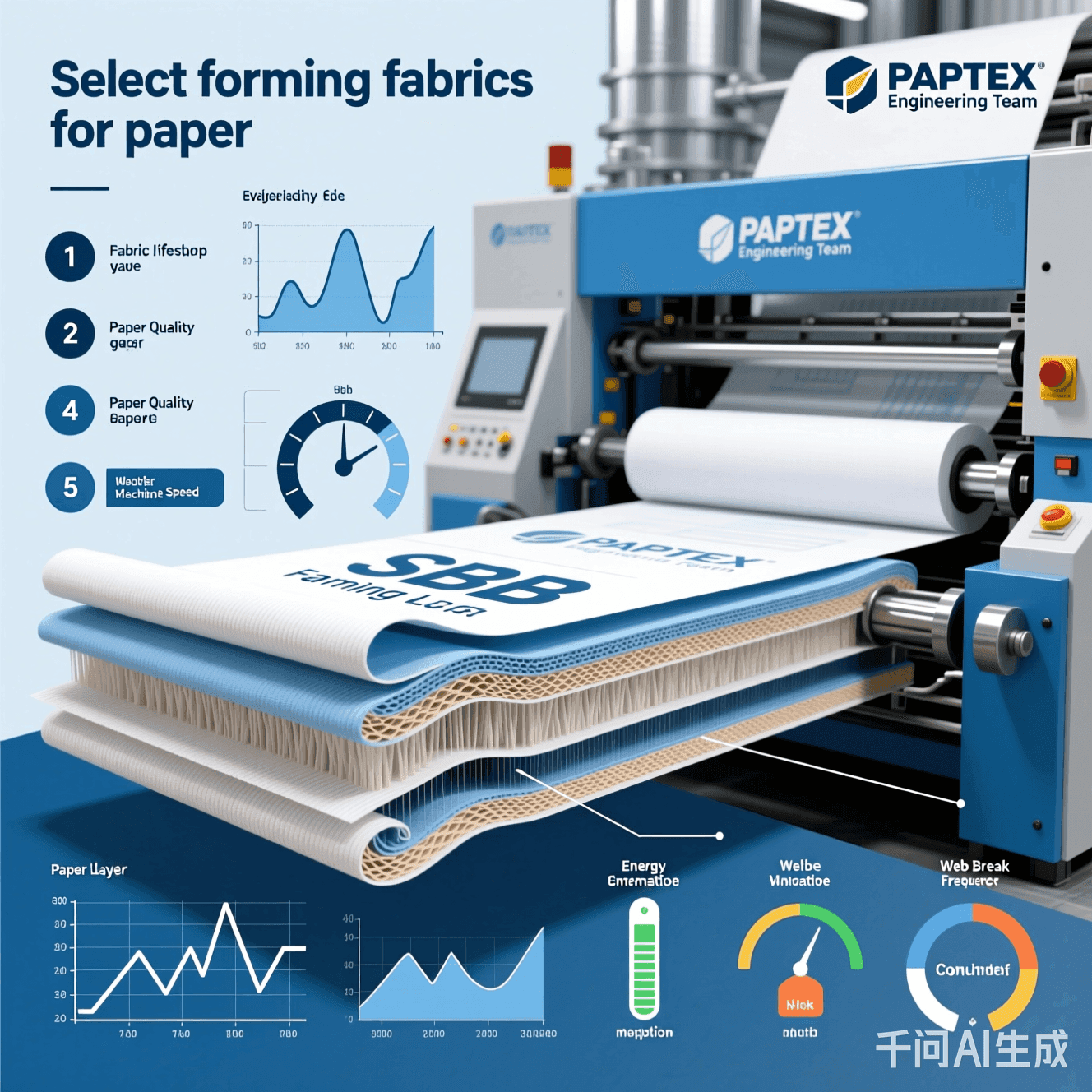
How to Choose the Right Forming Fabric
Choose a forming fabric using paper grade, furnish, former configuration, drainage, sheet-quality targets, machine data and current-fabric observations.
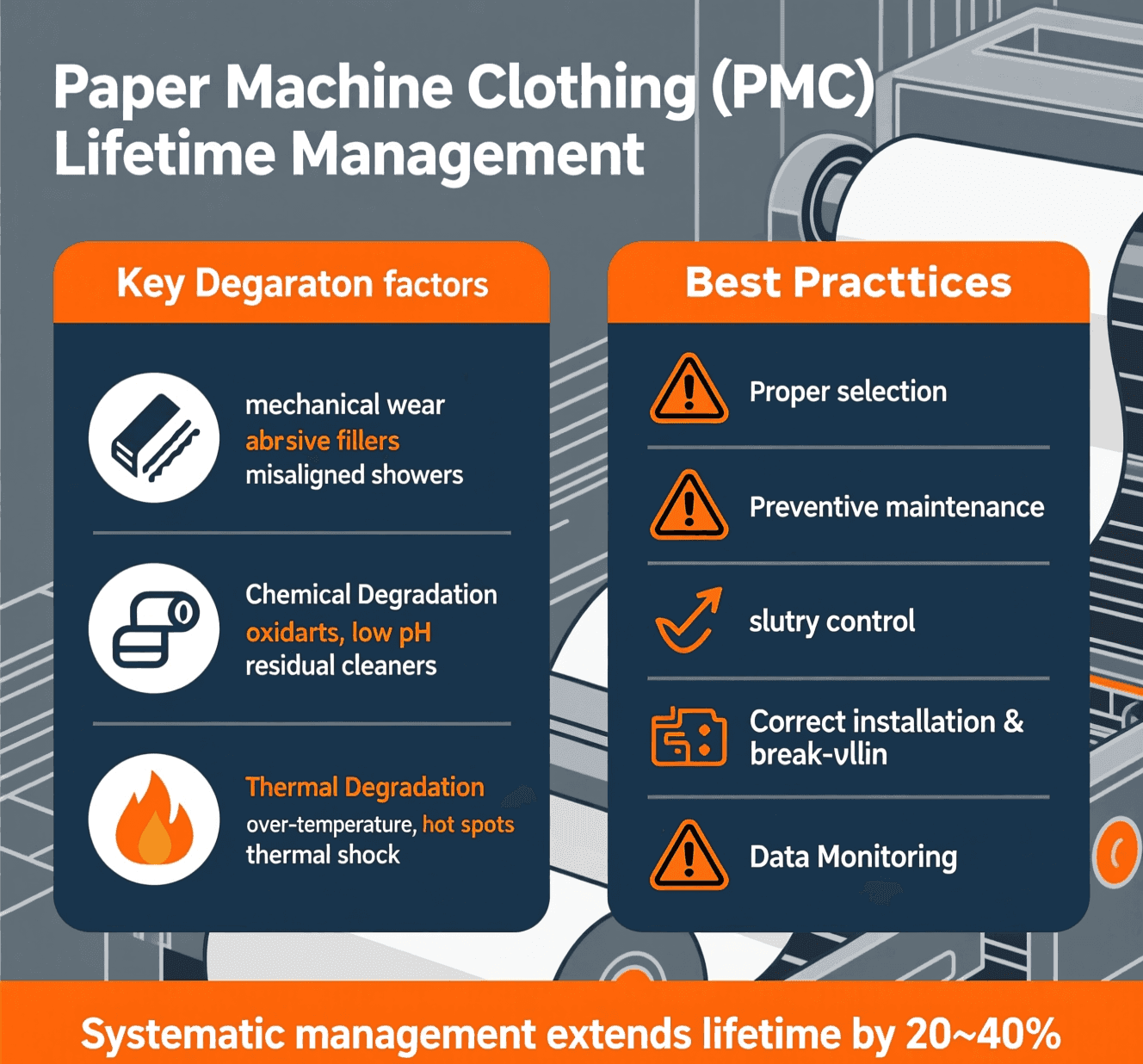
How to Extend Paper Machine Clothing Service Life
Understand the key factors affecting fabric life and discover practical tips for extending replacement intervals.
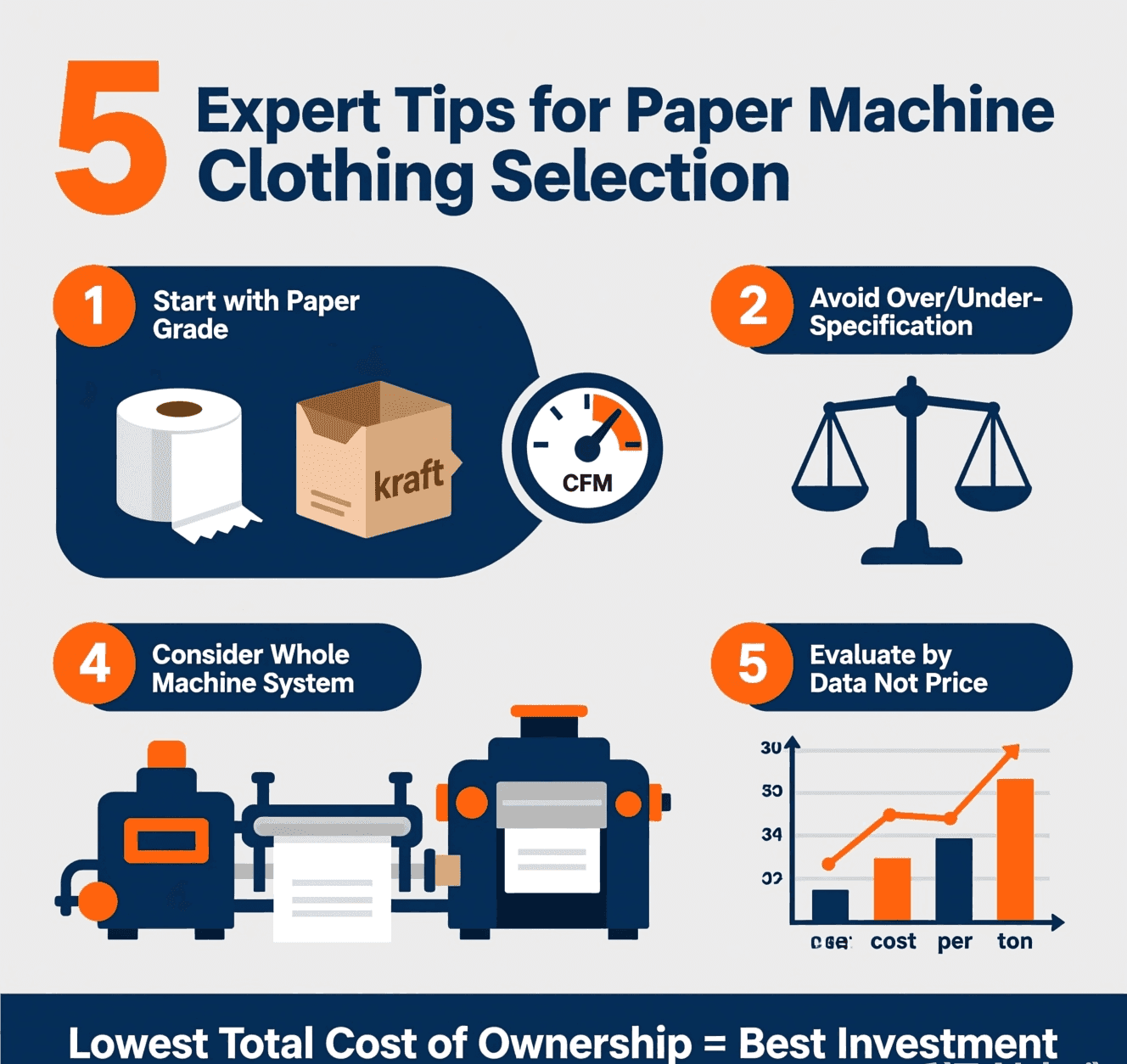
Top 5 Tips for Paper Mill Managers Selecting PMC Fabrics
Five practical checks for selecting paper machine clothing from machine position, furnish, operating data, baseline performance and measured total cost.