How to Extend Paper Machine Clothing Service Life
Understanding Paper Machine Clothing Service Life
Paper machine clothing (PMC) — forming fabrics, press felts, and dryer fabrics — represents a significant operating cost for any paper mill. Extending the service life of these consumables directly affects your bottom line through lower fabric costs, reduced downtime, and more consistent sheet quality.
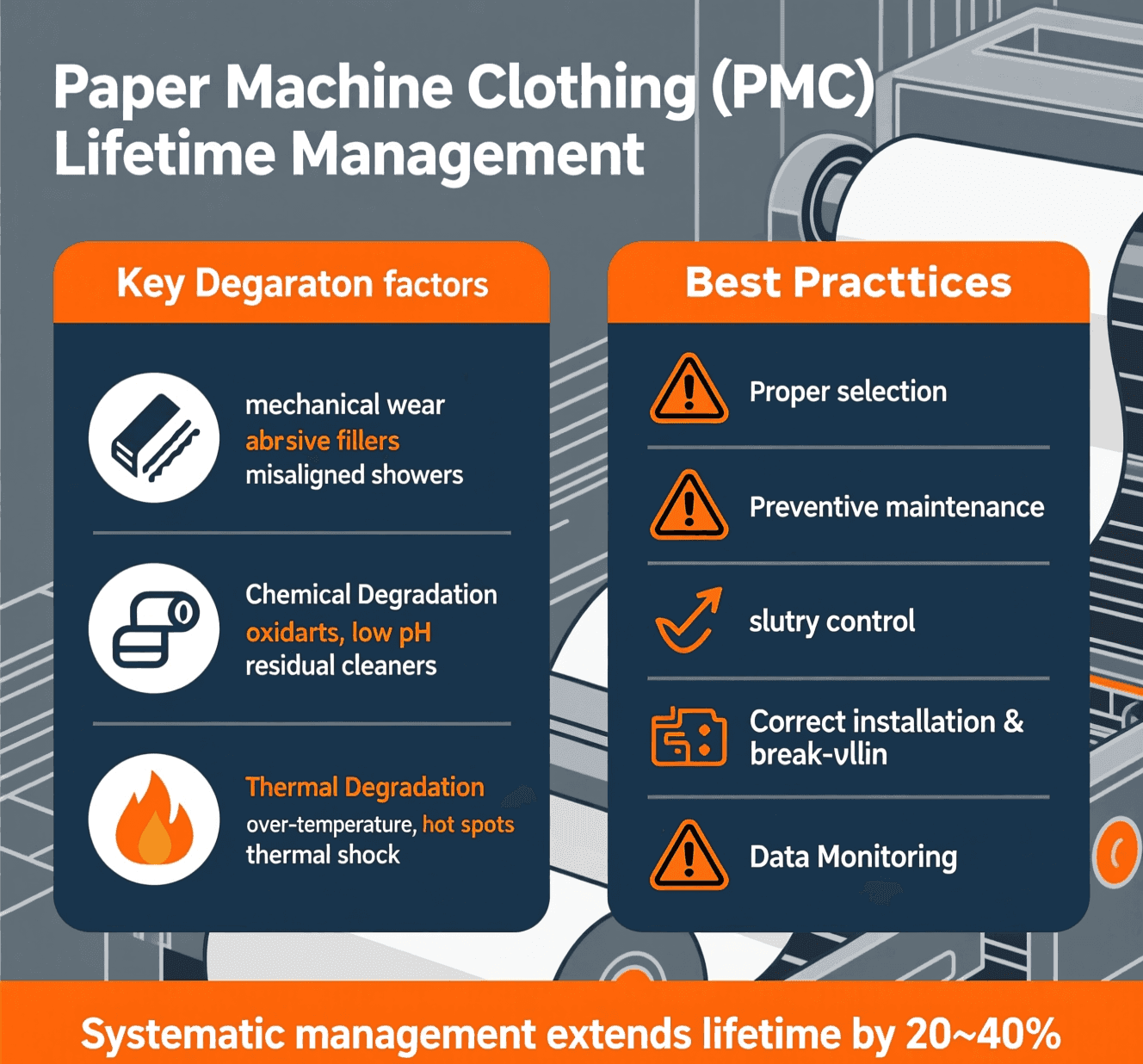
Key Factors Affecting Fabric Life
1. Mechanical Wear
The most common cause of fabric degradation is mechanical wear, primarily from:
- Filler particles in the stock (especially calcium carbonate and clay)
- High-pressure shower needles — can cut fabric yarns if misaligned
- Roll surface condition — worn or damaged rolls accelerate fabric wear
- Improper fabric tension — too high causes premature stretch; too low causes wrinkling and uneven wear
2. Chemical Degradation
Certain papermaking chemicals attack fabric materials:
- Strong oxidizing agents (bleaching chemicals) degrade polyester yarns
- Acidic conditions (pH below 4) accelerate hydrolysis of PET fibers
- Excessive use of cleaning chemicals without adequate rinsing
3. Thermal Degradation
Dryer fabrics are particularly susceptible to thermal damage:
- Operating above the fabric's rated temperature (typically 180°C for standard PET)
- Hot spots in the dryer section from poor air circulation
- Rapid temperature changes during start-up and shutdown
Practical Tips for Extending Fabric Life
Tip 1: Optimize Fabric Selection
The single most important decision is selecting the right fabric for your specific machine parameters. A fabric that performs well on one machine may fail prematurely on another. Work with your supplier to analyze:
- Paper grade and filler content
- Machine speed and width
- Vacuum and dewatering configuration
- Cleaning system capability
Tip 2: Implement Preventive Maintenance
- Inspect fabrics weekly for early signs of wear, edge damage, or seam issues
- Clean fabrics regularly with appropriate chemical programs
- Monitor and log fabric tension daily — tension decline is an early indicator of fabric degradation
- Check and maintain all fabric-contacting rolls, foils, and vacuum boxes
Tip 3: Control Stock Preparation
- Minimize abrasive filler carryover through effective retention programs
- Remove contaminants (stickies, plastics) before they reach the forming section
- Maintain consistent stock pH and temperature
Tip 4: Proper Installation and Conditioning
- Allow adequate fabric conditioning time after installation
- Follow manufacturer tension and speed run-in procedures
- Ensure seam alignment and integrity before accelerating to full speed
Tip 5: Monitor and Document
Keep detailed records for each fabric run, including:
- Fabric specification and supplier
- Installation and removal dates
- Reason for removal
- Operating conditions during the run
- Photographs of wear areas
This data is invaluable for identifying patterns and optimizing future fabric selections.
Conclusion
Extending paper machine clothing life is not about finding one "magic bullet" fabric. It's about systematic attention to fabric selection, machine maintenance, stock preparation, and operational discipline. A formal fabric management program makes service-life changes measurable and helps mills identify which operating practices are improving or shortening fabric life.
Related product and measurement guides: Review the complete paper machine clothing range by machine section, and use the paper machine fabric tension checks to keep tension records comparable before making an adjustment. For a structured review across forming, press and dryer sections before changing settings or replacement timing, use the paper machine clothing performance review.
Related Articles
How to Choose the Right Forming Fabric
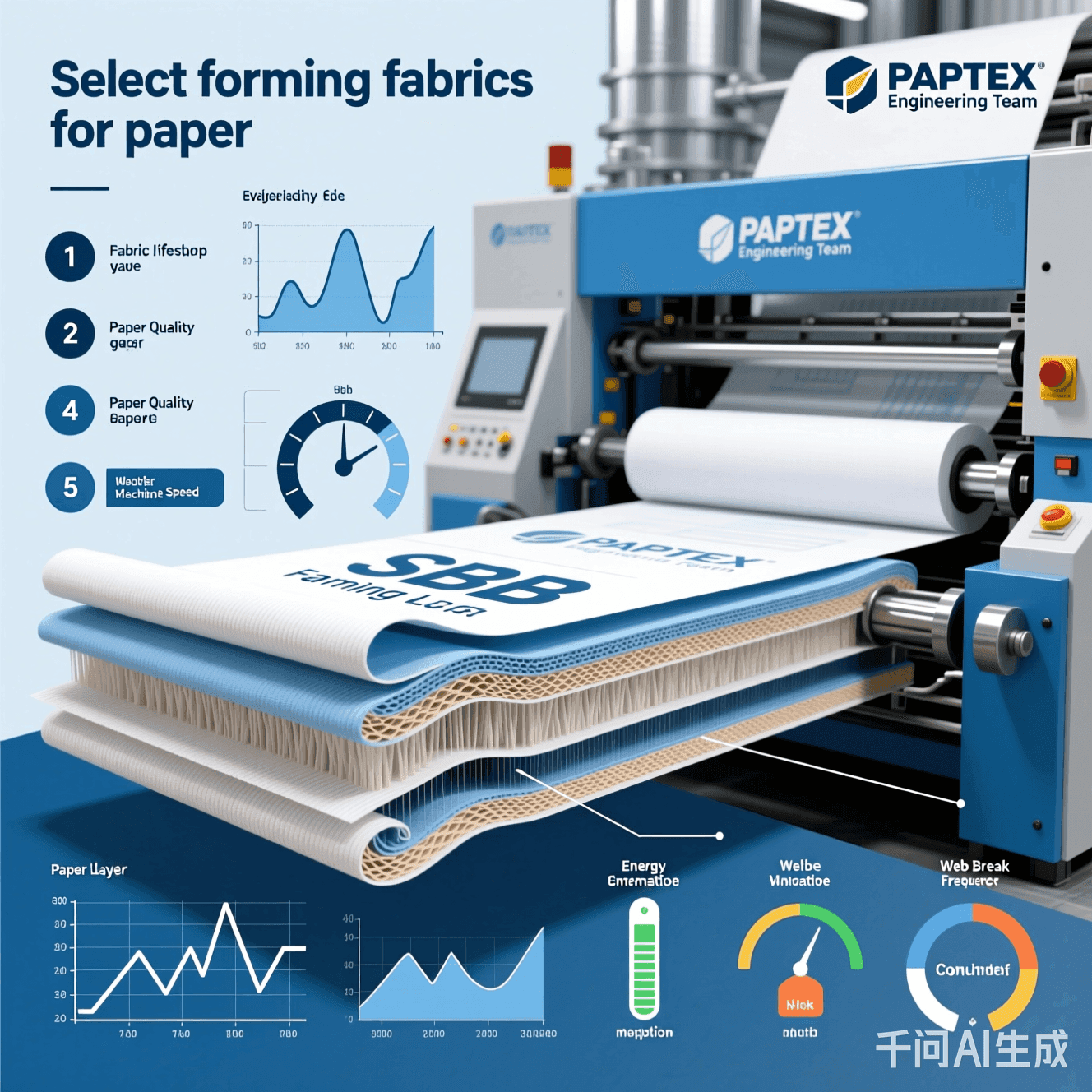
Choose a forming fabric using paper grade, furnish, former configuration, drainage, sheet-quality targets, machine data and current-fabric observations.
Top 5 Tips for Paper Mill Managers Selecting PMC Fabrics
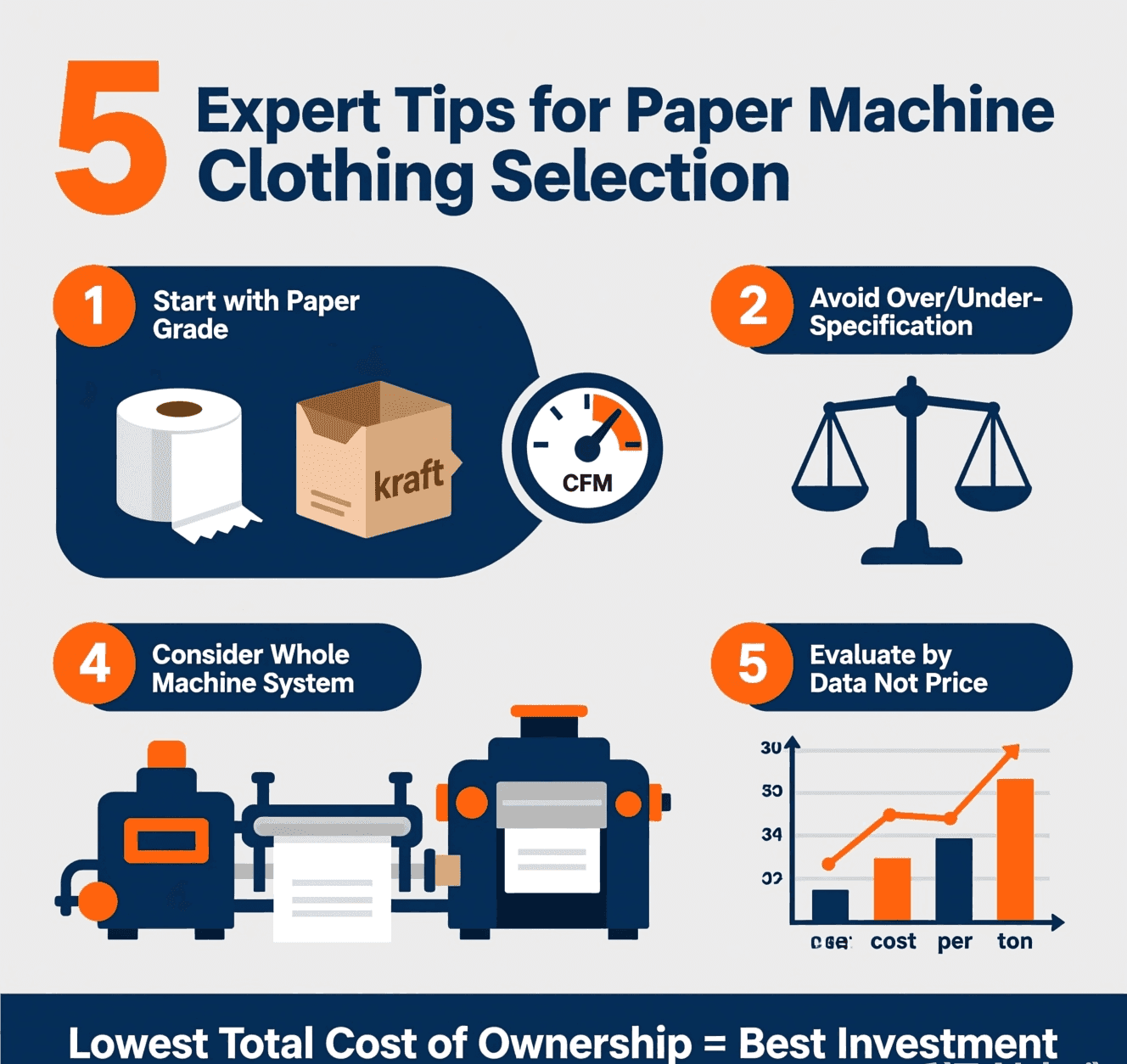
Five practical checks for selecting paper machine clothing from machine position, furnish, operating data, baseline performance and measured total cost.
2026 Paper Machine Clothing Industry Trends
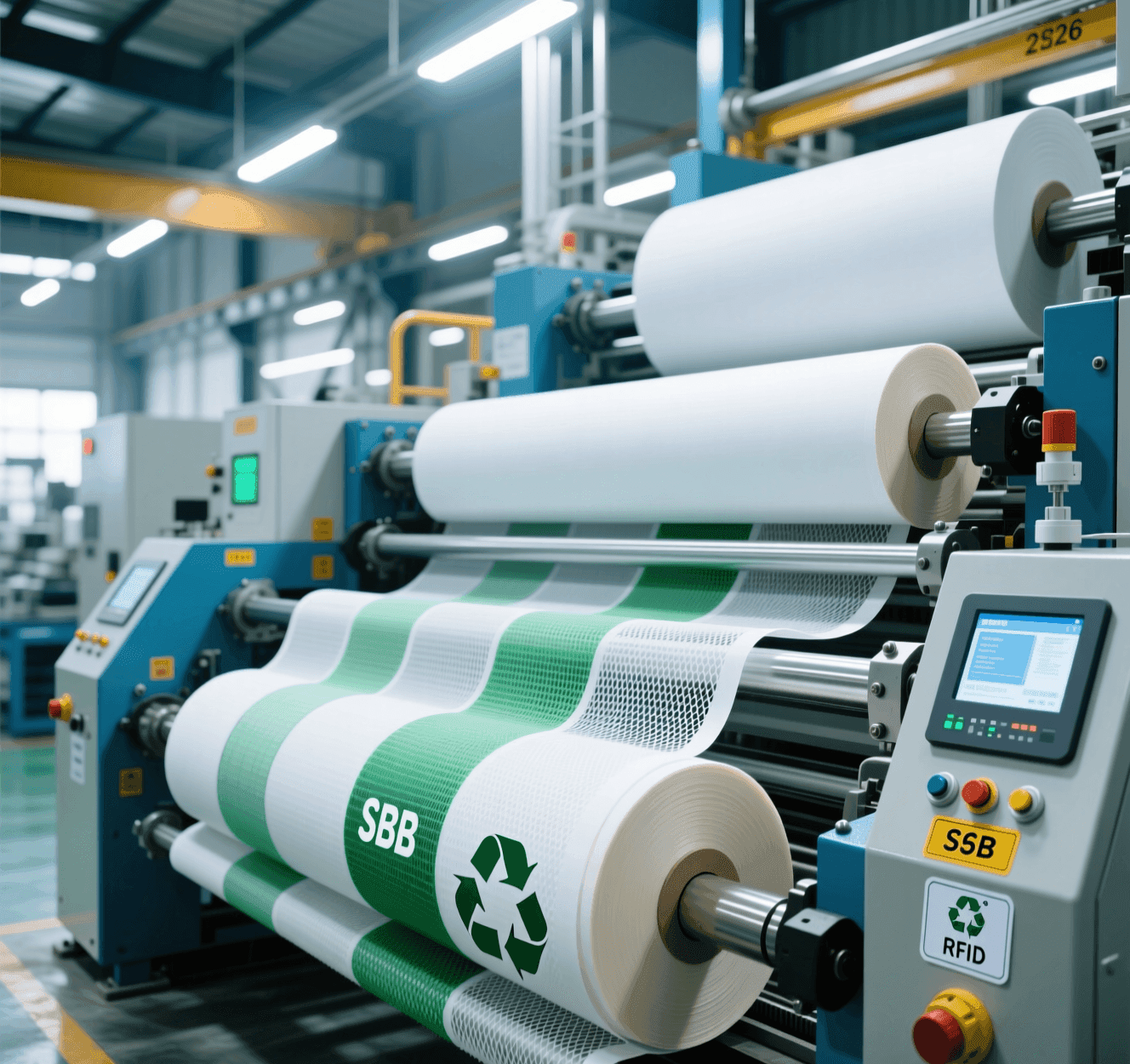
Five evidence-backed decision areas for paper mills in 2026: market pressure, circular furnish, energy, condition monitoring and position-specific PMC evaluation.