2026 Paper Machine Clothing Industry Trends
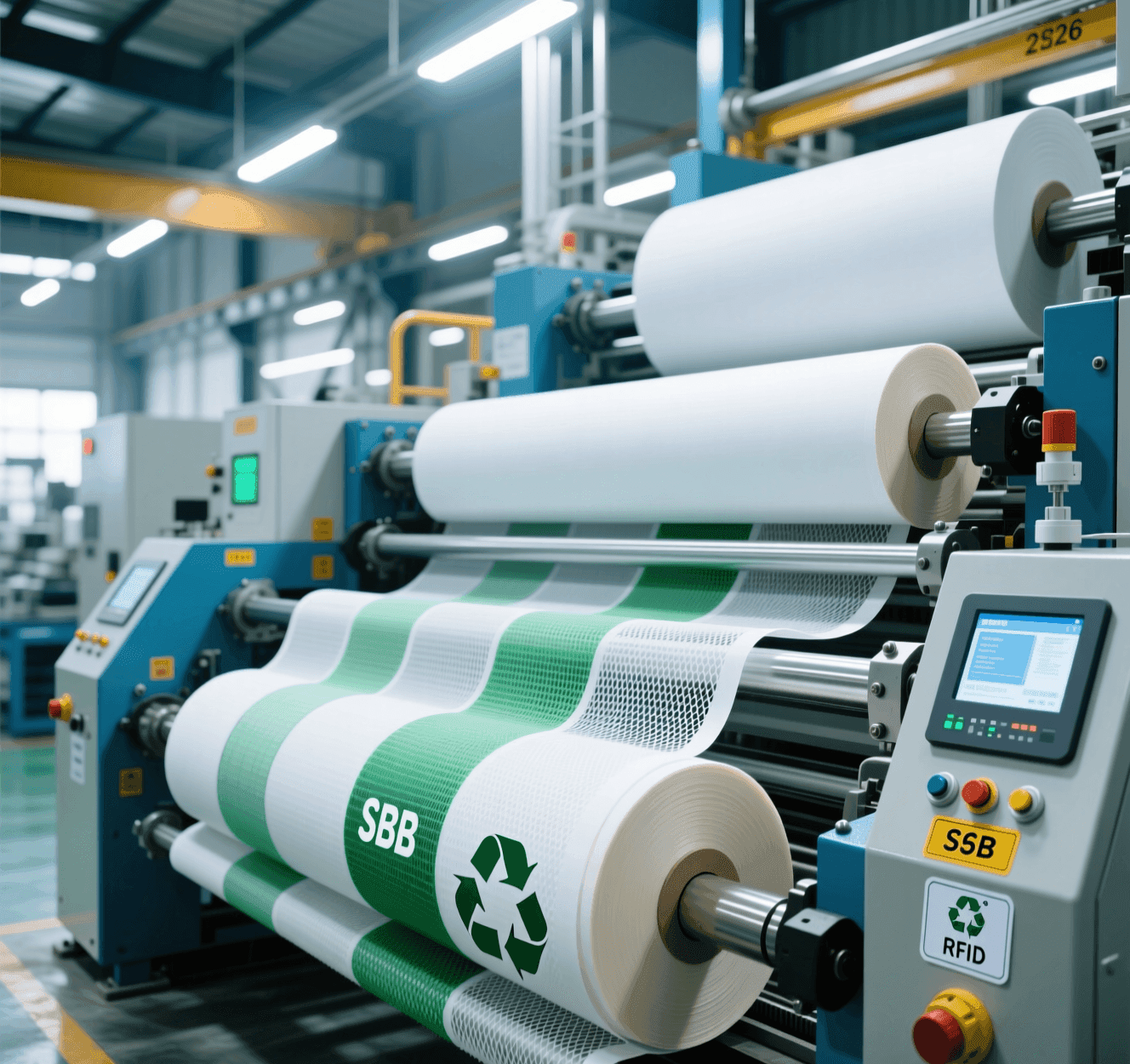
A decision framework, not a technology forecast
Paper machine clothing decisions in 2026 should be based on measured mill constraints rather than claims that one structure or digital technology is becoming universal. Current industry sources support five practical areas for review.
1. Cost and grade mix remain important
CEPI's preliminary 2025 statistics report pressure from energy and manufacturing costs, competition and changing demand across European grades. This does not predict one outcome for every region, but it reinforces the need to evaluate PMC by tons produced, quality, downtime and total operating cost rather than purchase price alone.
2. Circular furnish requires better process evidence
The European Commission overview of the pulp and paper sector identifies recycling, sorting quality and resource efficiency as continuing priorities. For PMC selection, recovered-fiber use should therefore be linked to actual ash, fines, contaminants, retention, drainage and cleaning demand—not to a universal fabric-life penalty.
3. Energy and decarbonisation are system questions
The European Commission JRC transition mapping reviews decarbonisation technology pathways for the pulp and paper industry. A fabric trial should measure the relevant system variable—such as vacuum, drive load, press dryness or steam per ton—without claiming that the fabric alone guarantees an energy percentage.
4. Condition monitoring starts with reliable measurements
TAPPI's 2026 forming-section monitoring TIP lists parameters such as fabric thickness, air permeability, tension, drainage, formation and drive torque, and notes that reliable results require appropriate practice and skill. The priority is consistent measurement and trend interpretation, not an unsupported claim about embedded sensors or automatic savings.
5. Evaluate PMC through machine performance
TAPPI's paper machine clothing performance analysis TIP explains that clothing life and cost-per-ton measures alone can miss effects on total machine performance. Mills should define position-specific baselines, record changes during the run and compare equivalent grades before approving a new specification.
For PAPTEX selection work, provide paper grade, basis weight, furnish, width, speed, position, vacuum or steam conditions, current fabric specification and the documented failure mode.
Related Articles
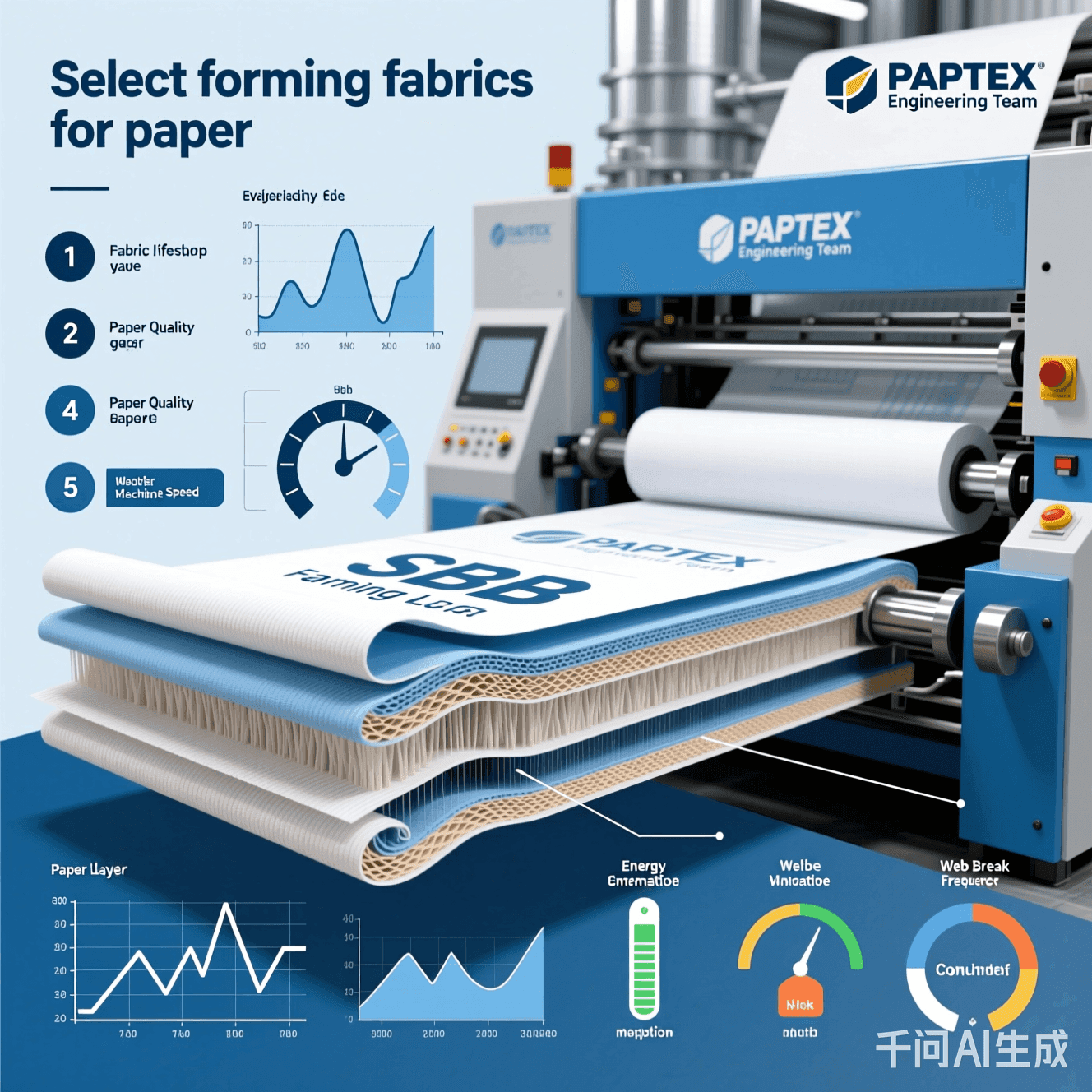
How to Choose the Right Forming Fabric
Choose a forming fabric using paper grade, furnish, former configuration, drainage, sheet-quality targets, machine data and current-fabric observations.
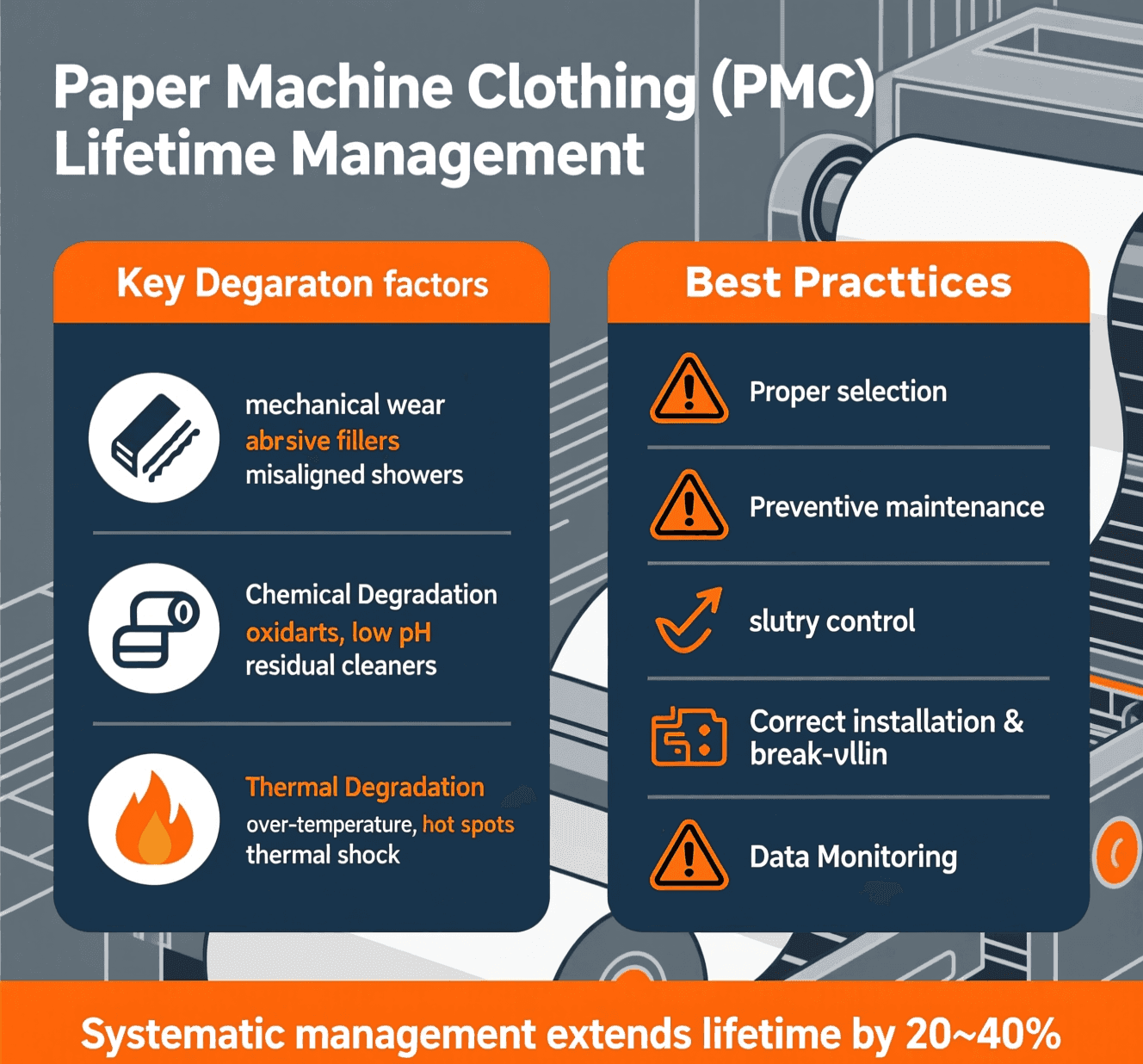
How to Extend Paper Machine Clothing Service Life
Understand the key factors affecting fabric life and discover practical tips for extending replacement intervals.
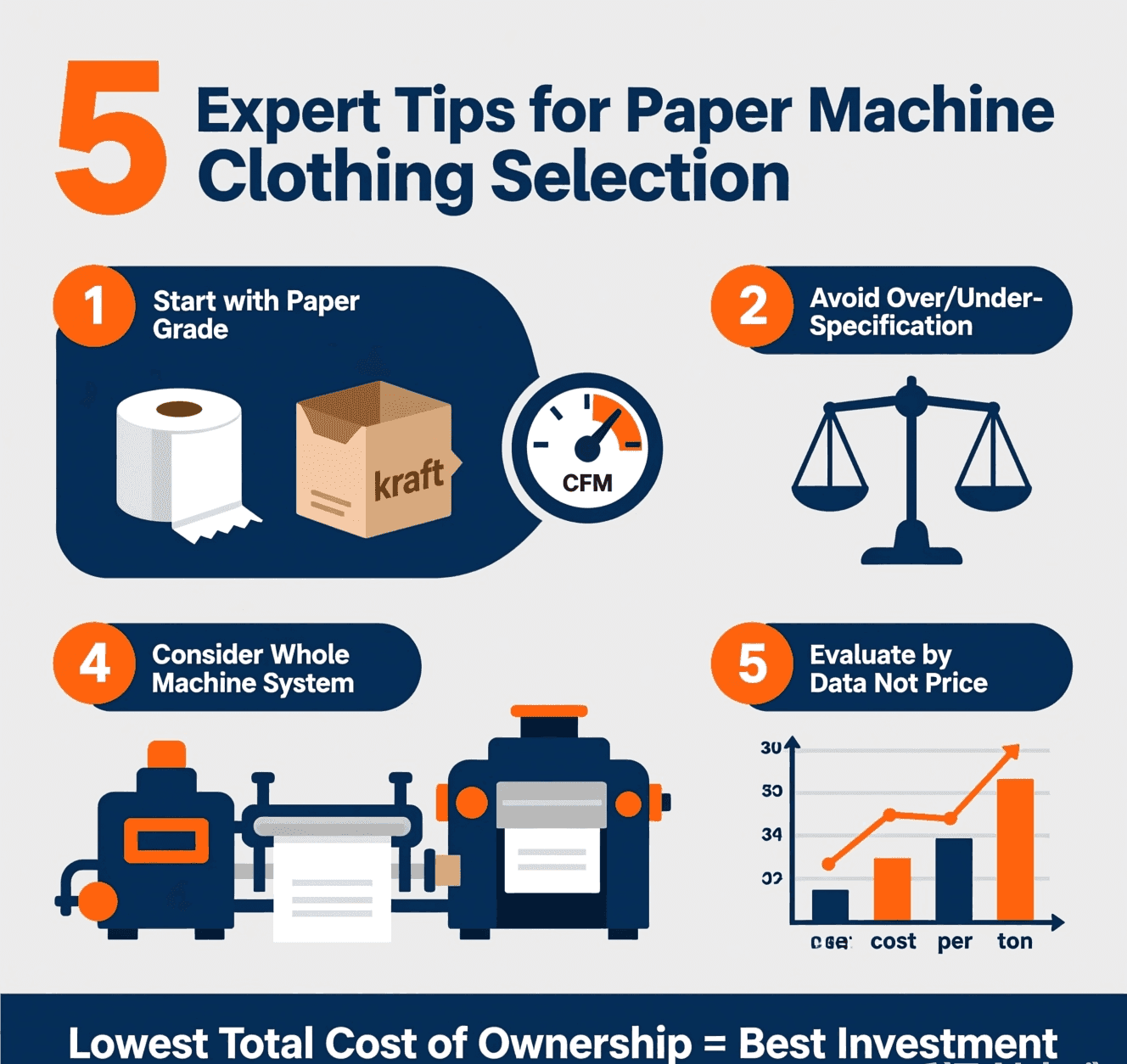
Top 5 Tips for Paper Mill Managers Selecting PMC Fabrics
Five practical checks for selecting paper machine clothing from machine position, furnish, operating data, baseline performance and measured total cost.