Top 5 Tips for Paper Mill Managers Selecting PMC Fabrics
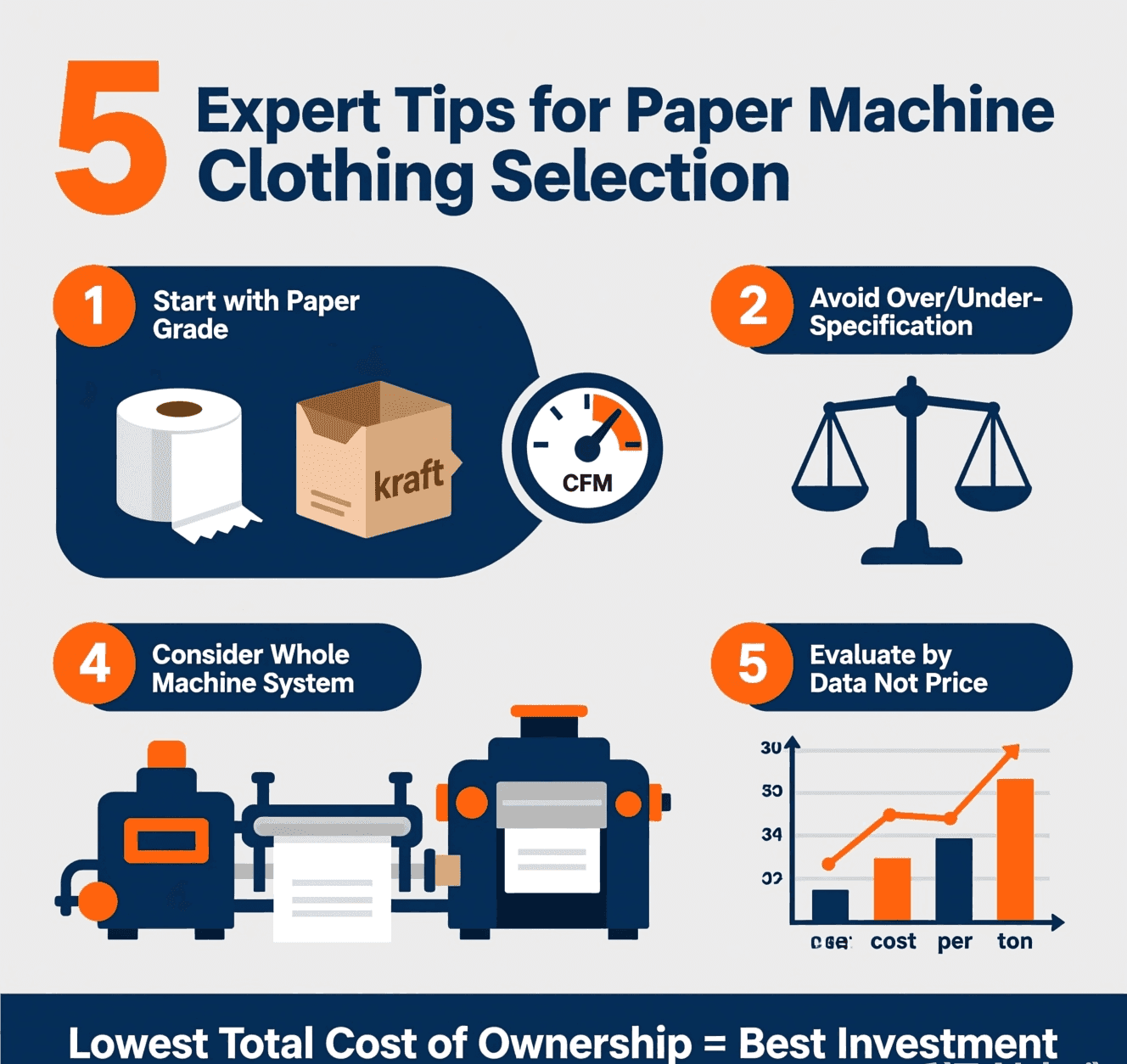
Treat PMC selection as a position-specific engineering decision
The correct fabric cannot be selected from a product name or purchase price alone. A useful recommendation starts with the paper grade, machine position, furnish, operating limits and the performance of the current fabric.
1. Define the paper and furnish
Record grade, basis-weight range, furnish mix, filler or ash trend, retention program and surface-quality requirements. These conditions influence fiber support, drainage, contamination and wear.
2. Describe the exact machine position
Provide machine width and speed together with forming elements and vacuum, press configuration and conditioning, or dryer-group ventilation and steam conditions. A design that performs well in one position is not automatically suitable in another.
3. Preserve the current baseline
Record the existing fabric construction, dimensions, permeability test standard, age, tension, cleaning practice and failure mode. Do not compare permeability values unless the unit and test pressure are the same.
4. Compare measured cost, not a hypothetical percentage
Track tons produced, sheet quality, breaks, planned and unplanned downtime, energy or steam per ton and the reason for removal. Calculate cost per ton from the mill's actual run data rather than assuming that a premium design will deliver a fixed gain.
5. Change one main variable at a time
Agree on trial objectives before installation and document any furnish, vacuum, steam, loading or cleaning changes during the run. This makes the result attributable and useful for the next selection.
Related Articles
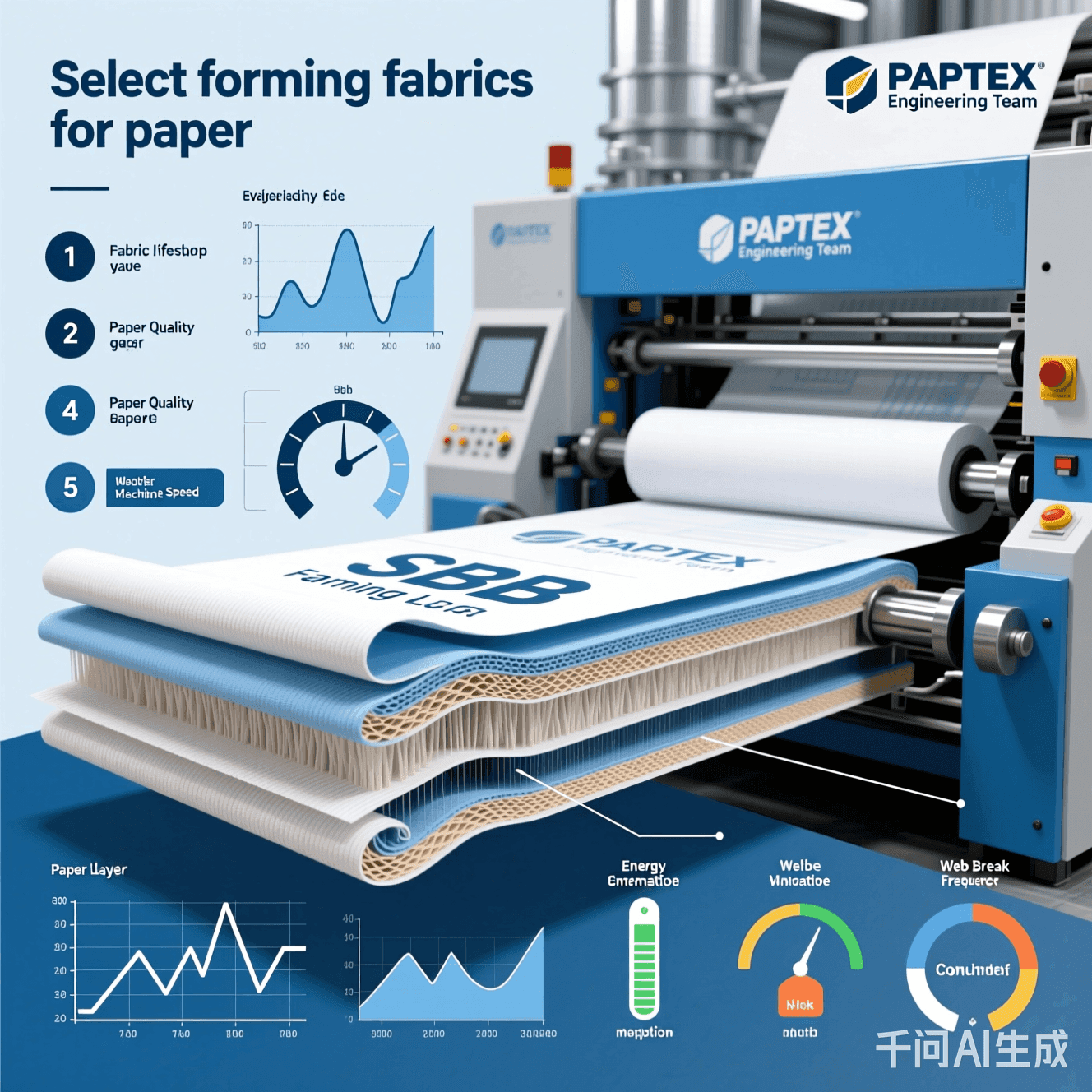
How to Choose the Right Forming Fabric
Choose a forming fabric using paper grade, furnish, former configuration, drainage, sheet-quality targets, machine data and current-fabric observations.
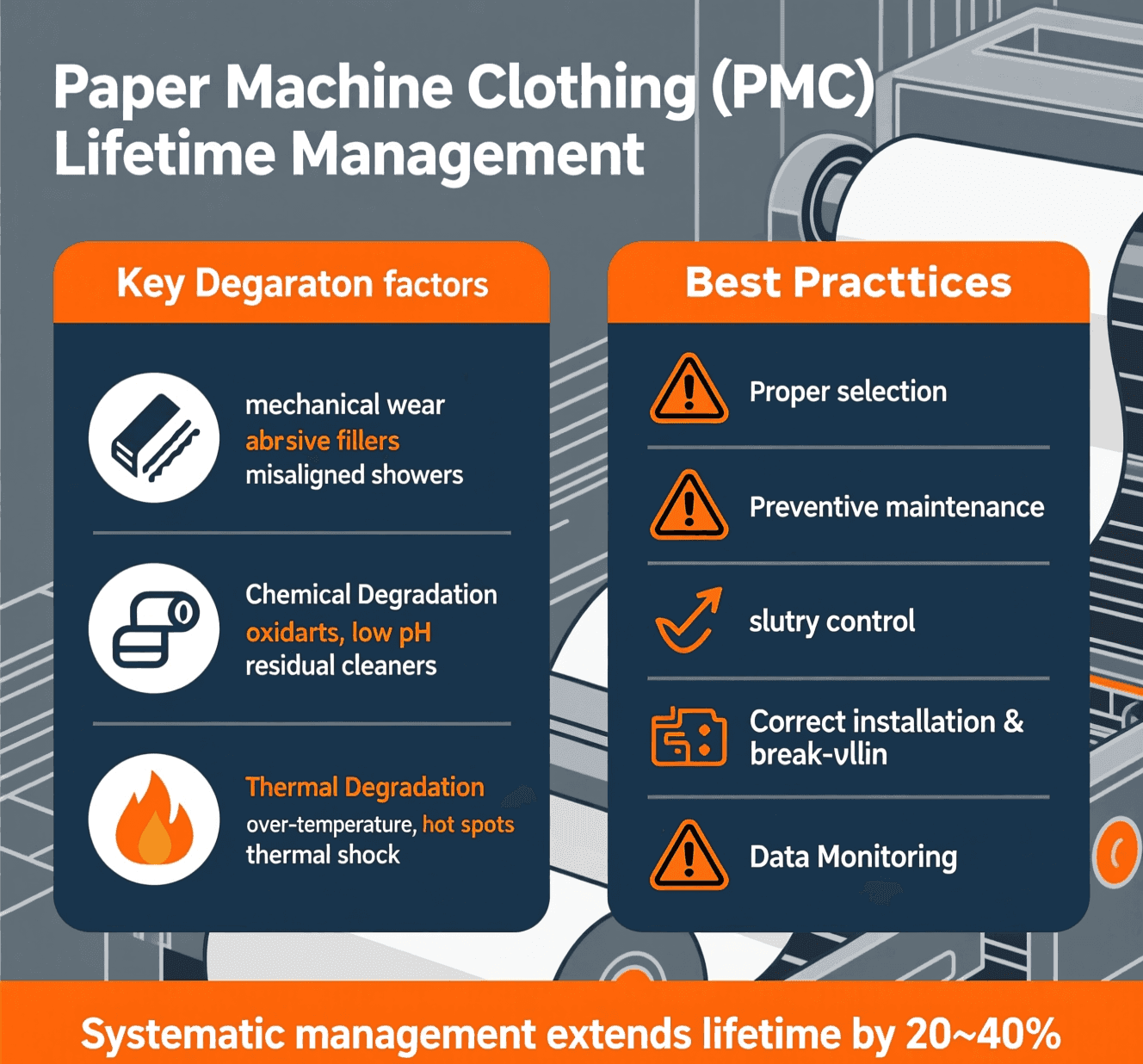
How to Extend Paper Machine Clothing Service Life
Understand the key factors affecting fabric life and discover practical tips for extending replacement intervals.
2026 Paper Machine Clothing Industry Trends
Five evidence-backed decision areas for paper mills in 2026: market pressure, circular furnish, energy, condition monitoring and position-specific PMC evaluation.