Start With the Symptom, Not the Assumption
A forming fabric can move toward one side for several reasons. The fabric itself is only one possible contributor. Guide-roll response, roll alignment, tension distribution, edge contact, contamination and a recent operating change can produce similar visual symptoms.
In this guide, guiding and tracking problems mean a fabric moving toward one side or responding unstably around the guide zone. Record the symptom and operating context before changing a guide setting, discussing a fabric change or drawing a conclusion about the cause.
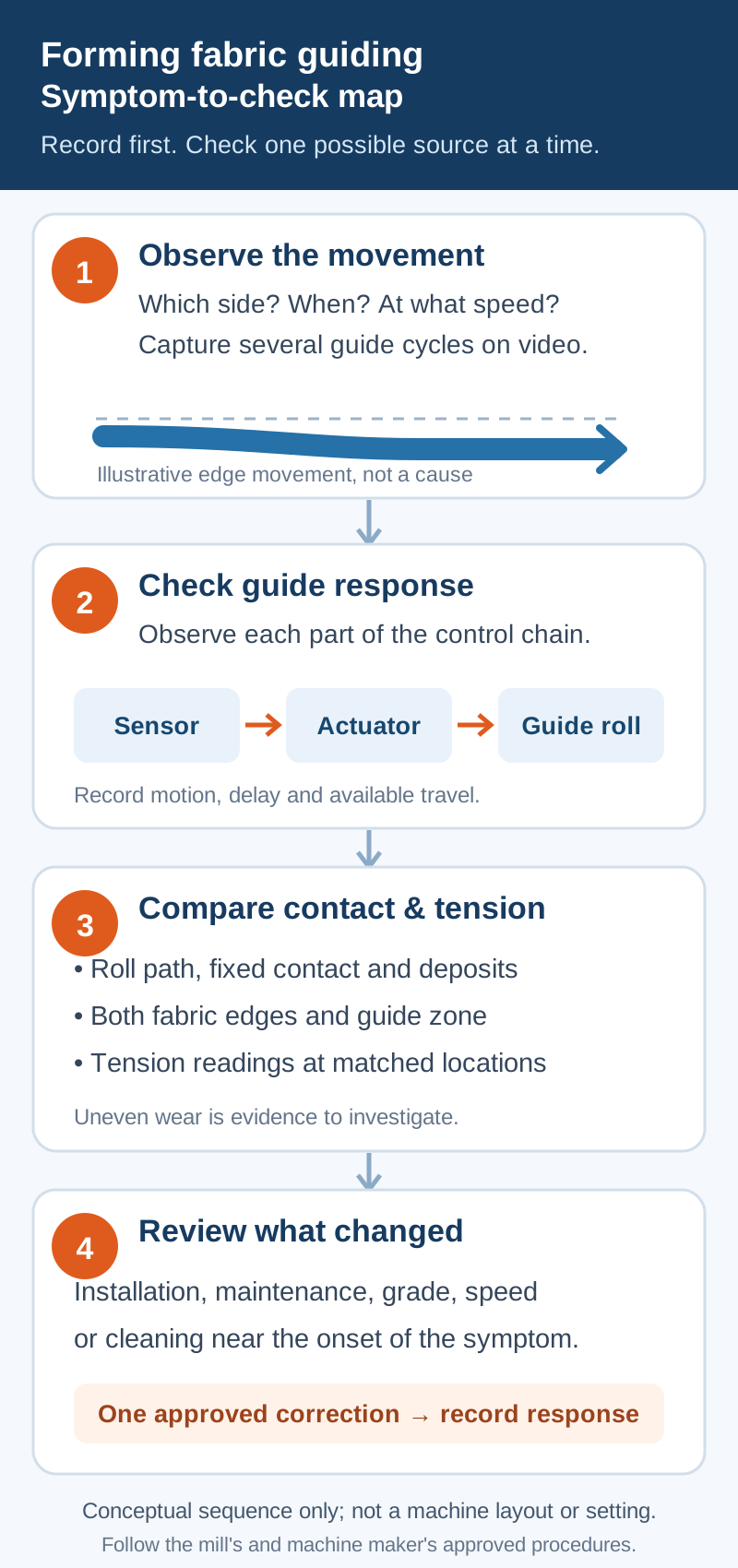
Start with the observed movement. This diagram organizes checks; it cannot identify a cause or prescribe a guide setting for a particular machine. Open the full-size diagram.
Before changing a fabric specification or guide setting, record what operators see: which side the fabric approaches, whether the behavior is continuous or intermittent, the speed range, the machine position, and whether the symptom began after an installation, maintenance event or grade change.
Quick diagnostic sequence
Use the same order for the first review so the evidence remains comparable:
- confirm which side the forming fabric approaches and whether the movement is continuous or intermittent;
- record the speed, grade, fabric identity and the change that preceded the symptom;
- inspect the guide sensor, actuator and guide-roll response;
- check roll alignment, fixed contact points, deposits and available guide travel;
- compare tension readings taken with the same instrument, unit and location;
- photograph both fabric edges and retain the maintenance and adjustment history;
- make only one approved correction at a time and record the response.
This is a diagnostic sequence for trained mill personnel working under the machine maker's and mill's approved safety procedures. It is not a universal guide or tension setting.
1. Confirm the Direction and Timing of the Movement
Use a consistent reference: operator side or drive side, machine direction, paper side and machine side. Record whether the fabric moves in the same direction throughout the run or only at a particular speed, tension condition, grade or guide-roll position.
| Observation | Useful evidence | Why it matters |
|---|---|---|
| Continuous movement to one side | Video covering several guide cycles | Helps separate a persistent mechanical influence from a transient event |
| Movement after a speed or grade change | Operating log and time of change | Indicates whether a process condition coincides with the symptom |
| Edge contact at one point | Photo of the exact contact location | Identifies a physical interference that should be corrected before changing fabric design |
| Delayed response from the guide | Video of the guide roll and fabric edge | Supports a review of sensing, actuator and guide-roll movement |
Do not rely on a short visual check alone. A clear time-stamped video is often more useful than a description such as “the fabric is unstable.”
2. Collect a Baseline Before Adjusting Anything
Create one troubleshooting record containing the current fabric identification, installation date, paper grade, machine speed, recent maintenance work, guide-system observations, edge photos and any changes in cleaning or furnish.
This baseline makes later adjustments traceable. It also prevents different teams from correcting separate symptoms without knowing what changed first.
3. Inspect the Guide System as a System
Check the guide sensor or detector, actuator, guide-roll travel and the condition of components that influence the fabric path. Look for restricted movement, buildup, damaged surfaces, loose hardware or a response that does not match the fabric movement.
The purpose is not to prescribe one setting for every paper machine. Guide systems and fabric paths vary. The objective is to confirm that the equipment can sense movement and make a smooth, repeatable correction before the fabric reaches an edge-contact point.
4. Review Roll Alignment and Contact Conditions
Guiding behavior can be affected when a roll, stationary element or edge guide creates unequal contact across the fabric width. Review recent roll changes, bearing work, doctor work and any modification near the fabric path.
| Check area | Question to ask | Evidence to retain |
|---|---|---|
| Roll path | Did the symptom start after roll or bearing maintenance? | Work order and alignment record |
| Stationary elements | Is either edge touching a fixed component? | Close-up photos of both edges |
| Surface condition | Is there buildup or damage affecting one side differently? | Inspection photos and cleaning notes |
| Guide-roll travel | Is the available movement sufficient and unobstructed? | Video through the full guide response |
Correct a confirmed mechanical contact issue before evaluating whether a new fabric construction is required.
5. Check Tension Distribution and the Tensioning Arrangement
An overall tension reading does not necessarily show whether the fabric is loaded evenly across its width. Review the tensioning arrangement, roll condition and any signs that one side of the fabric is seeing different loading or stretch history.
Use the fabric supplier's data sheet and the machine's established operating procedure for any tension decision. Do not substitute a generic online value for the specification of a particular fabric, width and machine path.
For a consistent record of the instrument, measurement location and machine conditions, use the paper machine fabric tension checklist. Keep those readings with the guiding observations so the review team can compare the same operating period.
6. Examine Both Fabric Edges and the Guide Zone
Inspect both edges before cleaning or removing the fabric. Compare reinforcement, discoloration, abrasion, fraying, deposits and marks from guide components. Mark the machine direction and take photos at the same distance from each edge.
Unequal edge wear is evidence to investigate, not by itself proof of a fabric-design defect. The pattern should be reviewed together with the guide response, roll path and installation history.
7. Include Process and Operating Changes in the Review
Ask whether any of the following changed near the start of the symptom:
- paper grade, basis weight, furnish or retention program;
- operating speed or draw;
- vacuum, dewatering or shower practice;
- cleaning chemistry or contamination level;
- guide-system maintenance, roll work or fabric installation procedure.
The goal is to identify a practical sequence: what changed, what was observed, and which check can confirm or rule out a contributor. This is more reliable than assuming that the latest fabric is automatically the cause.
8. Make One Controlled Correction at a Time
When the source is not immediately obvious, avoid changing several guide and operating variables together. Record the initial state, make one approved adjustment, observe the response over a defined operating period, then document the result.
| Step | Record | Decision point |
|---|---|---|
| Baseline | Symptom, operating conditions and photos | Establish what “before” looked like |
| First correction | One approved mechanical or operating change | Check whether the movement pattern changes |
| Follow-up | Same observations under comparable conditions | Decide whether to continue, reverse or investigate another contributor |
| Escalation | Evidence package and fabric identification | Request a supplier or machine-service review |
This approach protects the mill from losing the cause-and-effect relationship between an adjustment and the observed result.
9. When a Fabric Review Is Appropriate
A fabric review is useful after guide equipment, alignment, contact conditions and installation direction have been checked, or when the evidence indicates a repeatable relationship with the fabric itself.
Provide the current fabric label or data sheet, measured dimensions, position on the machine, guide arrangement, operating history and photos of both edges. The supplier can then identify which details are confirmed and which assumptions still require verification.
10. Build a Supplier-Ready Evidence Package
For an efficient technical review, send:
- a short video of the guiding behavior and guide-roll response;
- photos of both fabric edges, the guide area and any contact point;
- fabric model, installation date and machine position;
- paper grade, speed range and recent operating changes;
- maintenance records relevant to rolls, guides or the fabric path;
- a list of adjustments already tried and their observed outcome.
Use the downloadable paper machine parameter form to keep machine, clothing and operating data in one review record before sending the evidence package.
For product context, review the forming fabric range, compare forming fabric structures, or use the fabric finder. If the problem persists, send the evidence package through the engineering contact form.
Documented SSB parameter sheets
When a technical review requires model-specific recorded values, use these individual parameter sheets as reference. They do not replace confirmation against machine conditions and fabric dimensions: