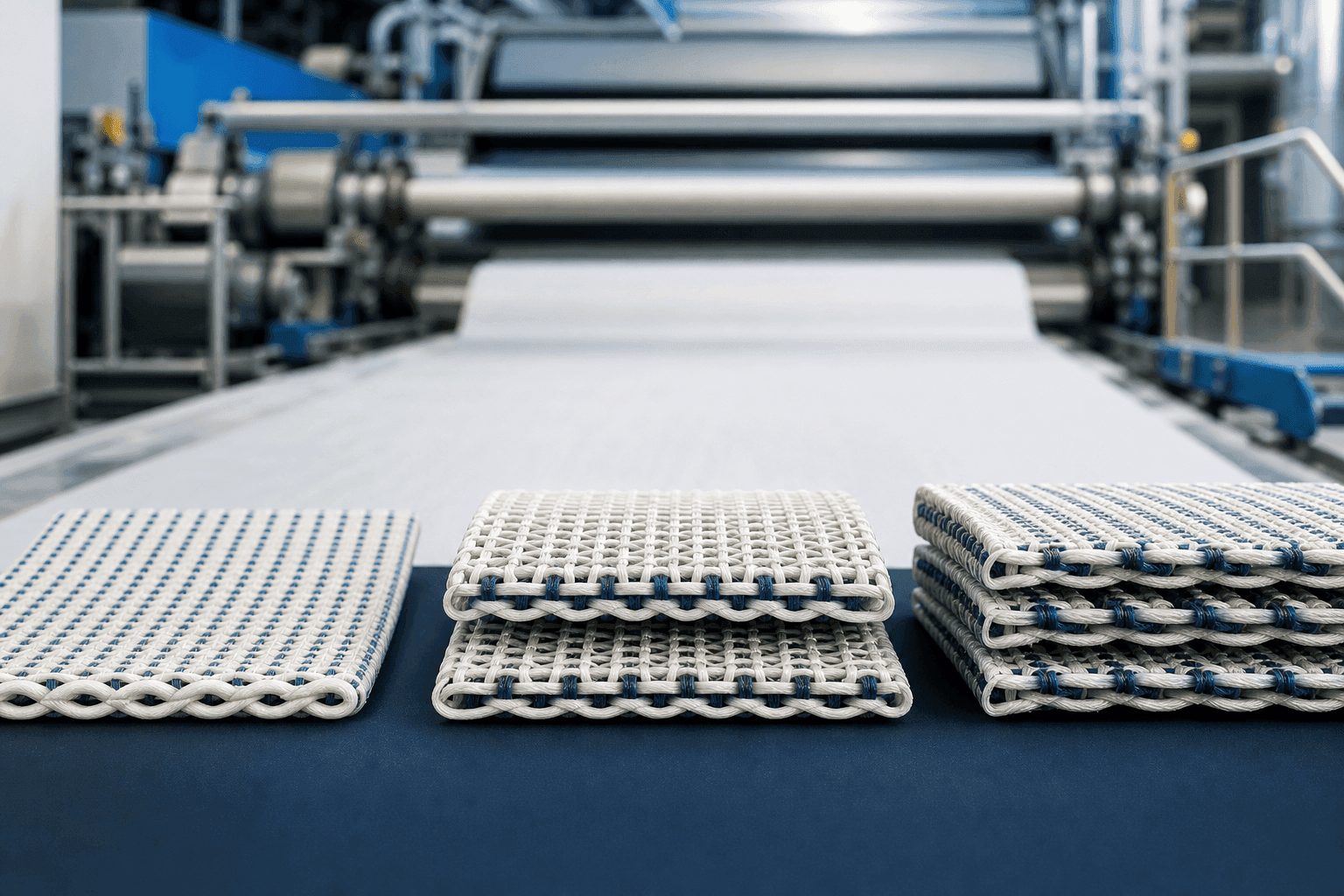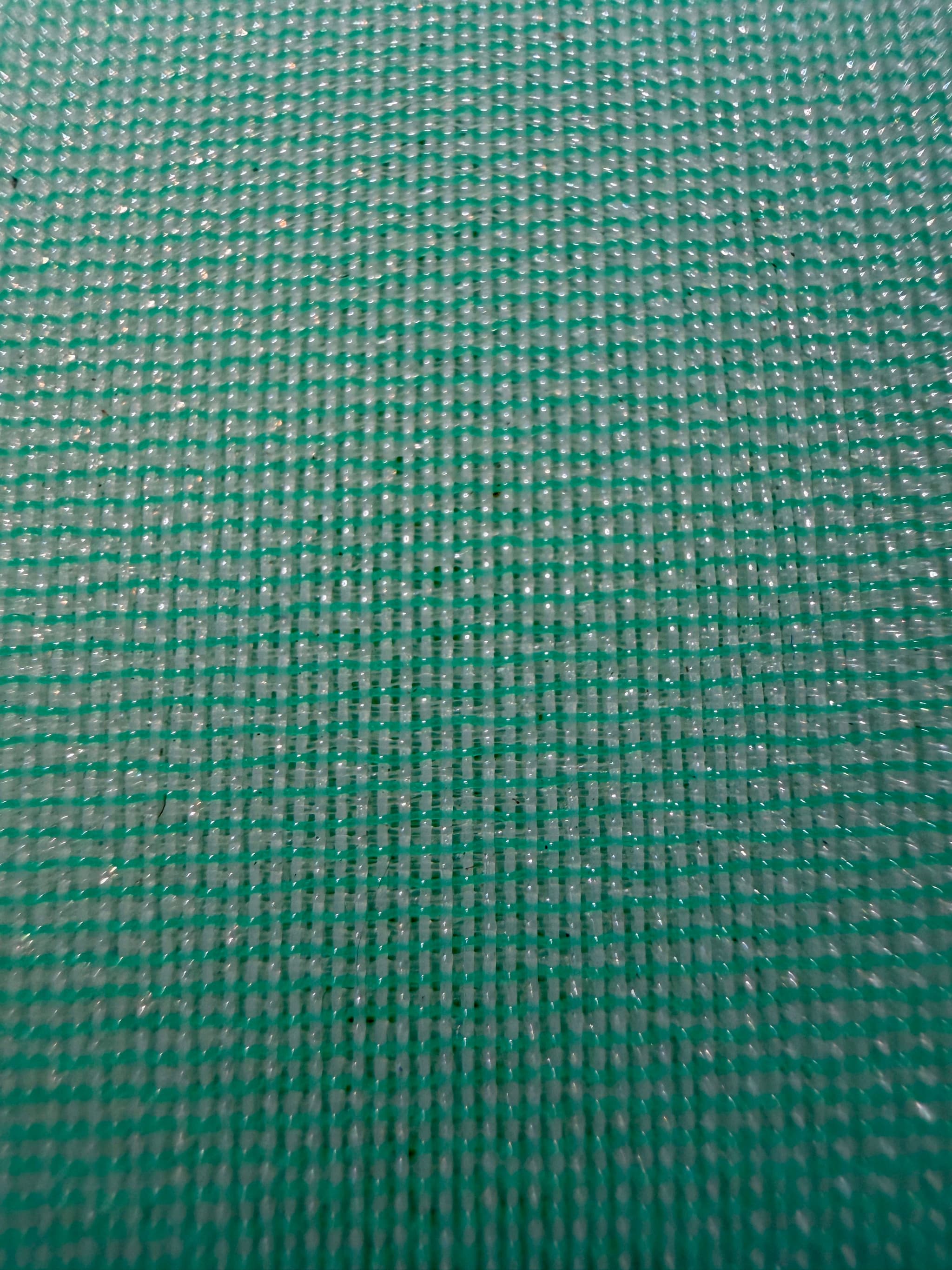
Structure changes the balance, not just the layer count
Forming-fabric construction controls how the paper side supports fibers while the machine side manages drainage, stability and wear. The correct structure is the one that matches the paper and machine constraints; there is no universal ranking that makes SSB, triple layer or any other family best for every position.
Construction families
| Structure | General construction | Typical reason to evaluate it | Main checks |
|---|---|---|---|
| Single layer | One warp and one weft system | Straightforward construction for applications where support and stability targets are moderate | Marking, dimensional stability, wear and drainage distribution |
| Double layer | Additional cross-direction support compared with single layer | A different balance of drainage, support and stability | Paper-side support, caliper, guiding and wear-side contact |
| 2.5 layer | Supplemental paper-side yarn arrangement | Improve paper-side support while retaining a familiar base concept | Fiber retention, marking, cleaning and seam/edge design |
| Triple layer | Separate paper and machine sides joined by binders | Separate fine paper-side support from a robust machine side | Binder pattern, internal wear, drainage uniformity and stability |
| SSB | Triple-layer family using sheet-support binders | High paper-side support and independent machine-side design where the application requires it | Binder geometry, marking, retention, cleaning and machine compatibility |
These descriptions are structural families, not fixed product specifications. Yarn material, diameter, density, weave repeat, binder design and finishing can create very different results within the same family.
Do not use a universal CFM, FSI or life table
PAPTEX source material includes identified model examples with different permeability, support and drainage values. They show why parameters must be evaluated together, but they do not establish one range for every single-, double- or triple-layer fabric. Confirm the test standard, pressure differential, units, finished fabric and model before quoting a value.
Service life also depends on furnish abrasion, contamination, tension, alignment, stationary contact, cleaning, edge condition and shutdown practice. Compare life only with documented grade mix and operating conditions.
Selection sequence
- Define the paper-quality and drainage problem with baseline measurements.
- Check headbox, forming board, foils, table activity, vacuum capacity and retention program.
- Screen structures for fiber support, drainage distribution, stability, wear and cleaning.
- Compare identified data sheets using the same test method and units.
- Confirm dimensions, joining, edges, tolerances and installation direction.
- Run a controlled trial and record both quality and operating cost per acceptable ton.
Purchase price alone cannot predict total cost. Use actual output, quality loss, cleaning, installation and downtime data rather than a universal multiplier.
If the observed issue is lateral movement, delayed guide response, unstable tracking or edge contact, investigate the operating symptom before changing construction. Use the forming fabric guiding troubleshooting process to organize that review.
Request a structure comparison for your machine or read the forming fabric selection guide.