Width-wise variation in a forming fabric is a documented contributor to guiding instability. A seam, by contrast, is primarily a useful observation and record point, not an established cause of a change in the running line. This page separates what is supported by published machine-clothing guidance — uneven tension across the width, a difference in length between the two sides, and fabric-construction effects — from what still requires mill records before any conclusion is drawn.
What is established about width-wise variation
When tension is not uniform across the fabric width, the fabric can move off the machine. Published paper machine clothing guidance describes this as a distinct condition from a low overall tension reading, and notes that a difference between the two sides may relate either to a machine misalignment or to the fabric itself — for example, one side being longer than the other.
That is why a width-wise comparison is more informative than a single value. Tension should be checked on both the tending and drive sides at the same position, and the measuring device itself should be confirmed as giving correct values. These are recording requirements, not settings for a particular machine: use the fabric supplier's data sheet and the mill's established operating procedure for any tension decision, and do not substitute a generic value found online.
For the full symptom-led workflow, see the forming fabric guiding overview.
What fabric construction contributes
Fabric construction can also be associated with a guiding change. A pronounced twill pattern on the machine side, and a suction-box drill pattern that matches the fabric's twill, can make the fabric tend to guide in a particular direction once vacuum is applied. A related and well-documented observation is that a fabric may guide one way before stock is applied and the other way once it is on, where a misaligned vacuum element is involved.
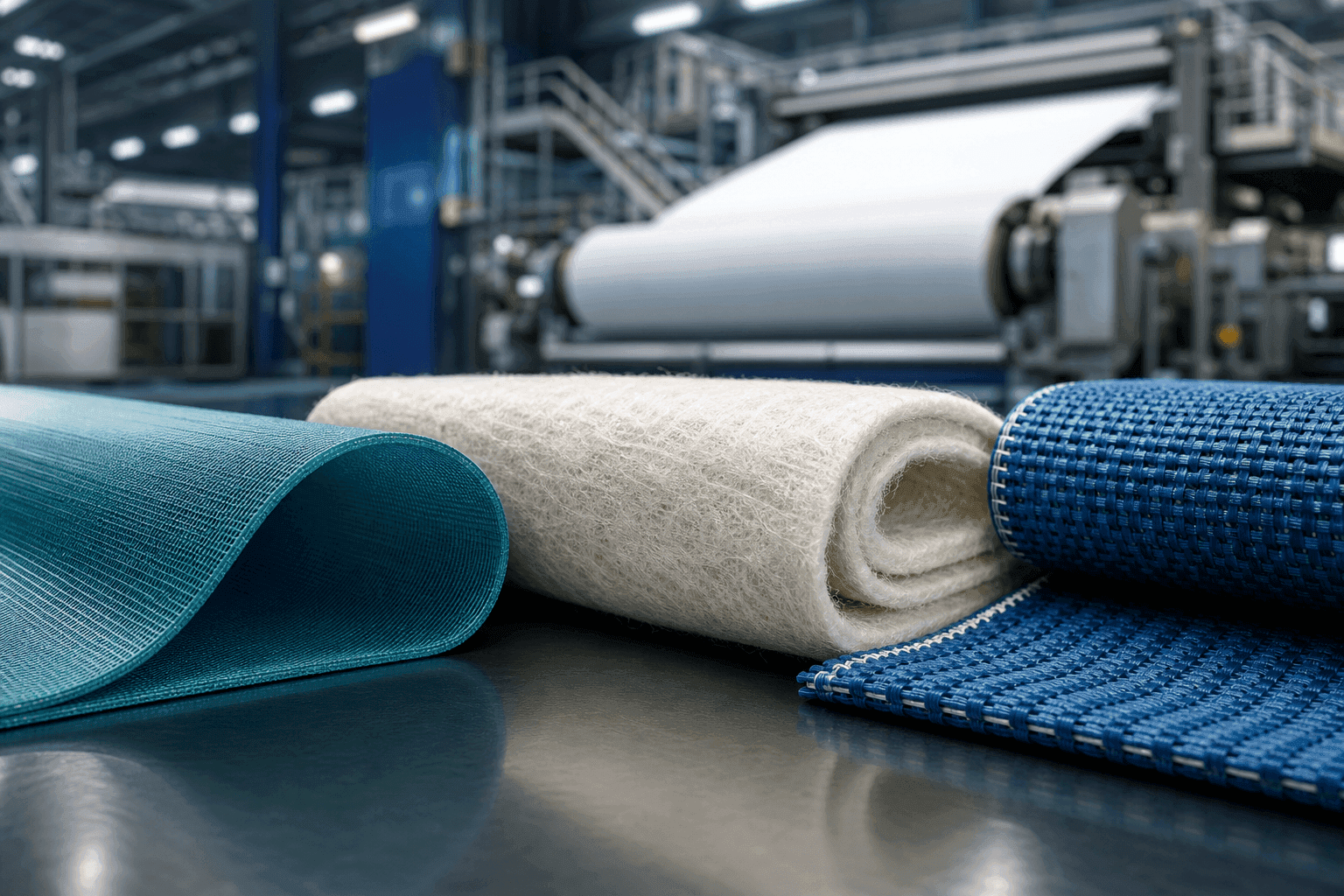
These effects are tied to process conditions rather than to a random fault. They also explain why the same fabric can appear stable in one operating context and unstable in another — and why a conclusion drawn from a single visual inspection is unreliable. A forming fabric range review can help frame which construction details are relevant to the position.
| Record | What it helps distinguish |
|---|---|
| Whether the movement changes when stock or vacuum is applied | A process-bound effect versus a persistent mechanical one |
| Tension comparison between both sides at the same position | Width-wise variation versus a single overall reading |
| Construction and seam details from the fabric identification | Which design features belong to the review |
| Timing relative to a grade, speed or shower change | A context-bound condition versus a developing one |
| Recent installation or maintenance actions | Handling variables from fabric-condition variables |
Why a full-width marker line is a useful observation record
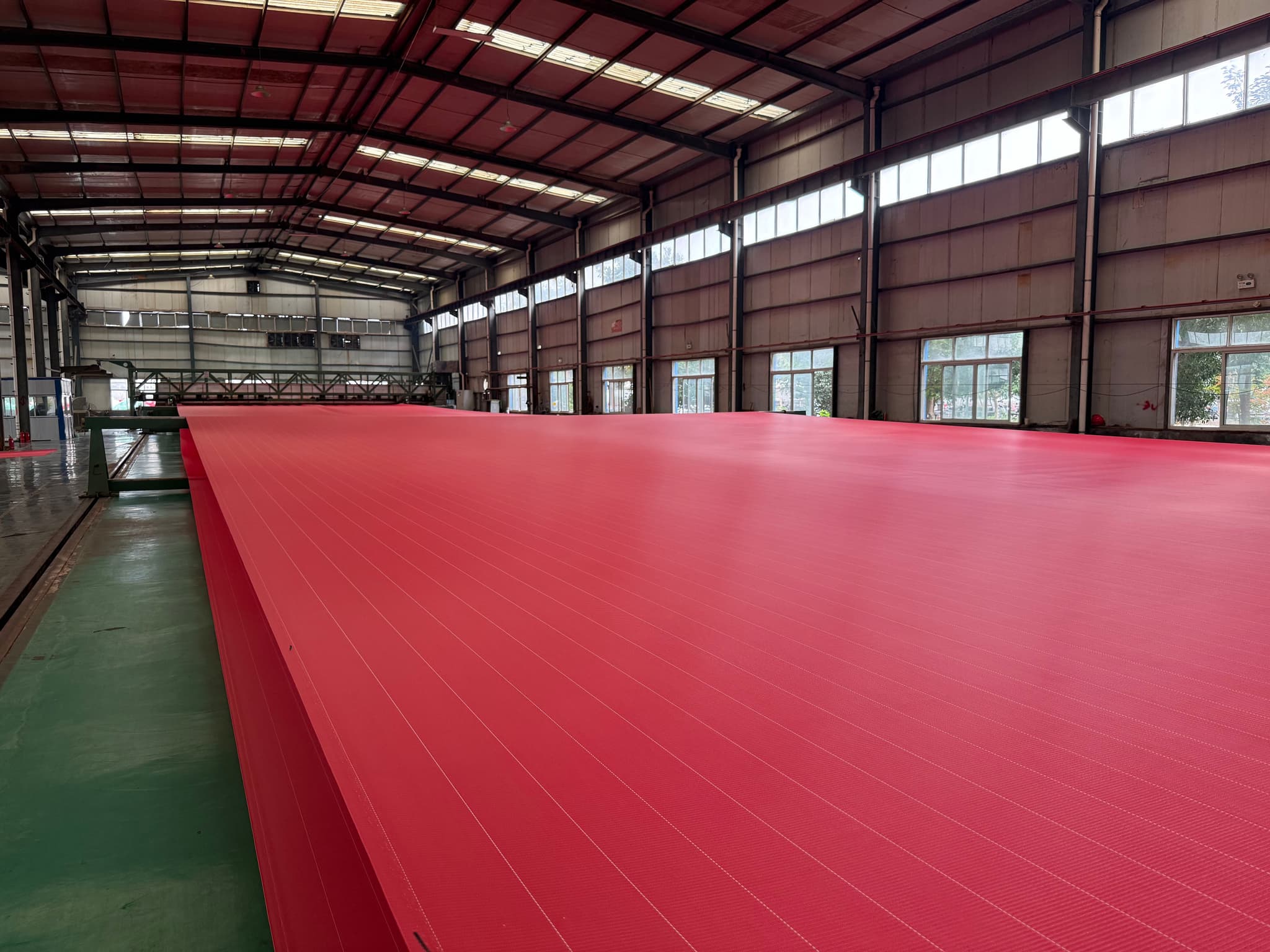
Fabric suppliers commonly apply a full-width cross-direction marker line to their fabrics. Its purpose is to help identify guiding problems: whether the line stays square as the fabric runs, and whether its position changes over time, are observations that can be recorded and compared.
A marker line is an observation aid, not a diagnosis. A change in the line can indicate that the fabric is not running square, but it does not establish which condition produced that change. The same limitation applies to photographs: they are most useful when taken from the same distance and position at more than one point, so that a stable condition can be separated from one that progresses.
What a seam record can and cannot establish
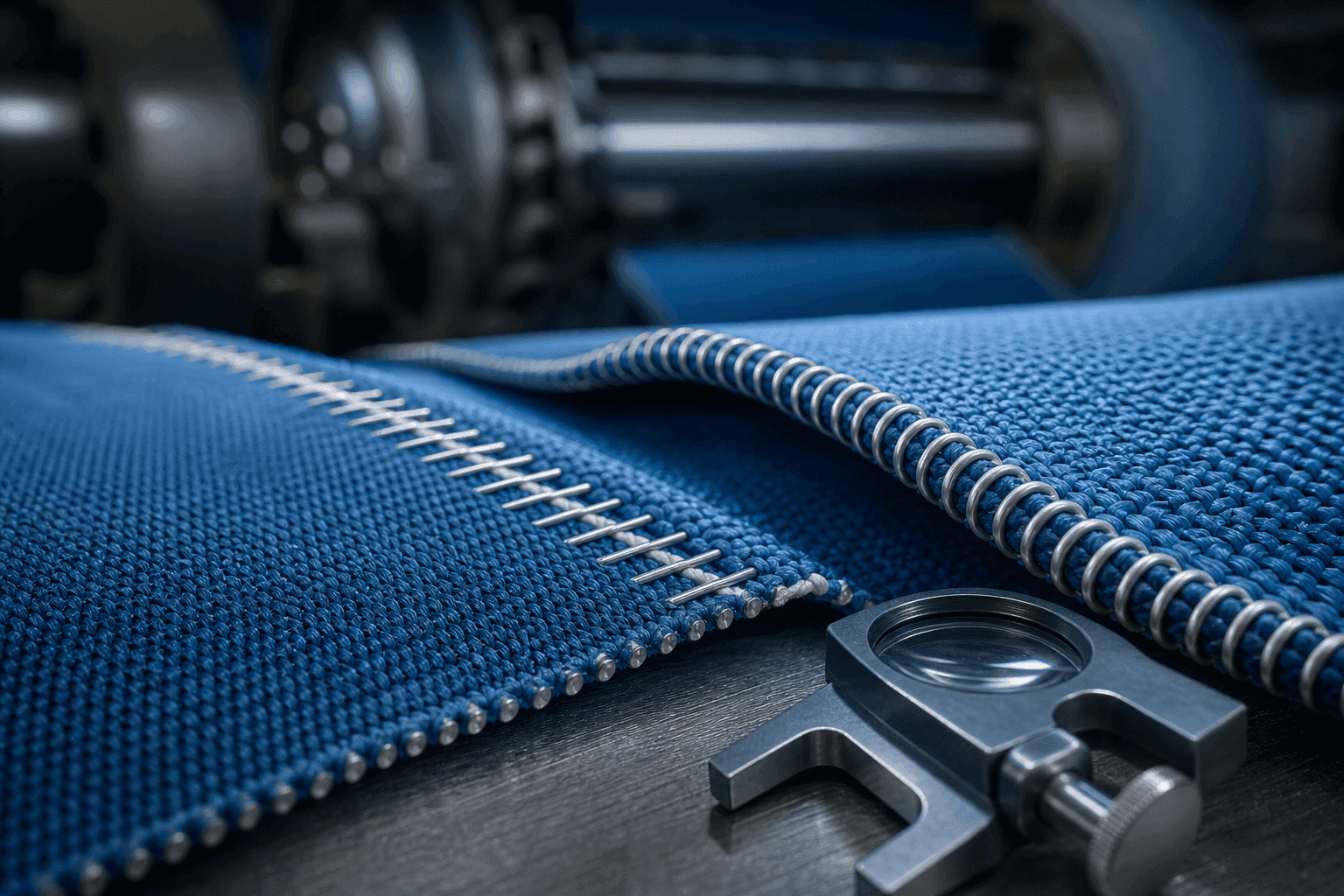
Seam construction, seam passage and seam damage belong in an installation and maintenance record. They are worth documenting because a change at the seam can coincide with a guiding observation, and because the installation history is needed to interpret that observation.
What the available guidance does not establish is a general causal rule that seam behaviour shifts the running line. This page therefore does not present the seam as the default explanation for a guiding change. Any statement about a seam-related mechanism for PAPTEX fabrics would need a documented, repeatable mill observation and engineering confirmation before it could be published as fact. Until then, the seam is treated as a recorded condition, with the causal question left open.
Where tension or tracking readings exist, they are meaningful only with their measurement context — instrument, location, procedure, machine condition and date. The paper machine fabric tension checks guide describes what to document before a reading is interpreted.
Why a seam observation is not an automatic replacement decision
Replacement is a decision about the fabric, while a guiding change can originate in the fabric, the machine, the operating practice, or a combination. A seam observation that is not tied to a timeline, a width-wise comparison and a repeatable pattern does not, on its own, support that decision.
The practical question is whether the observation changed when something else changed — a maintenance action, a cleaning step, a guide adjustment or a change in production context. Without that timeline, a replacement removes the item under review but not necessarily the condition that produced the movement.
What to photograph and record
- Machine section and exact forming position.
- Fabric identification, construction details and installation information.
- Paper grade and operating context at each observation.
- Whether the movement changes when stock, vacuum or speed changes.
- Tension observations from both sides, taken at the same position and with the same method.
- The state of the full-width marker line, and aligned photographs of both edges.
- Seam construction, passage and condition as installation/maintenance records.
- Recent changes to guides, rolls, showers, cleaning practice or fabric.
For a position-specific review, Send us your machine parameters through the engineering enquiry form. The knowledge centre and the fabric selection tool may help identify which details belong to the position.
Frequently asked questions
Can an irregular seam be taken as the cause of a guiding problem?
No. Seam condition belongs in the installation and maintenance record, but the available guidance does not support a general rule that seam behaviour shifts the running line. That conclusion would need a documented, repeatable observation and engineering confirmation.
Why is a width-wise tension comparison more useful than one reading?
A single overall reading does not show whether the fabric is loaded evenly across its width. Published guidance describes non-uniform tension as a condition in which a fabric can move off the machine, which is why both sides are checked at the same position.
Why can the same fabric appear stable in one run and unstable in another?
Construction effects and vacuum-related conditions can be tied to process state, so a change in stock, vacuum, speed or grade can change the observed behaviour. Records that capture the operating context are needed to separate these from a persistent mechanical condition.
What should be sent to a supplier for a construction-related review?
The eight records above, especially the fabric identification, both-side tension observations, the marker-line state and the aligned photo set. A single close-up photograph rarely provides enough context.