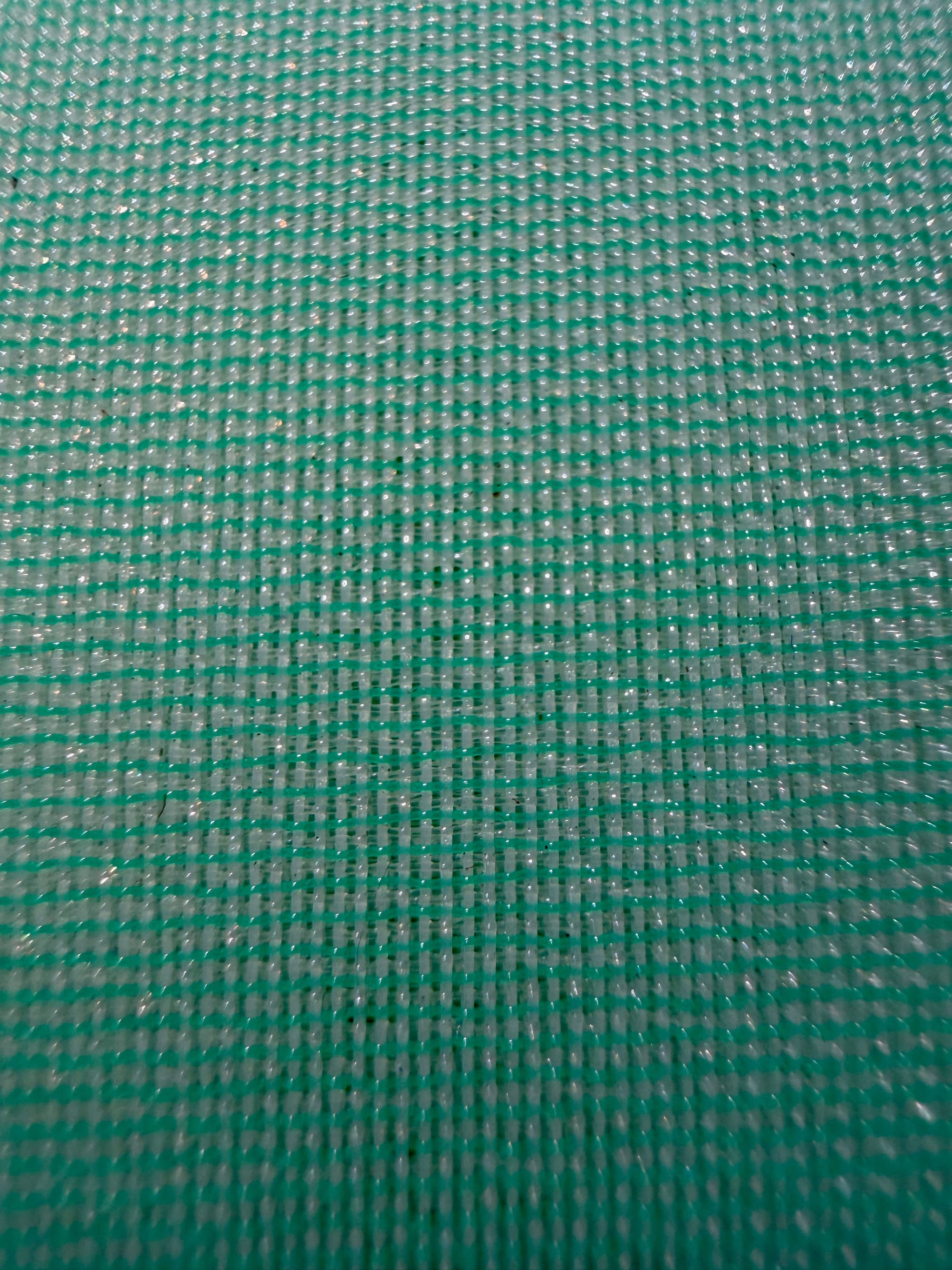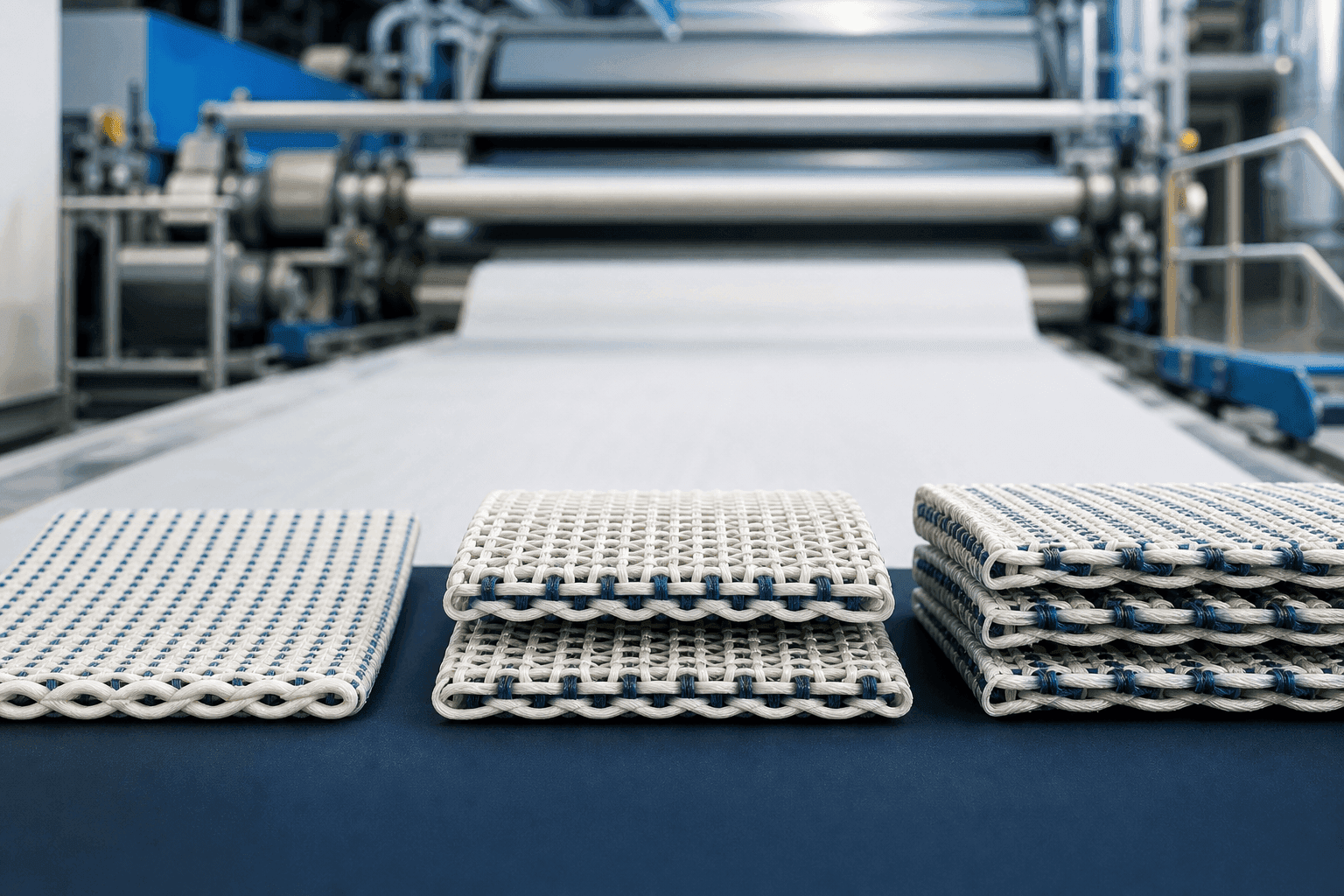
FSI and DI can help compare forming-fabric designs, but neither number selects a replacement fabric by itself. The sheet-side weave, permeability test conditions, paper grade and machine position matter. Before using a supplier's figures, ask what was measured, how the index was calculated and whether the figures use the same convention.
This guide uses three PAPTEX triple-layer forming-fabric model sheets to show a practical review. Their recorded figures are examples of specific designs, not target ranges or evidence that one model will improve retention or drainage on your machine.
What do FSI and DI describe?
Fiber Support Index (FSI) is a calculated indicator of support offered by the fabric's paper-side yarn arrangement. It is useful for discussing the sheet-side surface, but it is not a direct measurement of first-pass retention, formation or marking on a running paper machine.
Drainage Index (DI) is a calculated indicator that incorporates fabric geometry and air permeability in published methods. It is not a measurement of actual water removal at your forming section. Vacuum settings, furnish, speed, basis weight and the whole forming arrangement can change the operating result.
Methods and reporting conventions need to be stated. A published determination method from Cristini describes DI using a paper-side cross-direction support coefficient, yarn count and air permeability. Do not assume a different supplier or an old factory sheet applied precisely that method without confirmation.
What do the three PAPTEX model sheets actually say?
| Recorded field | 3CSSB523520 | 3CSSB404520 | 3CSSB365020 |
|---|---|---|---|
| Sheet description | Paper-side triple layer | Core triple layer | Bottom-layer triple layer |
| FSI | 172 | 101 | 131 |
| DI, exactly as printed | 34% | 22.0 | 42 |
| Air permeability | 5,300 m³/m²h (335 CFM) | 6,500 m³/m²h (411 CFM) | 7,580 m³/m²h (480 CFM) |
| Caliper | 1.03 mm | 1.25 mm | 1.48 mm |
Source: PAPTEX's owner-designated product parameter document, 成型网用网方案(1), model sections 3CSSB523520, 3CSSB404520 and 3CSSB365020. Values and parenthetical CFM figures are transcribed as printed. The DI entries are reported inconsistently: the first has a percent sign; the other two do not. The sheet does not state a DI formula or air-permeability test pressure. Do not treat these DI figures as directly comparable until the issuing engineer confirms the method and unit.
The figures also do not isolate one design feature. The three fabrics differ in construction and caliper as well as in the listed indices. A higher FSI does not by itself prove better retention, and a higher DI does not guarantee faster machine drainage.
You can inspect the individual model pages for 3CSSB523520, 3CSSB404520 and 3CSSB365020. Confirm the current approved sheet before placing an order.
Five checks before comparing supplier data sheets
- Identify the actual machine position. Record former type, fabric position, paper grade and basis-weight range. A figure detached from its application is not a selection criterion.
- Confirm the paper-side construction. Ask for a weave drawing or clear surface image, yarn sizes and a statement of which side faces the sheet. A single index hides surface details.
- Ask for the calculation convention. Request the FSI and DI method, version, units and rounding. If DI appears with and without a percent sign, resolve that discrepancy first.
- Normalize permeability measurements. Obtain the test pressure, standard, units and whether the stated value was measured on a new fabric. Matching “CFM” labels alone does not establish comparable tests.
- Compare against a machine baseline. Keep the present fabric's model and dimensions, relevant furnish and operating conditions, observed issue, and any available retention, drainage or sheet-quality records. Decide in advance what a trial will measure.
For the broader selection sequence, use the forming fabric range and the forming fabric specification comparison guide. If the problem is fabric wandering, use the separate forming-fabric guiding checklist; FSI and DI do not diagnose a tracking fault.
What should you send for technical review?
Send the present fabric model and dimensions, machine position and former type, grade and basis-weight range, normal speed, reason for replacement, and the current and proposed data sheets. Mark missing values as unknown. Ask the supplier to confirm the index method and permeability test conditions, then propose what must be checked in a controlled trial.
Request a forming-fabric technical review. Include the model numbers and the exact issue; a recommendation requires the machine context, not just the largest index.