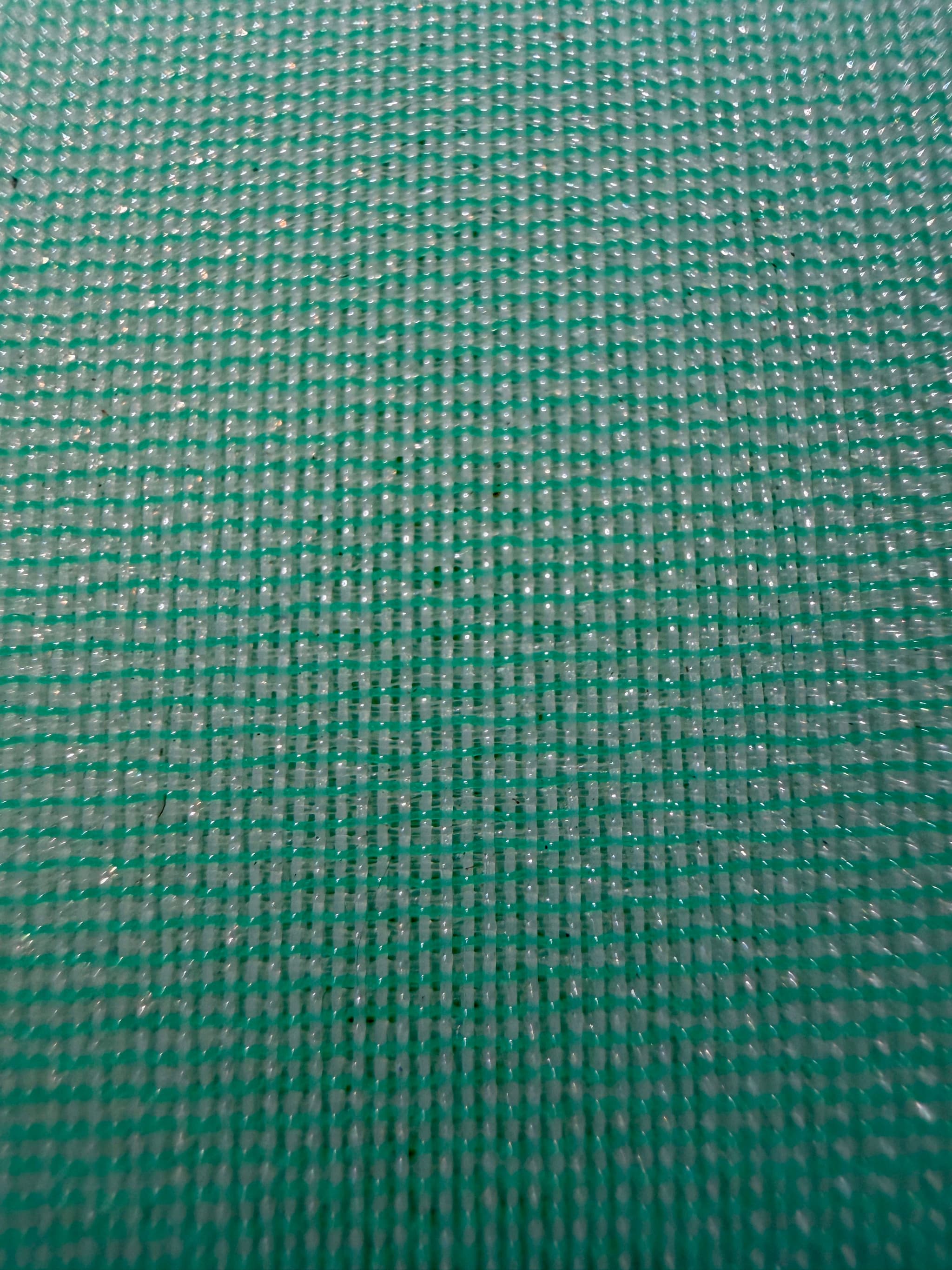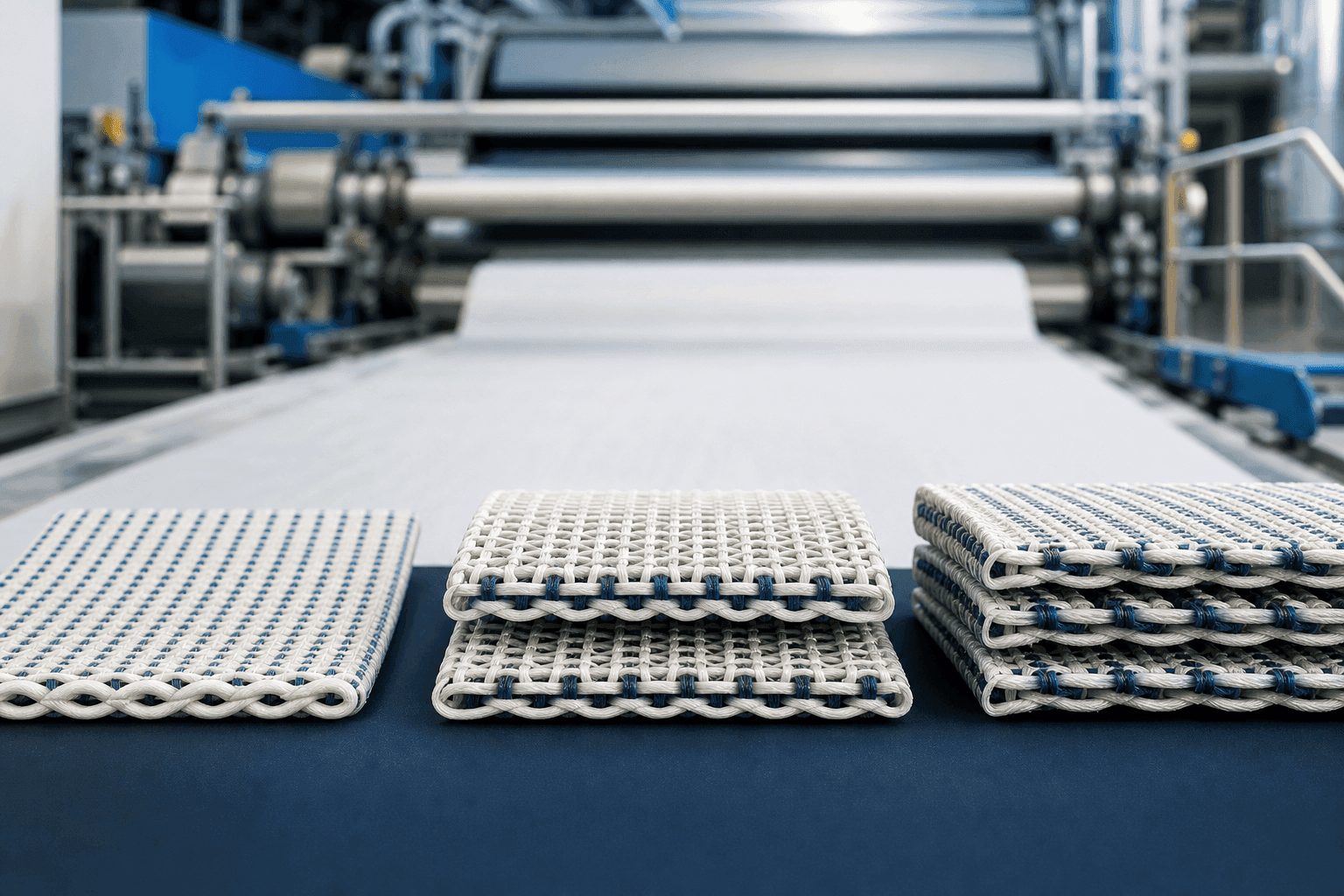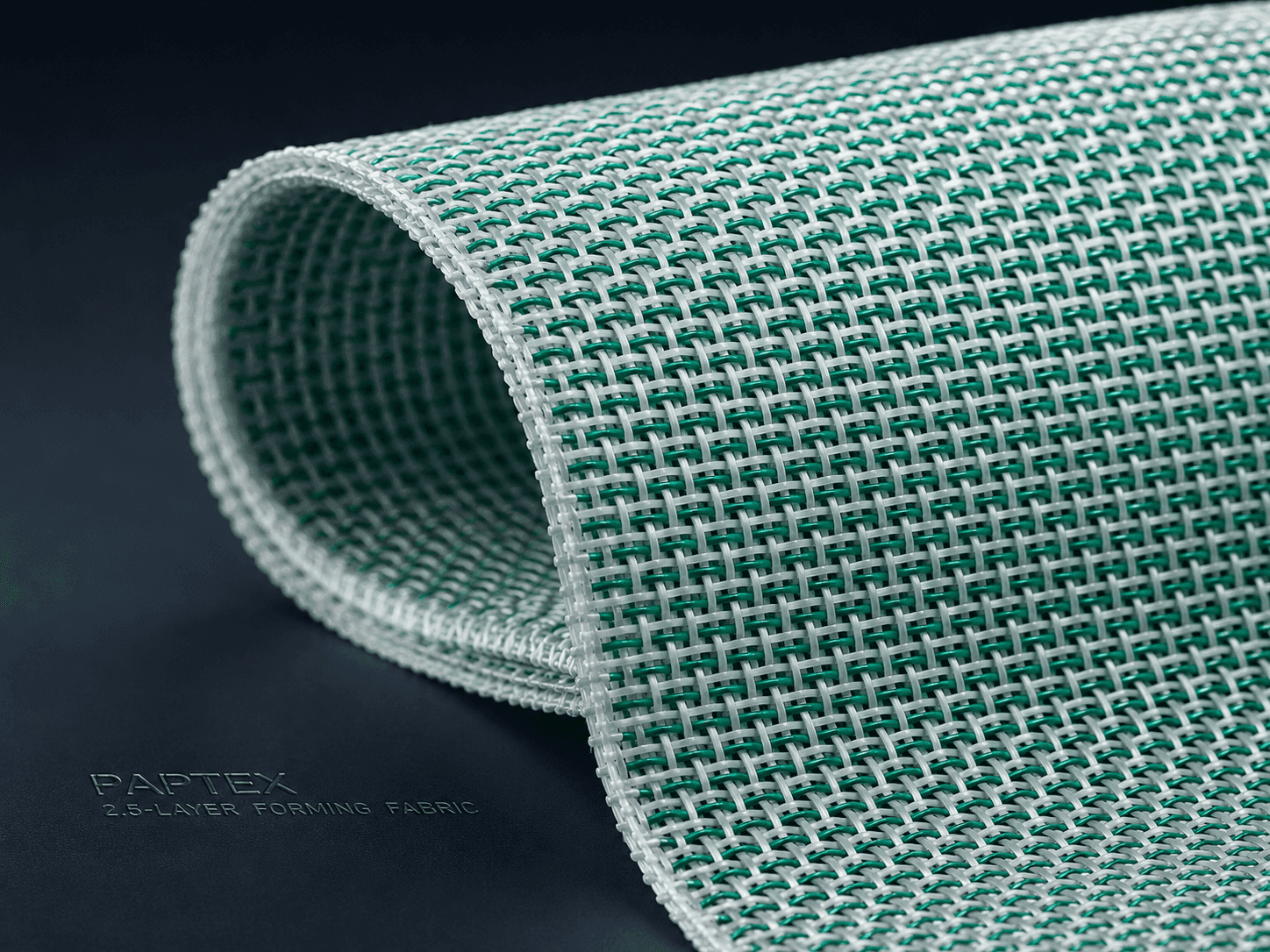
Start with the data sheet, not a layer label
“2.5-layer” and “SSB” describe construction families. They do not by themselves prove which fabric is suitable for a particular forming position. A useful comparison starts with documented construction and test values, then adds the machine position, paper grade, drainage arrangement, cleaning practice and current operating evidence.
This note compares two PAPTEX design types using their source data sheets: 2B603516 (8/16 2.5-layer) and 3CSSB603020 (2/5 triple-layer SSB). It is a technical RFQ aid, not a guaranteed performance forecast or a substitute for the mill’s engineering approval process.
For a broader explanation of construction families, read Forming Fabric Structure Comparison. For the information a supplier needs before proposing a design, use the Forming Fabric RFQ Checklist.
The documented values side by side
| Data-sheet field | 2B603516 | 3CSSB603020 | What to keep with the comparison |
|---|---|---|---|
| Construction description | 8/16 2.5-layer | 2/5 triple-layer SSB | The full weave description, not only the layer name |
| Warp density | 65.5-66.5 threads/cm | 62.5-64.5 threads/cm | Which surface and measurement convention the supplier uses |
| Weft density | 58.0-61.0 threads/cm | 76-80 threads/cm | The construction drawing and yarn allocation |
| Air permeability | 4,900 m³/m²h (310 CFM) | 4,800 m³/m²h (303 CFM) | Test method, unit and condition |
| Water permeability | 58 s/5 L | 52 s/5 L | Test method and the basis for comparison |
| Caliper | 1.03 mm | 0.83 mm | Installed-position clearance and contact conditions |
| Specific elongation at 50 N | ≤0.45% | ≤0.45% | Direction, test method and acceptance criteria |
| Fibre Support Index (FSI) | 154 | 172 | The supplier’s calculation basis |
| Drainage Index (DI) | 24.7 | 27.7 | The supplier’s calculation basis |
The figures above are design-type data from the two cited PAPTEX PDFs. They must not be treated as universal targets for another paper machine, position, supplier or test method.
Read the values as a package
Neither model should be selected because one table cell is higher or lower. The two data sheets use closely spaced air-permeability values, while their construction descriptions, yarn-density values, caliper and indices differ. Those differences are a reason to ask technical questions, not evidence that either design will automatically improve formation, drainage, lifetime, speed or operating cost.
Before comparing a replacement with the current fabric, retain the same information for both: the exact position, product ID, dimensions, direction of travel, available construction description, test units and measurement conditions. A number without its method can create a false comparison.
Questions to resolve before choosing either model
- Which position is under review? State the former or wire position and whether the request is a planned replacement, a trial or a response to a documented observation.
- What is the current fabric? Attach the current data sheet and identify what is confirmed versus unknown.
- Which paper grade and operating context apply? Include the normal grade, relevant furnish context and any recent operating changes.
- What issue is being reviewed? Describe an observation and its timing rather than requesting a general “higher-performance” construction.
- Are the measurements comparable? Record the method and condition for permeability, elongation, dimensions and any mill-side measurements.
- What machine constraints matter? Make seam, installation, access, cleaning, guide history and current contact conditions visible before a recommendation is approved.
The paper machine clothing data-sheet review provides a broader approval checklist. If wear is the reason for replacement, add the forming-fabric wear inspection checklist rather than assuming the fabric specification is the sole cause.
Turn the comparison into a supplier-ready RFQ
Send the two data sheets only as part of a position-specific package. Include confirmed dimensions, running direction, current fabric identity, paper grade, machine position, available inspection records and the question the mill wants answered. Ask the supplier to state the proposed construction, the assumptions used and the information still required for a final recommendation.
PAPTEX can review this package against the forming-fabric range and the verified model pages for 2B603516 and 3CSSB603020. The final choice should be made for the actual machine conditions, not from layer count or a single parameter alone.
Frequently asked questions
Does the SSB model automatically have a longer service life?
No. The cited data sheets do not establish a universal service-life result. Service life depends on the actual machine position, paper grade, drainage conditions, tension, cleaning, maintenance and contact conditions.
Can air permeability alone decide the replacement fabric?
No. Air-permeability values need their test method and machine context. Construction, dimensions, drainage arrangement, cleaning and the operating record also matter.
Can I use this comparison for a fabric from another supplier?
Use it as a question list, not as a direct equivalency claim. Confirm the other supplier’s construction description, test methods, units and the machine conditions before comparing values.
Source boundary
Model-specific values in this draft are transcribed from PAPTEX source PDFs for 2B603516 and 3CSSB603020. No speed, paper-grade fit, life, energy, quality, price, capacity or delivery claim is made because those outcomes are not established by these two data sheets.