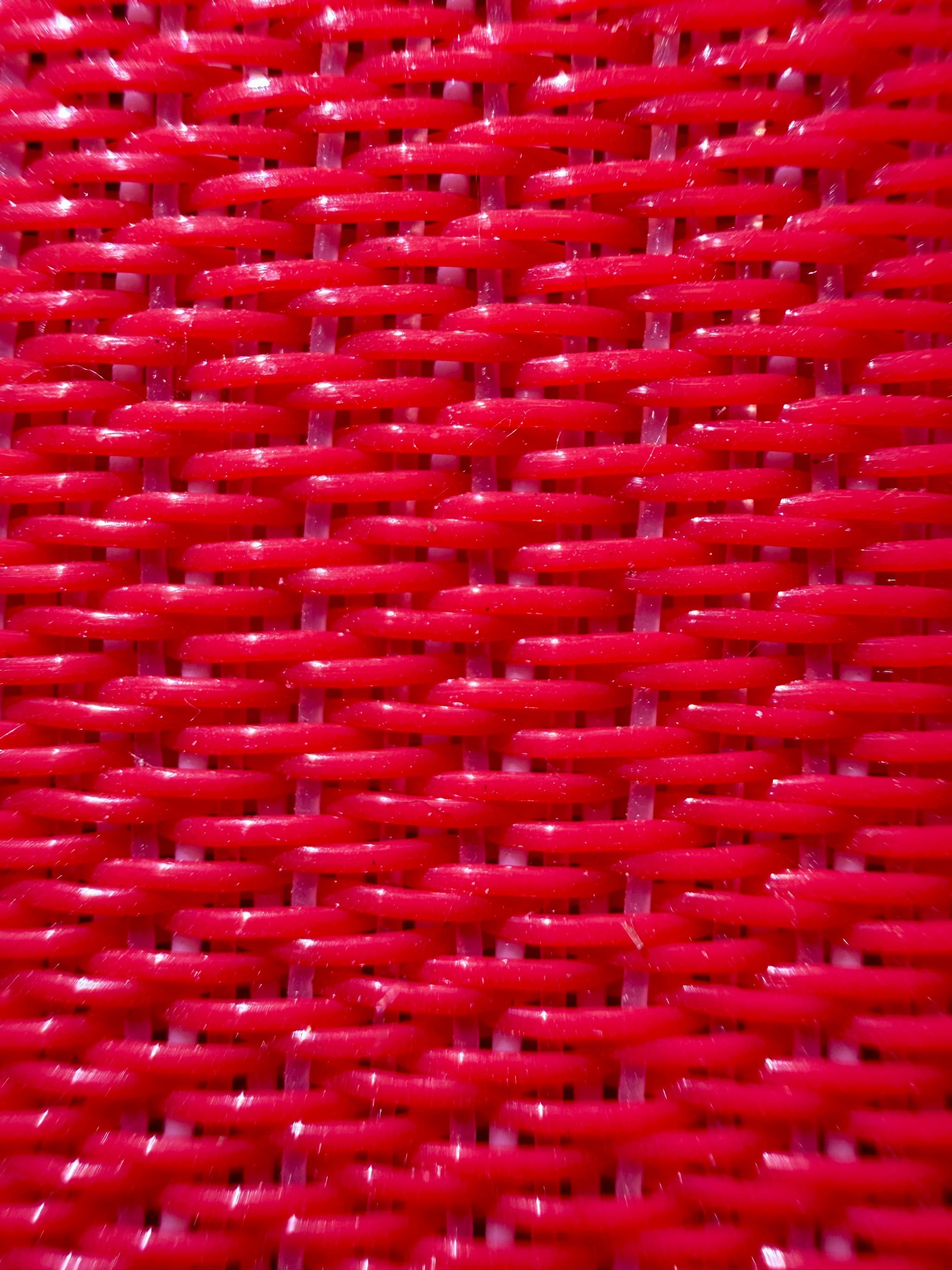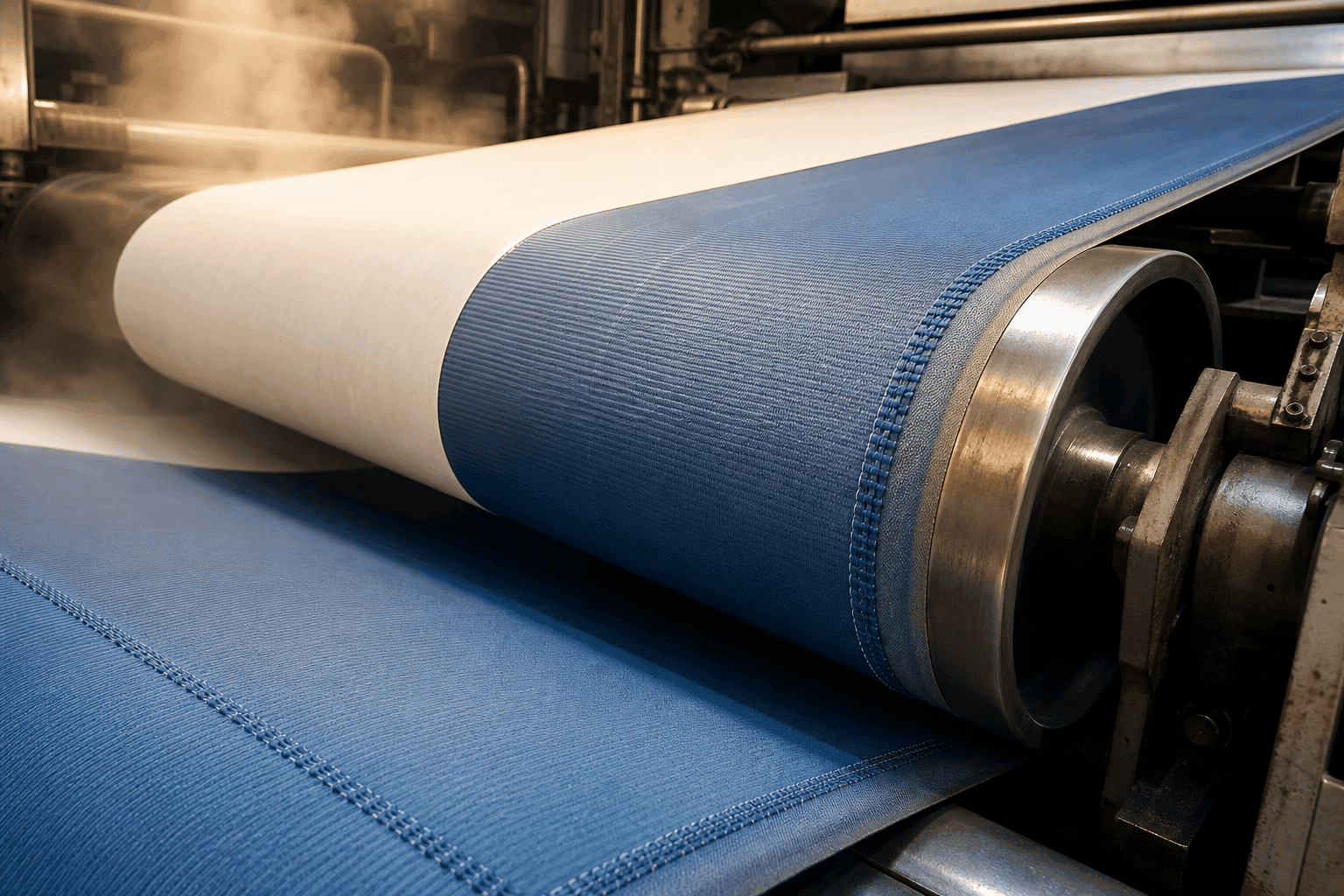
A rising moisture profile or unstable sheet does not, by itself, prove that a dryer fabric is plugged. Deposits can sit on the surface, between yarn crossings or inside the fabric structure, but upstream sheet conditions, ventilation, cleaning equipment, rolls, steam and condensate conditions can create similar symptoms. This guide gives a mill team a repeatable way to document the problem before changing a cleaning setting or ordering a replacement fabric. It is most useful when a named dryer position shows visible deposits, a suspected cross-machine permeability change or contamination that returns after cleaning.
It is a diagnostic worksheet, not a universal cleaning recipe. The mill's approved safety procedure and the fabric, machine and cleaner suppliers govern cleaning method, chemical compatibility, pressure, temperature and nozzle position. PAPTEX has not tested a universal setting or a guaranteed drying or energy gain for your machine.
First locate the symptom
Record the machine, grade, dryer group, exact fabric position, fabric age and the time the symptom first appeared. Mark the cross-machine location: drive side, centre, tending side or a repeated band. Photograph the same marked fabric areas, both sheet and roll sides where access is approved. Note whether the deposit is a continuous film, isolated spots, edge build-up or a repeating mark. If a change in recycled furnish, additives, grade or cleaning-system operation preceded the symptom, record its date rather than assuming it is the cause.
Use this screening table before treating every moisture or runnability complaint as a fabric-cleaning job.
| Observation | Fabric evidence to collect | Another cause to check at the same time |
|---|---|---|
| Visible deposit and lower measured permeability at the same cross-machine band | Repeat surface photos and a width-wise permeability profile with method, pressure, units and test points recorded | Cleaner coverage, blocked nozzles, extraction/waste-water removal and upstream contaminant source |
| Moisture streak but no matching deposit or permeability change | Confirm the fabric location and repeat the measurement rather than inferring a blockage | Basis-weight and incoming moisture profile, moisture-scanner calibration, hood/pocket ventilation, roll condition, steam and condensate system |
| Deposit returns quickly after an approved cleaning | Compare photos and profile at the same positions before and after cleaning | Furnish, additives, stickies, cleaner condition and contaminant transport |
| Edge damage, seam distress or tracking trouble | Photograph the edge and seam and record where contact occurs | Guide, roll, tension and alignment; cleaning cannot repair mechanical damage |
This matrix narrows an investigation; it is not a remote diagnosis. A photograph alone cannot identify the contaminant chemistry. Label uncertain material as “unknown” until the mill or a qualified lab identifies it. Valmet's cross-machine moisture checklist explains why dryer clothing, incoming sheet profile, ventilation, condensate and measurement systems should be considered together.
Trace the deposit and check the cleaner
Inspect a sample of the affected area under the mill's approved access procedure. Record whether the contamination is on the sheet side, the roll side or within the structure; whether the pattern matches a cleaner traverse, nozzle lane, roll or sheet-edge position; and whether a nearby roll carries the same deposit. A Heimbach fabric study found that deposits in its inspected positions could occur on different fabric areas and that cleaning effectiveness depended on fabric design and cleaner configuration. These observations are reasons to inspect your position, not predictions for a PAPTEX fabric.
Before repeating a cleaning cycle, ask the mill's maintenance team to confirm the cleaner type and its approved configuration: nozzle condition and cross-machine coverage; traverse or oscillation function where fitted; extraction and disposal of removed contamination; and whether overspray or deposits are reaching the sheet, rolls or fabric's opposite side. An AstenJohnson technical note describes chemical, shower and mechanical cleaning as different system families and warns that setup and fabric compatibility matter. It does not establish a safe setting for this machine or authorize changing one.
If deposits appear after a grade or furnish change, investigate the upstream source with the mill's process team. A dryer-fabric cleaning change alone may remove visible material temporarily without removing what produces it. Record the suspected source as a hypothesis until sample or process evidence supports it.
Make the before/after comparison valid
- Fix the reference points. Use the same fabric position and labelled cross-machine points for both rounds. Keep photos at the same distance and orientation where practical.
- Record the test method. For permeability, capture the instrument, test pressure or differential pressure, unit, sampling area and fabric condition. Do not compare CFM or m³/m²h from unlike methods, and do not use a new-fabric data-sheet value as the in-service baseline.
- Record operating conditions. Note grade, basis weight, speed, steam and condensate state, hood/ventilation conditions and cleaner status if available. Mark unknowns explicitly.
- Use only an approved intervention. The mill and relevant equipment/fabric suppliers decide whether and how to clean. Record the actual method and settings from the approved job sheet, including chemical identity and rinse confirmation when applicable; this article supplies no operating settings.
- Repeat, then decide. Measure at the same points after the fabric and process return to a comparable condition. A cleaner surface with no measured improvement, or a rapid return of deposits, calls for more investigation. One before/after result does not establish a service-life or energy saving.
A recent data point, with limits. A 2026 symposium technical paper compared clean references and used dryer-fabric samples from three different paper machines. In its Table 2, the used fabric B sample (16 months in service) had 41.5% lower permeability than its clean reference; the used fabric C sample (12 months) was 32.1% lower than its clean reference. These are clean-reference-versus-used comparisons, not measurements before and after cleaning on the same fabric. The paper does not document enough permeability-test detail to compare its absolute values with another mill, and one coauthor represents a cleaner supplier. These figures are neither PAPTEX results nor universal cleaning or replacement thresholds; your own position needs measurements with a recorded method and operating context.
The PAPTEX permeability guide explains why test conditions matter. For general checks of edges, seams and tension, use the existing condition-based maintenance guide. This page focuses specifically on deposits and comparable cleaning evidence.
Copy this field log for one dryer position
Use one row per observation time and marked test point; repeat rows before and after an approved intervention. Attach the referenced photos and instrument readings to the mill's own maintenance record.
| Field | Before cleaning | After cleaning / follow-up |
|---|---|---|
| Date, machine, grade and fabric position | ___ | ___ |
| Fabric ID, installation date and hours in service | ___ | ___ |
| Marked cross-machine point and side of fabric | ___ | Same point: ___ |
| Deposit appearance, photo ID and suspected source (or unknown) | ___ | ___ |
| Permeability value, unit, test pressure, instrument and method | ___ | Same method: ___ |
| Grade, speed, ventilation and steam/condensate condition | ___ | Comparable / changed: ___ |
| Cleaner type/status, nozzle/traverse/extraction check and approved job-sheet reference | ___ | Actual intervention, rinse and deviation: ___ |
| Moisture/runnability observation and measurement method | ___ | ___ |
| Open question, owner and next check date | ___ | ___ |
If no permeability instrument is available, record the visible evidence and operating conditions; do not invent a CFM estimate. If the process conditions changed, label the two observations not directly comparable.
When to review replacement rather than repeat cleaning
Escalate for a position-specific fabric review if an approved cleaning leaves persistent measured plugging, deposits recur despite correction of the upstream cause, or there is independent seam, edge or structural damage. Send the completed log, photos, existing fabric specification, size and seam details. The dryer-fabric selection guide covers construction choices; the dryer-fabric product range shows candidate families. Neither proves a candidate will solve the recorded problem without a position-specific review.
Request a dryer-position technical review and include the log and any unknown fields. We can discuss what additional evidence is needed before proposing a specification.
Technical sources and limits: Voith's fabric-cleaning overview describes contamination at fabric surfaces, yarn crossings and structural voids; Valmet's dryer-fabric paper discusses contamination and permeability in the dryer section. Their product outcomes are not PAPTEX test results. The diagnostic log above is a PAPTEX editorial tool for recording a mill's own observations, not a validated cleaning protocol or a PAPTEX mill case.