Understanding Fabric Air Permeability and Its Impact on Paper Quality
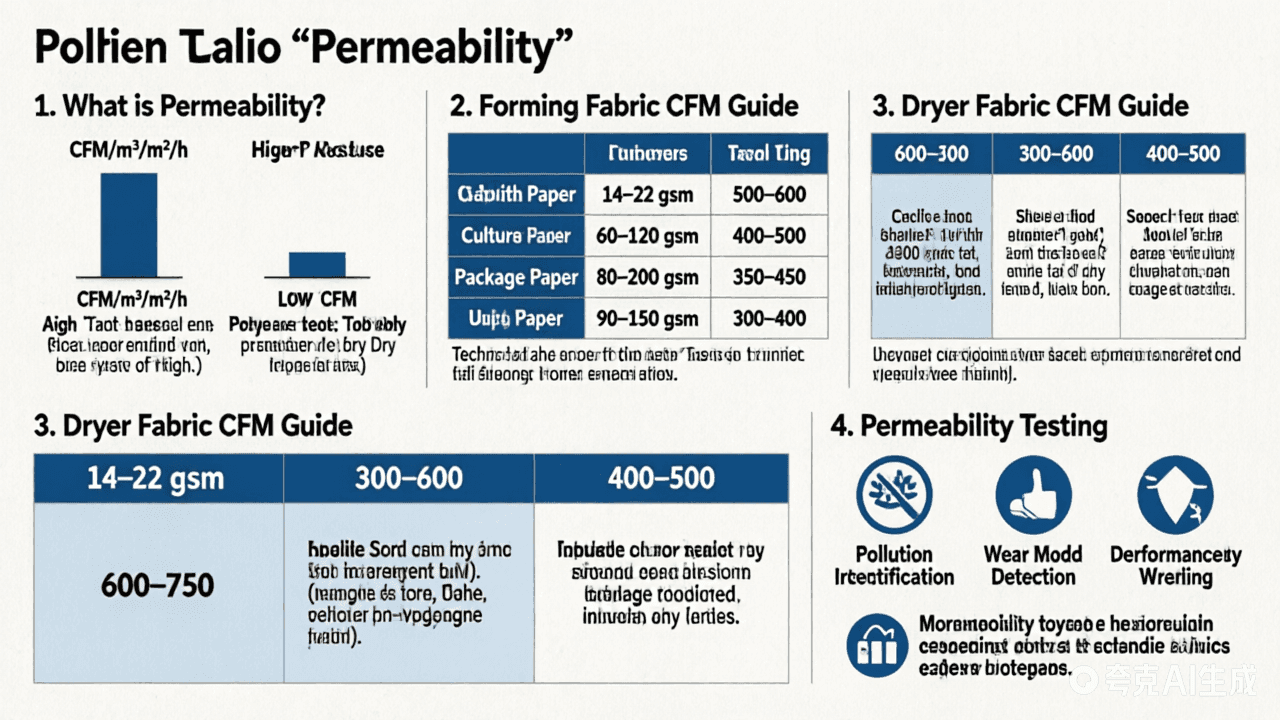
What an air-permeability figure tells you
Air permeability describes the volume of air passing through a specified fabric area under a stated pressure difference. A datasheet may report it in m³/m²h and CFM. Before comparing numbers from different sheets or suppliers, ask for the test method, pressure difference and units. A number without those conditions is a limited reference, not a prediction of drainage, drying rate or paper quality.
Air permeability is one part of a paper machine clothing (PMC) specification. Forming fabrics and dryer fabrics work in different machine sections, so their figures must be interpreted with different operating information.
Three examples from PAPTEX model sheets
| Fabric and machine section | Air permeability recorded in its model sheet | What the figure does not establish |
|---|---|---|
| 3CSSB603520 forming fabric | 4,900 m³/m²h (310 CFM) | A guaranteed drainage or sheet-quality result |
| 3CSSB603020 forming fabric | 4,800 m³/m²h (303 CFM) | That this model will run better or worse than 3CSSB603520 on your machine |
| BGW22608 dryer fabric | 4,740 m³/m²h (300 CFM) | A valid performance comparison with either forming fabric |
These values are transcribed exactly as paired in the PAPTEX technical parameter sheets for the named models; the CFM figures are not independently converted from the m³/m²h figures here. The sheets do not specify the air-permeability test pressure, method or CFM area convention. Confirm those conditions and the unit relationship with the supplier before comparing results across suppliers or treating small numeric differences as meaningful. The forming and dryer examples are not substitutes for one another.
Reading a forming-fabric value
For a forming position, review the permeability figure alongside the fabric construction, yarn arrangement, paper-side support, caliper and available drainage information. The 3CSSB603520 and 3CSSB603020 sheets also list different weft densities, calipers, Fiber Support Index (FSI) and Dewatering Index (DI) values. Those are separate recorded properties; one air-flow number cannot replace a position-specific review of the whole fabric.
Record the paper grade and basis-weight range, furnish, former type, machine speed, fabric position and dimensions. Include current drainage, retention, marking, guiding or wear observations, with the operating conditions and units of any measurements. See the forming-fabric range and the FSI/DI datasheet guide for related selection information.
Reading a dryer-fabric value
For a dryer position, the same reported unit does not make a forming-fabric figure a suitable benchmark. Review the dryer group and run path, pocket ventilation, seam, contamination, cleaning practice and temperature or humidity observations alongside the proposed fabric specification. BGW22608's sheet gives a model-specific air-permeability value; it does not promise a drying-rate or energy result.
If you are comparing dryer-fabric constructions, start with the dryer-fabric range and the round-yarn versus flat-yarn guide. Confirm the exact machine position and joining requirement before deciding whether a candidate is relevant.
A useful supplier-comparison request
Ask each supplier to state the fabric model and construction; reported air-permeability value and units; test method, pressure difference and sample condition; and the other properties needed for the intended machine position. Keep missing conditions marked as unknown. Do not convert a generic CFM table into a recommended setting for all tissue, packaging or kraft machines.
You can use the paper-machine parameter form to collect your machine conditions, then send them for a technical review. The final specification must be checked against the actual position and operating data.
Source note: Model values above come from the owner-provided PAPTEX technical parameter sheets for 3CSSB603520, 3CSSB603020 and BGW22608. The sheets do not state a common test pressure, method or CFM area convention. No cross-model performance or lifetime claim is inferred from them.
Related Articles
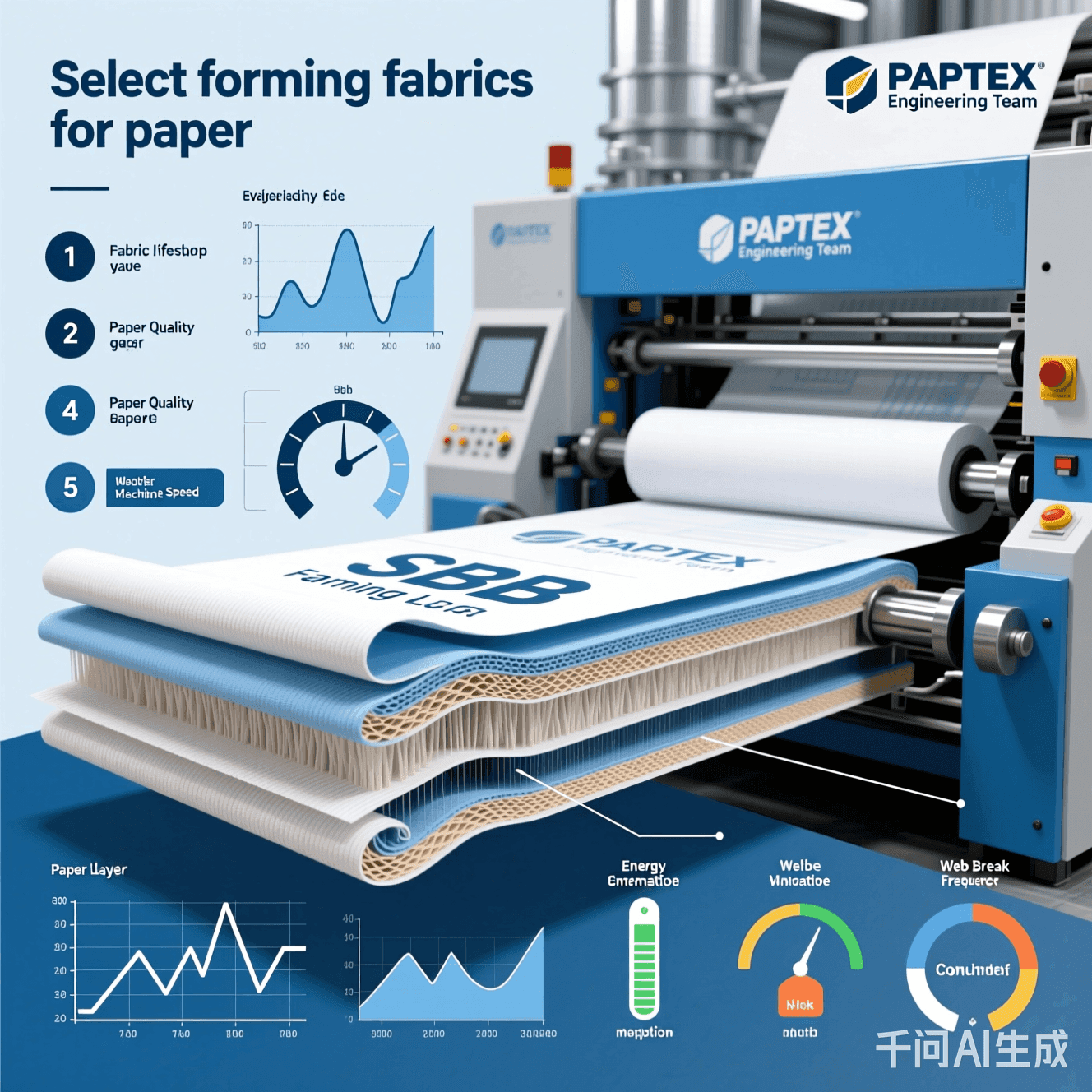
How to Choose the Right Forming Fabric
Choose a forming fabric using paper grade, furnish, former configuration, drainage, sheet-quality targets, machine data and current-fabric observations.
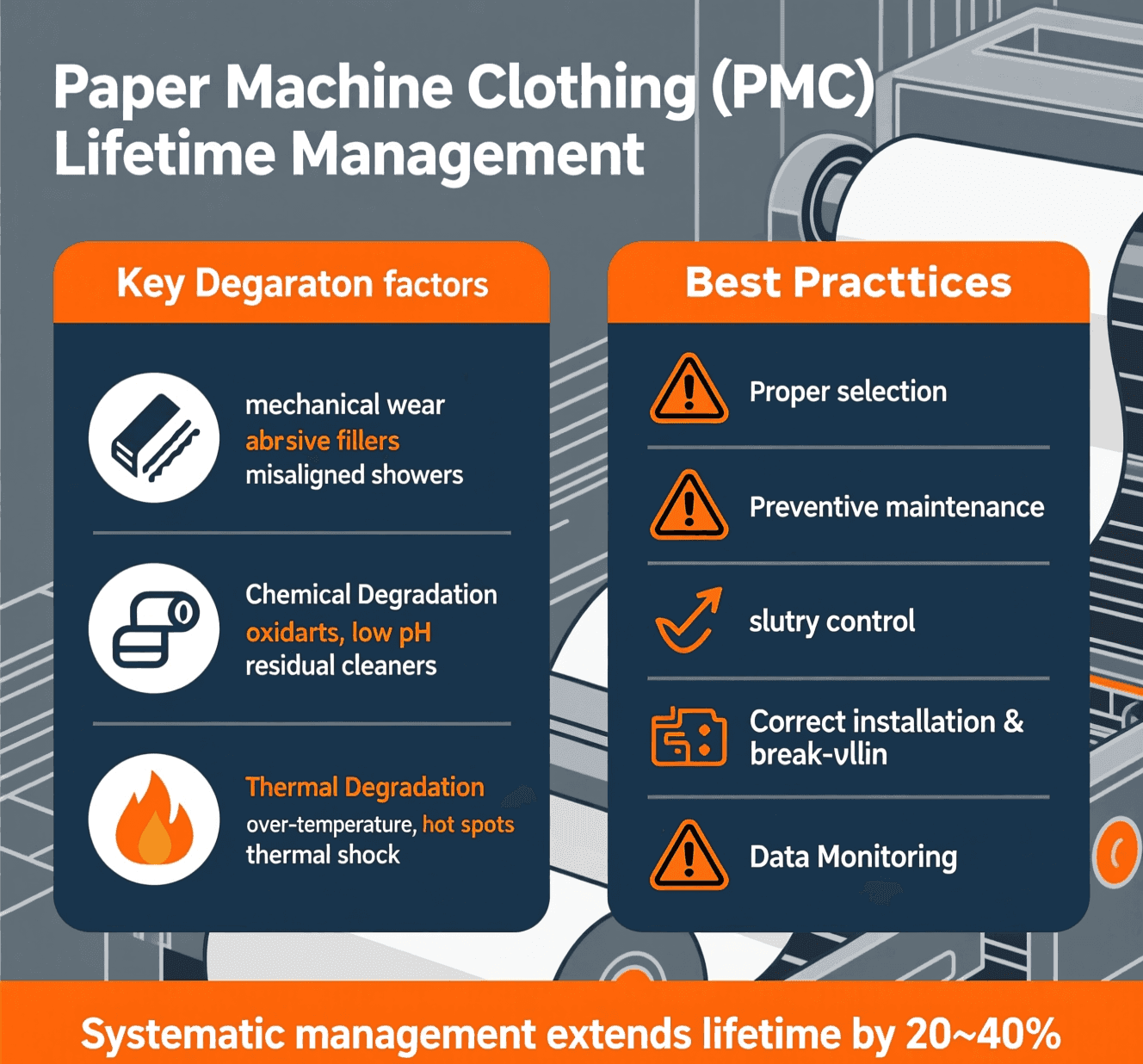
How to Extend Paper Machine Clothing Service Life
Understand the key factors affecting fabric life and discover practical tips for extending replacement intervals.
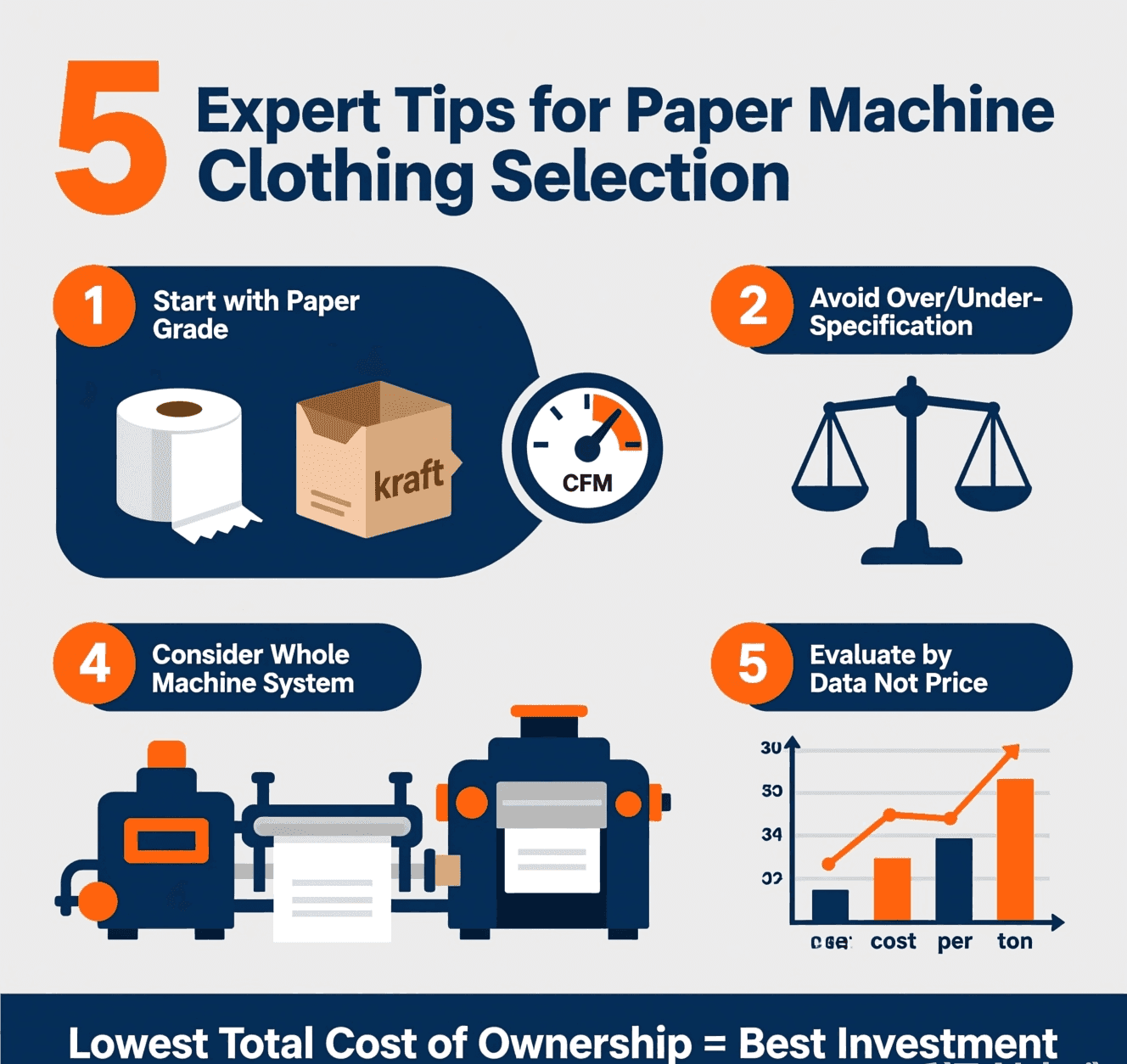
Top 5 Tips for Paper Mill Managers Selecting PMC Fabrics
Five practical checks for selecting paper machine clothing from machine position, furnish, operating data, baseline performance and measured total cost.