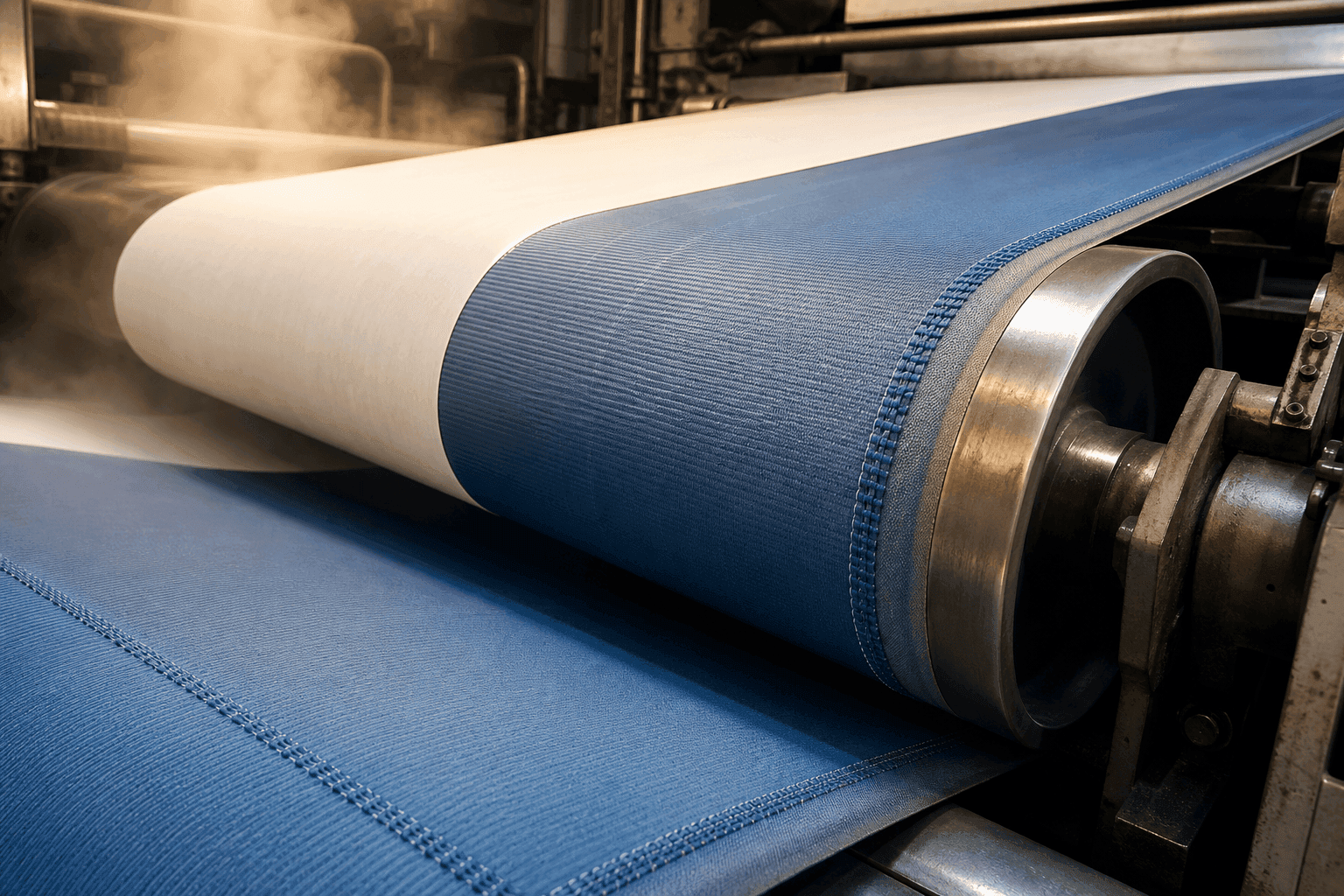
Flat yarn and spiral fabrics solve different constraints
Neither construction is universally better. The correct dryer fabric depends on the dryer group, sheet support requirement, permeability window, seam access, contamination, hydrolysis risk and the machine's threading path.
Practical comparison
| Decision factor | Flat-yarn construction | Spiral construction |
|---|---|---|
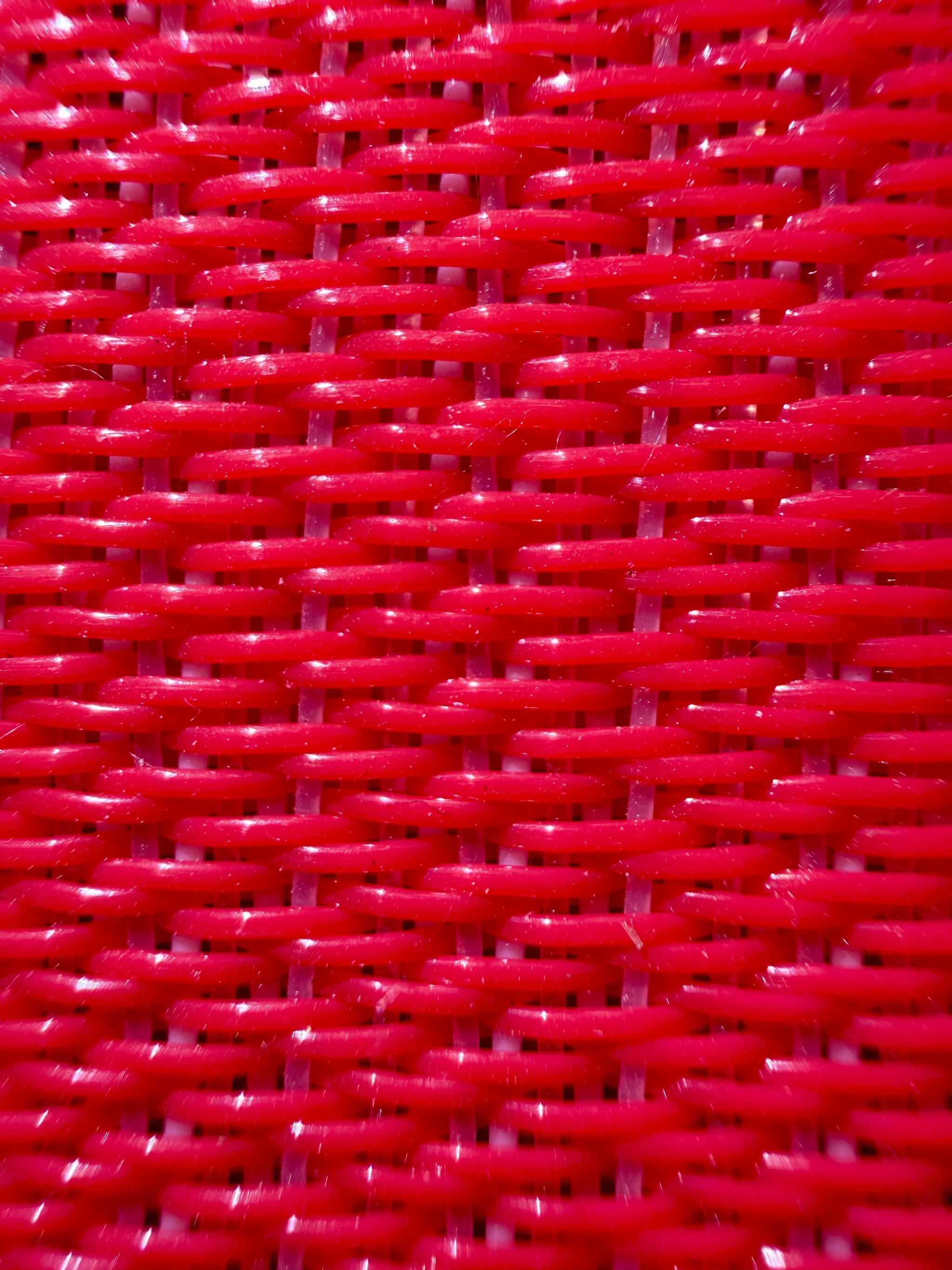
| Sheet contact | Flat machine-direction yarns can provide a broad support surface | Open spiral geometry provides a different balance of support and ventilation |
| Permeability | Available in position-specific design windows | Can be configured across different openness levels |
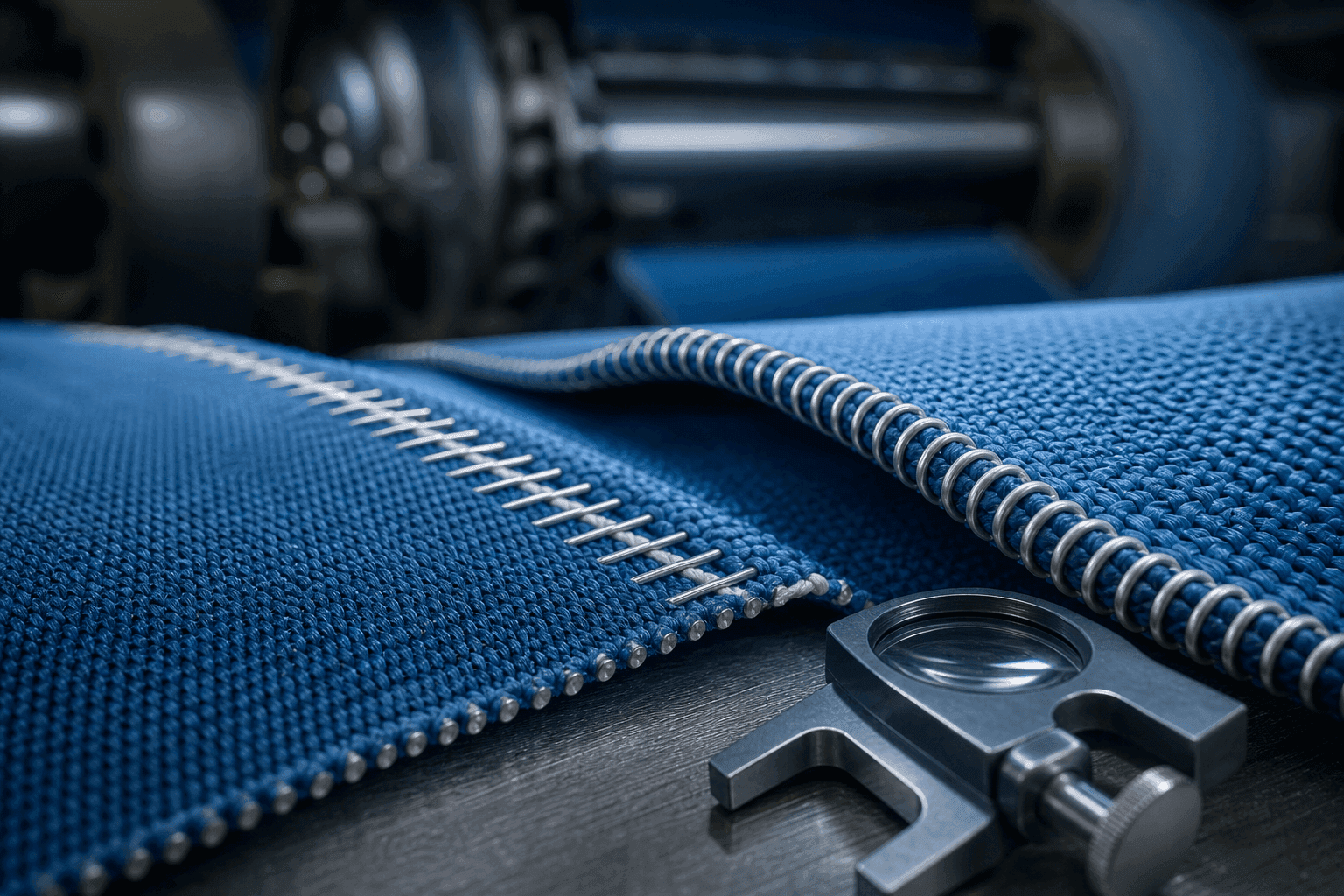
| Seam and threading | Pin-seam profile and installation space must be checked | Spiral joining can simplify handling on some fabric runs |
| Contamination | Yarn shape and surface should match the deposit and cleaning method | Open geometry may help release some deposits, depending on the furnish |
| Heat and hydrolysis | Stabilized yarn options can be evaluated for hot, humid groups | Material and seam rating still need confirmation for the position |
Quick decision questions
Ask which dryer group needs the fabric, how the sheet is supported through the run, what permeability test and current value are used, how much seam access exists, and whether contamination, hydrolysis, guiding or seam wear caused the last removal. A preference based only on fabric name or purchase price is not enough.
Do not select from a generic life table
Service life changes with temperature, contamination, tension, alignment, seam travel, cleaning and shutdown practice. Compare days and tons produced only when grade mix and operating conditions are equivalent.
Compare cost from measured operation
Use purchase price, tons produced, installation time, cleaning, planned and unplanned downtime, sheet quality and energy per ton. A higher purchase price does not prove a higher operating cost, and a lower price does not prove better value.
Information needed for selection
Provide the dryer group and run diagram, paper grade, basis weight, width, speed, inlet/outlet moisture, steam and pocket conditions, current permeability and structure, seam, service history, contamination and failure photos.
Request a position-specific recommendation or review the dryer fabric selection guide.