A dryer fabric that fails early does not automatically need a different polymer or a fabric labelled “hydrolysis-resistant.” Abrasion, edge contact, a damaged seam, contamination and cleaning conditions can produce different replacement requirements. Start with the position and the failed fabric, then ask the supplier to show what the proposed construction actually documents.
This guide is for a mill preparing a dryer-fabric replacement review. It uses PAPTEX BGW22608 as a documented specification example, not as proof that it will last longer or perform better on a particular machine.
When should hydrolysis resistance enter the discussion?
Review it when the same dryer position repeatedly shows a loss of yarn or seam strength, brittleness, or premature breakage in a hot, humid operating environment. Record whether the damage is spread across the fabric or concentrated at an edge, roll, seam or cleaning point. A localized wear track calls for a different investigation from a broad loss of strength.
The operating environment matters. An industry dryer-fabric technical paper discusses hydrolysis-prone positions and the effect of residual cleaning chemicals on fabric polymers. It describes another supplier's products and practices; it is not a test report for PAPTEX BGW22608.
| What the mill observes | Check before attributing it to hydrolysis |
|---|---|
| Brittle yarns or repeated breaks over a broad area | Record dryer group, hood conditions, service history and cleaning chemistry. Preserve a failed sample for material evaluation. |
| Fraying or breaks near one edge | Check guides, rolls, edge contact, tension and alignment before changing yarn specification. |
| A seam fails while the body remains sound | Record seam design, installation, joining wire, damage location and seam-specific strength evidence. Body breaking strength is not seam strength. |
| Airflow falls and deposits appear | Record contaminant, cleaning method and measured permeability profile; plugged fabric is not evidence of polymer hydrolysis by itself. |
These are screening questions, not a remote diagnosis. A mill engineer and supplier need the actual failed fabric and operating record to determine a cause.
What does the BGW22608 sheet document?
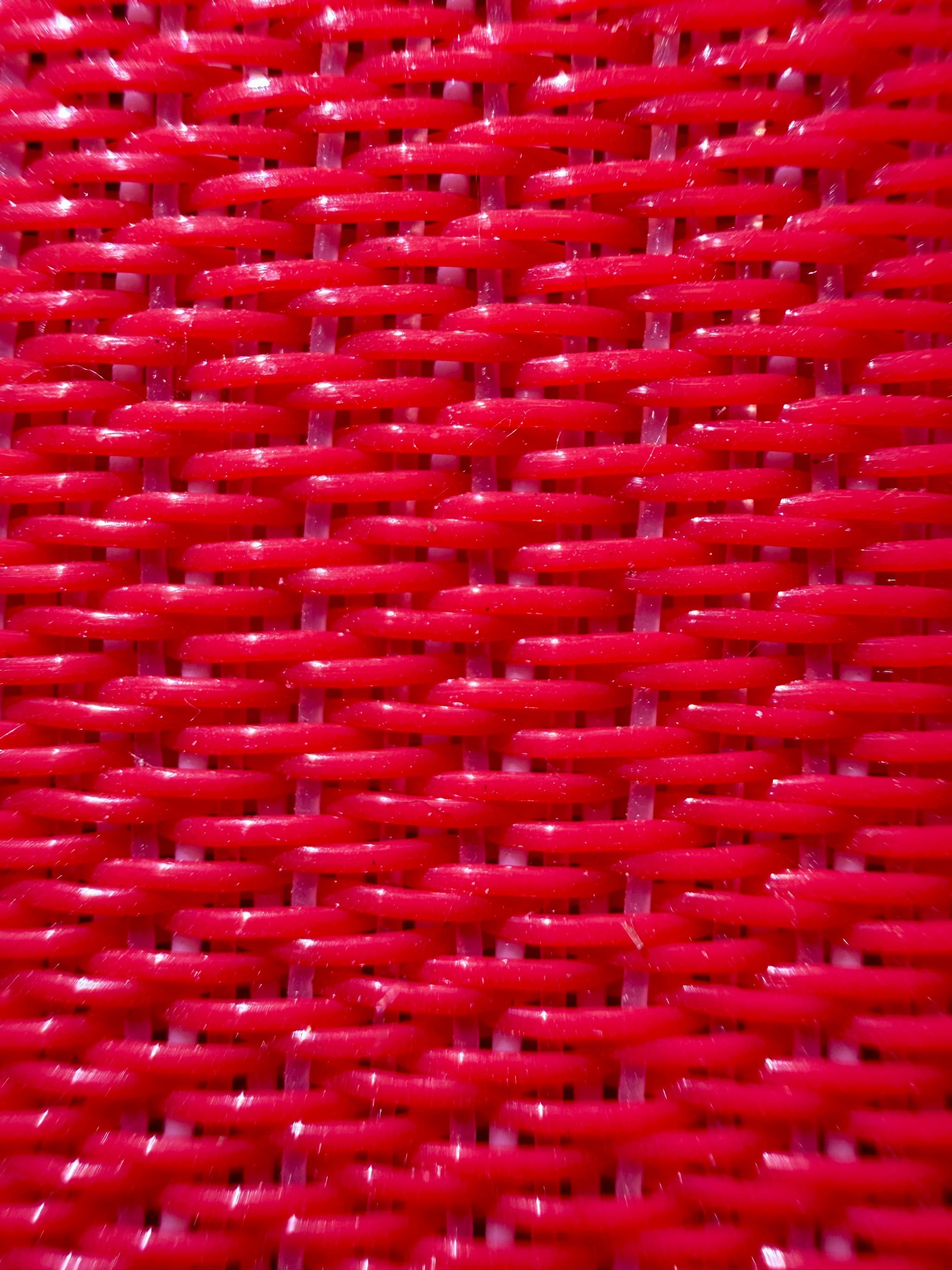
The owner-supplied High Hydrolysis-Resistant Flat Yarn Dryer Fabric sheet names BGW22608 and describes a flat-yarn warp with round monofilament weft. The specification below is transcribed from that model sheet.
| Recorded field | BGW22608 sheet |
|---|---|
| Construction | 8-shaft, 1.5-layer |
| Warp density | 22.0–22.6 ends/cm |
| Weft density | 13.5–14.5 picks/cm |
| Warp yarn | 0.60 × 0.40 mm PET flat yarn |
| Weft yarn | 0.60 / 0.50 mm PET round yarn |
| Air permeability | 4,740 m³/m²h (300 CFM), as printed |
| Caliper | 1.60 mm |
| Fabric breaking tenacity | ≥2,000 N/cm |
The sheet calls the fabric hydrolysis-resistant, but it does not give the resin or stabilizer formulation, an exposure-test method, retained-strength results after exposure, a comparison with a standard fabric, or a measured seam-strength value. The 300 CFM and breaking-tenacity figures describe the listed new-fabric specification; they do not establish in-service permeability or hydrolysis resistance. Ask for test conditions and current approved documentation before treating the label as a performance claim.
See the BGW22608 product record for the current listed model and the dryer-fabric range for other constructions. A model page is a starting point for review, not a drop-in replacement decision.
Five questions for the supplier
- What operating problem is the proposed fabric meant to address? Separate loss of yarn strength from contamination, edge wear, seam damage and sheet-handling problems.
- What exactly makes the construction “hydrolysis-resistant”? Request the relevant yarn or material specification and an explanation of the claimed difference from the current fabric. Do not assume PET, reinforced PET and PPS constructions are equivalent.
- What test supports the claim? Ask for the exposure conditions, duration, measured property, before/after values and comparison material. A trade name or general breaking-strength figure is insufficient.
- Will the rest of the specification fit the position? Confirm dimensions, air-permeability test conditions, fabric thickness, seam type, running tension and cleaning compatibility. Resistance to one failure mode cannot compensate for a mismatch elsewhere.
- How will a trial be judged? Agree in advance on the inspection points, baseline fabric condition, cleaning record, permeability checks and the decision date. Do not promise a service-life or energy outcome before a controlled comparison.
For the wider position-by-position choice of permeability, weave and seam, use the dryer-fabric selection guide. For a round-yarn versus flat-yarn construction comparison, use the separate model-sheet comparison. Neither comparison replaces evidence about the actual failure mechanism.
What to include in a replacement request
Send the machine and dryer-group identification; paper grade and basis-weight range; machine speed; fabric position, installed length and width; current fabric construction and seam; operating temperature and humidity if measured; steam and hood conditions if available; tension and guiding record; cleaning chemicals and rinse procedure; and the failure location, photos and retained sample. Give the current fabric's service and maintenance history without treating one run as a controlled benchmark.
State which facts are unknown. If the concern is hydrolysis, ask the supplier to identify the specific evidence supporting the proposed material for those conditions. If the concern is an edge, seam or deposit, investigate that cause before specifying a different polymer.
Request a dryer-fabric technical review with the machine position, current fabric and observed failure. PAPTEX can review the information and confirm what further measurements or documents are needed before proposing a specification.