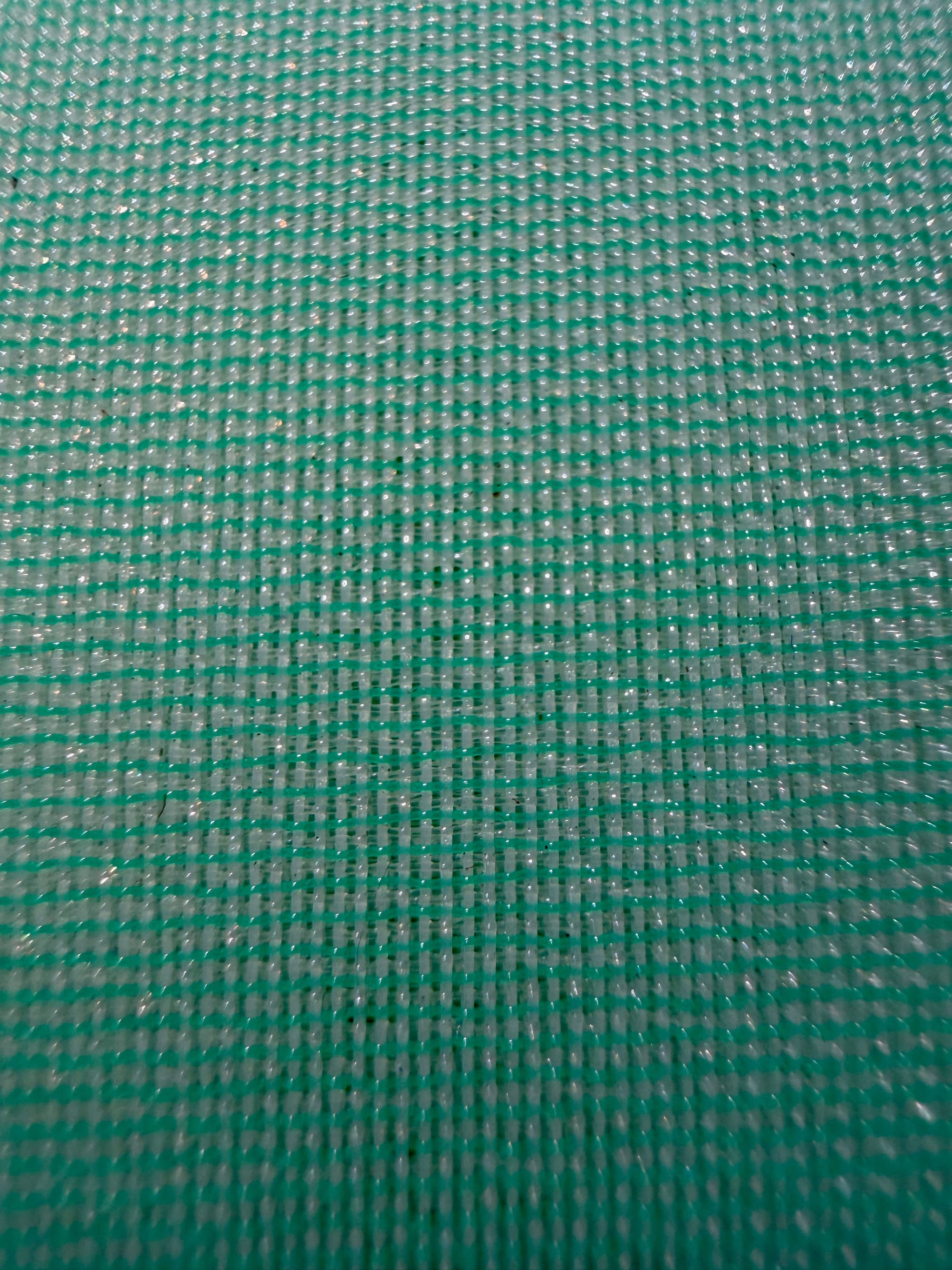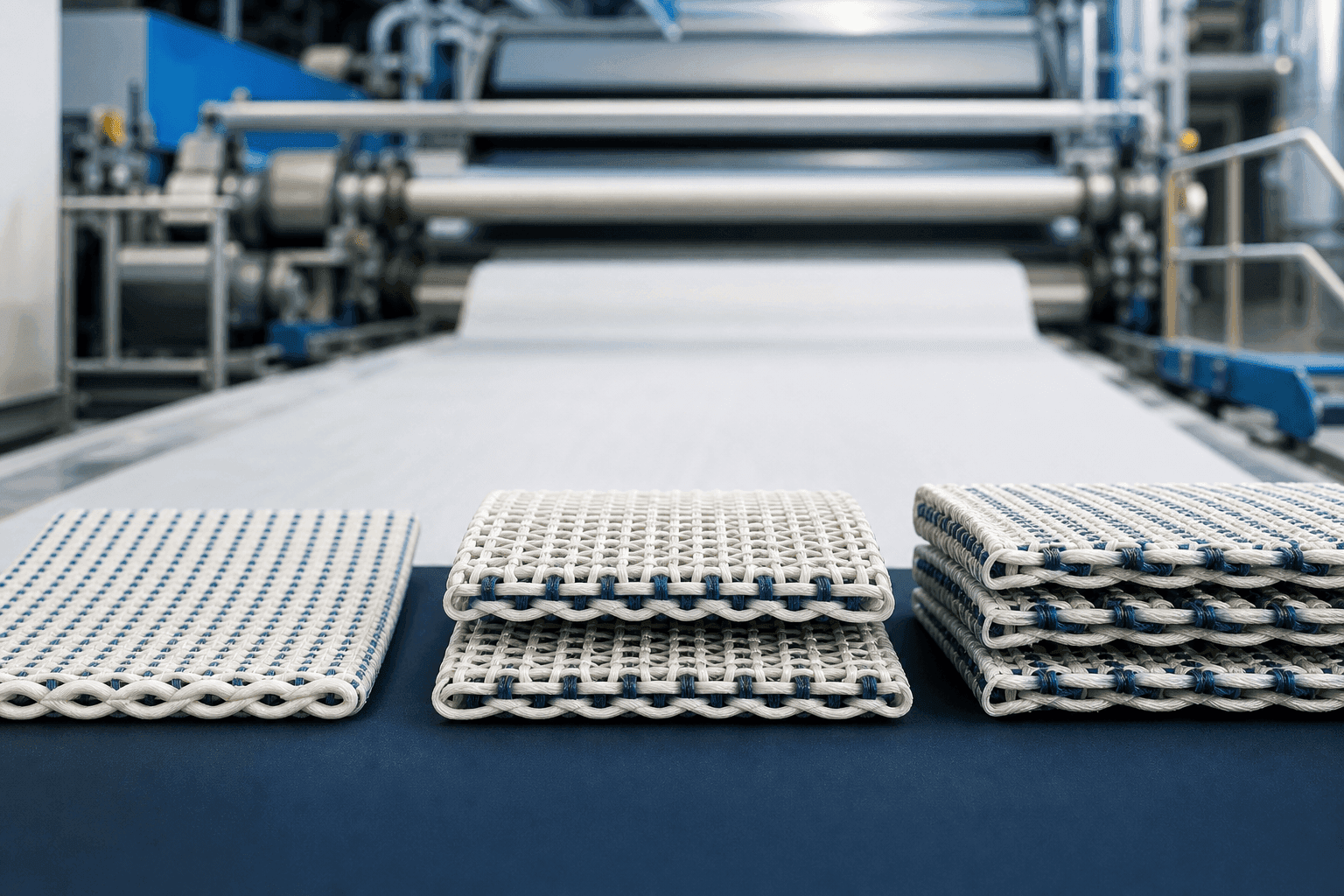
When a forming fabric appears plugged, a new fabric is not automatically the answer. A blocked nozzle, incomplete shower coverage, a change in furnish or retention chemistry, worn drainage elements and damage to the fabric can create overlapping symptoms. This worksheet helps a mill gather evidence before deciding whether to restore its cleaning system, investigate another forming-section cause or review a replacement fabric.
It does not prescribe shower pressure, chemicals or an operating procedure. Inspection and any intervention must follow the mill's safety rules and the machine, fabric and cleaning-equipment suppliers' instructions. This guide cites no PAPTEX mill trial, so the checks below cannot promise drainage recovery or longer fabric life on your machine.
Start with one position and one symptom
Record the machine and forming position, paper grade and basis-weight range, furnish, current fabric identity and installation date. Note when the change began and whether it followed a grade, furnish, retention-program, shower-maintenance or fabric change. Map the symptom across the machine width and mark repeatable locations on both the sheet side and running side, where safe access permits.
Do not treat a sheet mark or increased vacuum reading as proof of fabric plugging. Keep the sheet observation, fabric condition, shower condition and drainage-element condition separate until they agree. The forming-section guide explains why fabric, drainage and operation must be reviewed together.
Read the pattern before changing a cleaning setting
| Observed pattern | Check before blaming the fabric | Evidence that would change the next decision |
|---|---|---|
| Repeated machine-direction streaks at roughly nozzle spacing | Is a nozzle blocked, misdirected or worn? Is the oscillator moving through its full approved travel? | Map streak spacing against nozzle positions; record dated photos and the maintenance finding. |
| A broad drainage decline after a furnish or chemical change | Did fiber, filler, stickies or additives change? Is the same deposit present at yarn crossings or within the structure? | Keep the change log and a labelled sample or close photo; compare the same machine conditions over time. |
| A narrow low-drainage band with visible deposit | Does shower coverage reach that band? Are extraction and drainage elements working as designed? | Repeat the same-point fabric and sheet observations after the system fault is corrected under an approved procedure. |
| Edge fraying, seam distress or local abrasion | Is there roll, guide, foil or other mechanical contact? | Photograph both sides and identify the contact point; cleaning cannot repair broken yarn or edge damage. |
| Appearance improves after cleaning but drainage does not | Were measurements taken at the same point, method and operating condition? Could vacuum or stock changes explain the result? | Repeat comparable readings and inspect for remaining internal blockage or structural damage. |
AstenJohnson's forming-fabric cleaning technical note describes the importance of clear nozzles, uniform coverage and working oscillators. It notes that streaks can indicate coverage faults and that aggressive jets can damage some fabric designs. These are inspection leads, not PAPTEX-approved pressure settings. Voith's CleanLine overview shows that cleaner design also affects the result; its product claims are Voith's, not evidence for PAPTEX fabrics.
Make a same-point comparison
Choose fixed cross-machine locations and record the fabric side, photo position and measurement method. If an air-permeability instrument is used, record its unit, test pressure or pressure differential, area and fabric condition. Do not compare a new-fabric data-sheet value with an in-service value as though they were measured under identical conditions. If the mill has no compatible instrument, write “not measured” instead of estimating CFM.
Before and after an approved cleaning or maintenance action, record the same grade, basis weight, speed, furnish, vacuum arrangement and other relevant conditions, or mark what changed. The mill and its suppliers decide whether cleaning is appropriate and set any pressure, nozzle, chemical and interlock requirements. The PAPTEX maintenance checklist provides wider routine checks; this worksheet focuses on the forming fabric's shower coverage and replacement decision.
| Field for one marked point | Before approved action | After / follow-up |
|---|---|---|
| Date, machine, forming position and fabric ID | ___ | ___ |
| Grade, basis weight, furnish and speed | ___ | Comparable / changed: ___ |
| Cross-machine point and sheet/running side | ___ | Same point: ___ |
| Sheet symptom and photo reference | ___ | ___ |
| Fabric deposit, damage and photo reference | ___ | ___ |
| Shower/nozzle/oscillator finding and maintenance record | ___ | ___ |
| Drainage/vacuum observation and measurement method | ___ | ___ |
| Permeability reading, unit, pressure, area and instrument, or “not measured” | ___ | Same method: ___ |
| Action approved by, job-sheet reference and actual work | Planned: ___ | Completed: ___ |
| Result, unresolved cause, owner and next review date | ___ | ___ |
One improved reading does not prove the cleaner caused the change if the furnish, operating state or test method also changed. A dirty-looking surface alone does not establish that the fabric is beyond recovery.
When is a replacement-fabric review justified?
First correct confirmed shower or machine faults and assess the result under comparable conditions. A position-specific fabric review becomes more useful when blockage persists despite approved cleaning and source control, when deposits quickly return for a documented reason, or when yarn, seam or edge damage remains. The useful question is which requirement the current fabric no longer meets, not simply how many days it has run.
For that review, send the position, paper grade, former arrangement, fabric construction or current specification, width and length, operating speed, cleaning-system details, dated photos and the same-point record above. The forming-fabric range shows available construction families; the forming-fabric RFQ checklist lists the additional data needed before a recommendation.
Discuss a forming-fabric position with PAPTEX. Include unknown fields instead of inventing measurements.
Source and evidence boundary: This article combines PAPTEX's original decision and recording worksheet with the cited AstenJohnson and Voith technical material. Supplier examples explain possible mechanisms and inspection questions; they are not independent tests of PAPTEX products or proof of a universal cleaning result. No mill-specific performance claim is made.