How to Select the Right Forming Fabric for Your Paper Machine
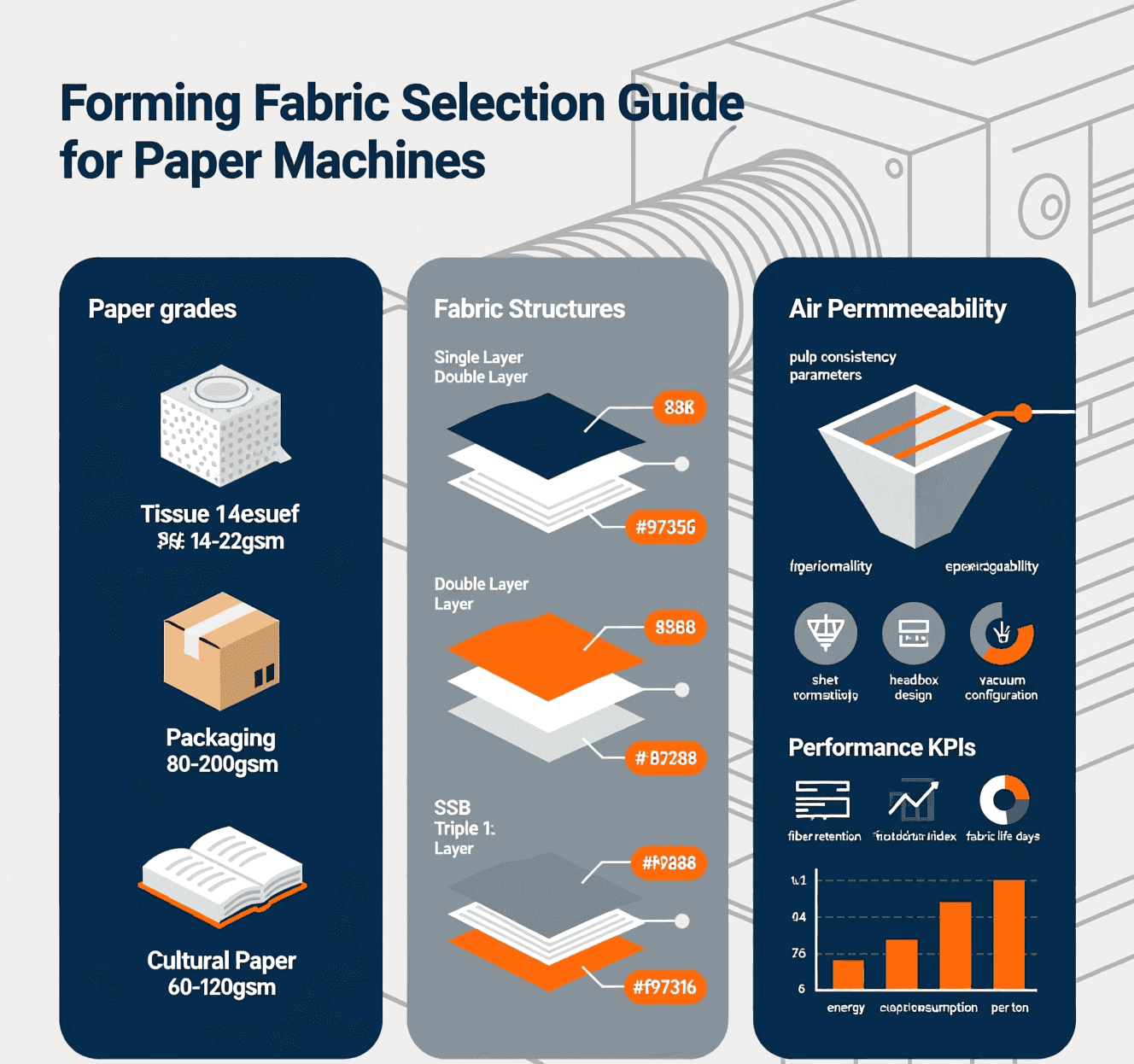
Start with the paper machine, not a fabric name
A forming fabric should be selected for one machine position and operating objective. Paper grade alone is not enough: furnish, basis weight, width, speed, headbox, vacuum arrangement, retention program, cleaning and the current fabric all affect the result.
Record the operating baseline
Before comparing constructions, collect:
- Paper grade, basis-weight range, furnish and recycled-fiber content
- Machine width, normal and target speed, headbox and forming-section layout
- Current fabric construction, permeability test method, thickness, seam and running direction
- Vacuum by element, drainage profile, retention, formation, two-sidedness and marking observations
- Tension, guiding, shower condition, contamination, edge wear and removal reason
- Running days and acceptable tons produced under comparable grade conditions
Without this baseline, a change cannot be attributed reliably to the fabric.
Convert the objective into fabric properties
| Mill objective | Fabric properties to review | Operating checks |
|---|---|---|
| Improve fiber support or sheet surface | Paper-side yarn geometry, support index and weave stability | Furnish, retention chemistry, jet-to-wire condition and formation data |
| Adjust drainage | Tested permeability, caliper, void structure and drainage distribution | Headbox consistency, foils, table activity and vacuum capacity |
| Improve dimensional stability | Machine-direction strength, cross-direction stability and tension behavior | Width, speed, guiding, loading and installation practice |
| Reduce wear or edge damage | Wear-side yarns, edge construction and abrasion resistance | Stationary contact, edge showers, alignment and contamination |
Single-, double-, 2.5-layer, triple-layer and SSB constructions offer different balances. A more complex structure is not automatically the correct choice, and one permeability number cannot be transferred between test methods or paper machines.
Compare identified data sheets
PAPTEX source files contain model-specific examples for double-layer and SSB constructions. Those figures apply only to the named design and stated test method. Compare candidates on the same units and test conditions, then confirm finished width, length, joining, edge treatment and manufacturing tolerance in the quotation.
Validate with a controlled trial
Agree on the baseline, installation checks and success measures before the trial. Keep major process changes documented. Evaluate formation, retention, drainage or vacuum, sheet release, marking, cleaning, guiding, energy per acceptable ton and the final removal reason. Do not promise a fixed life or production improvement before equivalent operating data exists.
Send your machine and paper data for a position-specific recommendation, or compare the forming fabric structure families.
Prepare a supplier-ready RFQ
Before requesting a construction, use the forming-fabric RFQ checklist to organize the machine position, current fabric, dimensions and the facts behind the review.
Documented SSB parameter sheets
When a technical review requires model-specific recorded values, use these individual parameter sheets as reference. They do not replace confirmation against machine conditions and fabric dimensions:
- PAPTEX 3CSSB523520 triple-layer SSB forming fabric
- PAPTEX 3CSSB404520 triple-layer SSB forming fabric
- PAPTEX 3CSSB365020 triple-layer SSB forming fabric
Move from selection to a position review
Use the forming fabric product families to identify a suitable starting point for a technical discussion. A category page does not establish that every listed model fits a particular machine, paper grade or operating condition.
For a supplier review, send the recorded baseline and the forming-fabric RFQ checklist. Where a candidate has a documented parameter page, compare only the named model and stated test conditions. If the available information is incomplete, state the gaps clearly and contact PAPTEX for a position-specific review.
Related Articles
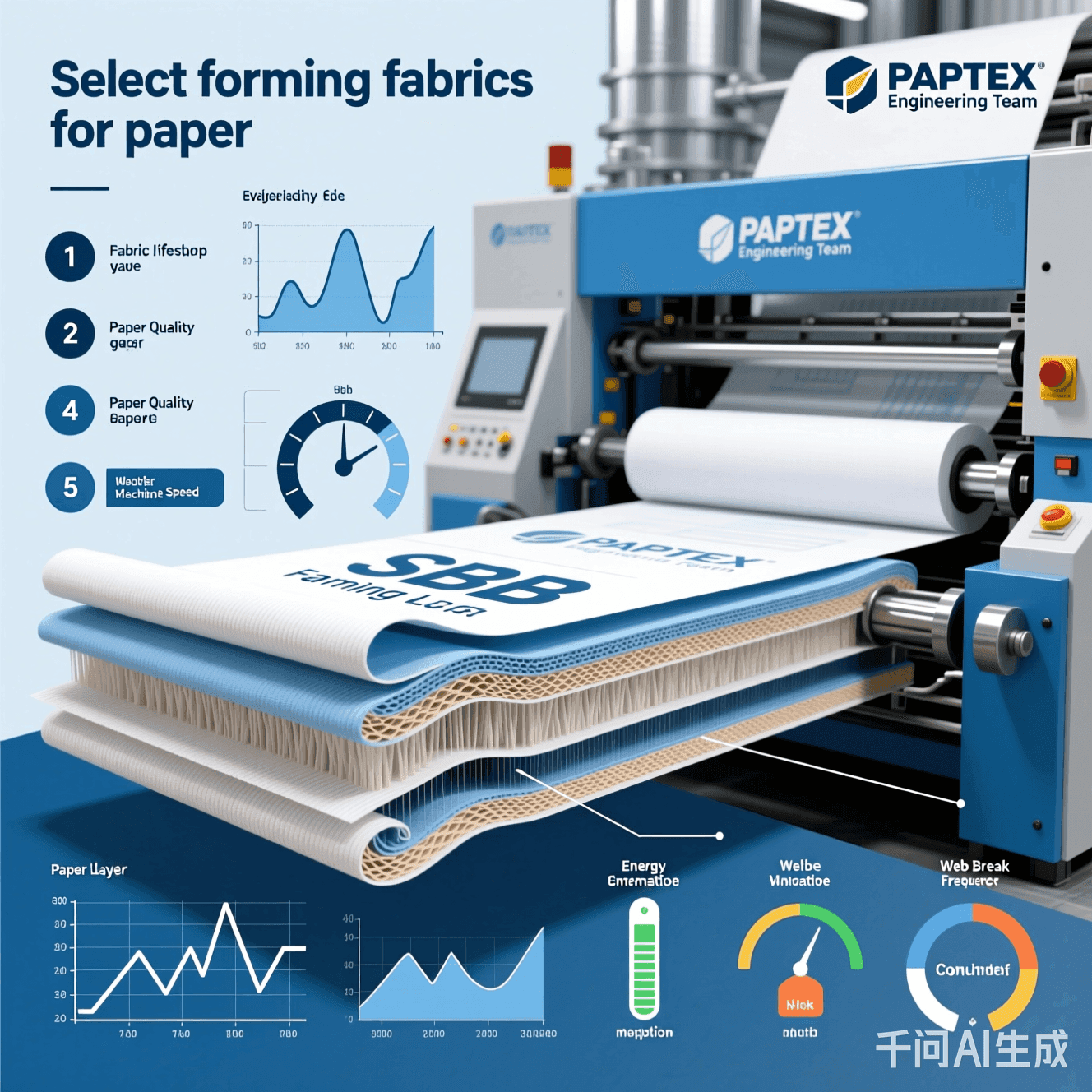
How to Choose the Right Forming Fabric
Choose a forming fabric using paper grade, furnish, former configuration, drainage, sheet-quality targets, machine data and current-fabric observations.
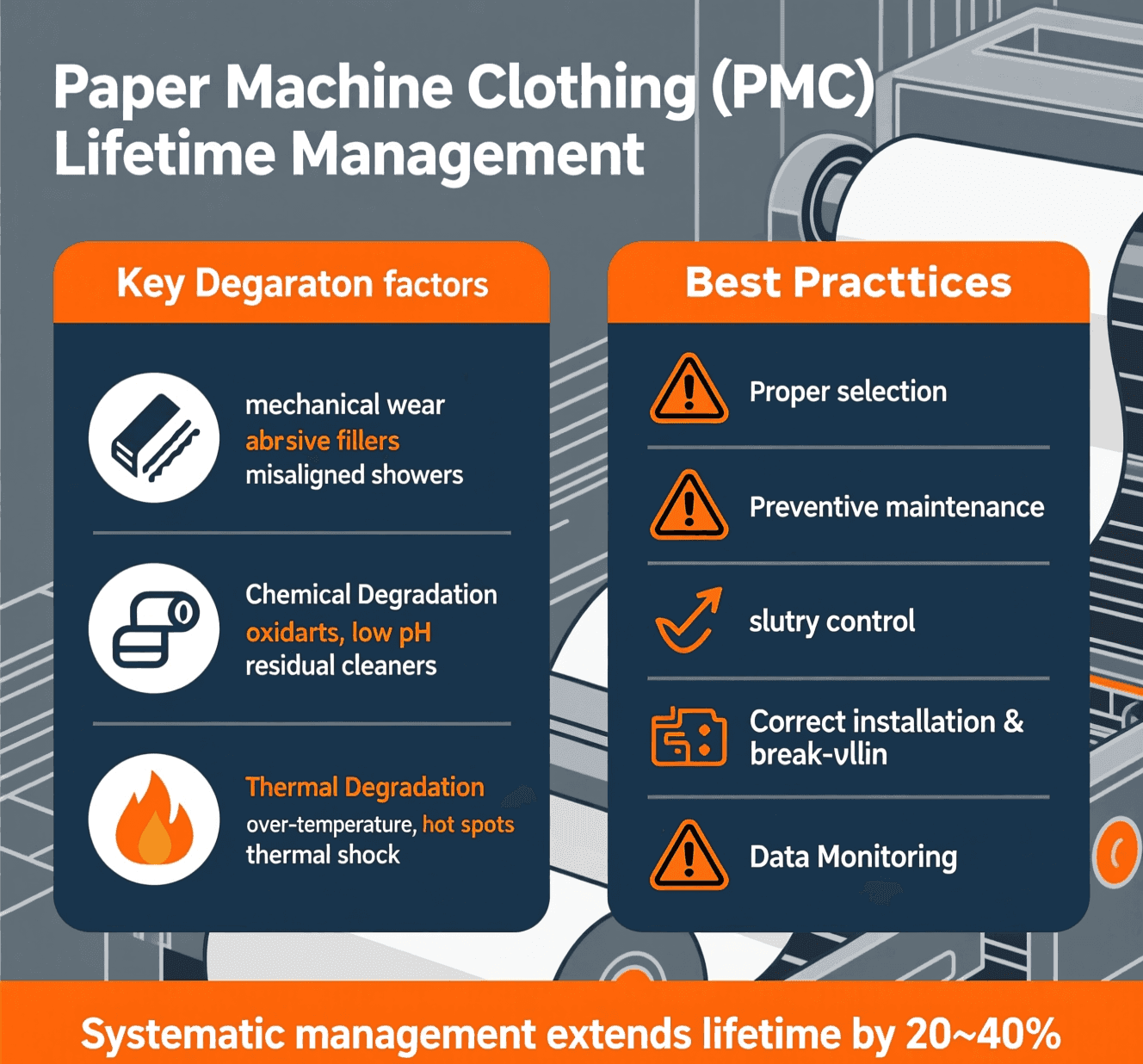
How to Extend Paper Machine Clothing Service Life
Understand the key factors affecting fabric life and discover practical tips for extending replacement intervals.
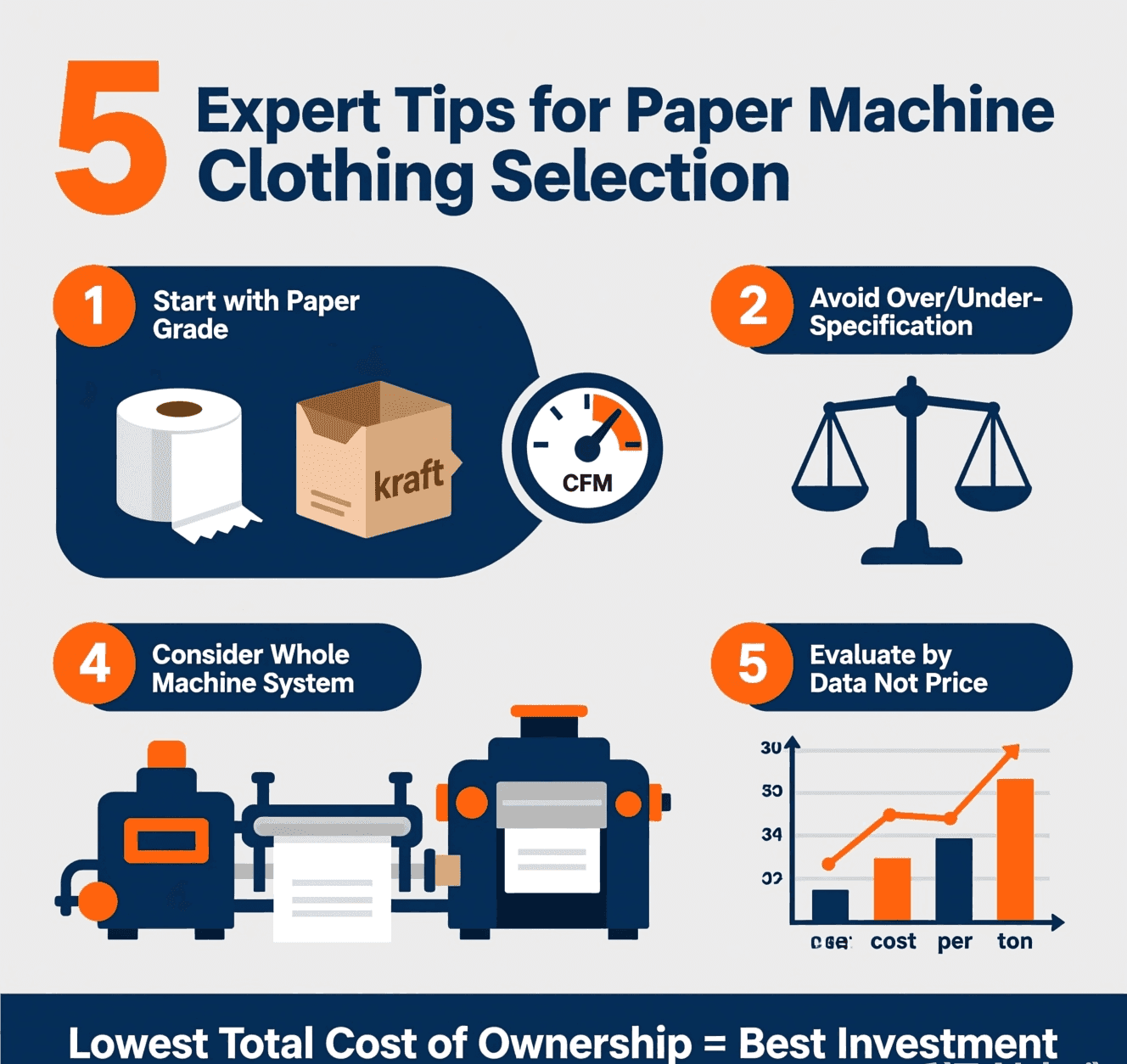
Top 5 Tips for Paper Mill Managers Selecting PMC Fabrics
Five practical checks for selecting paper machine clothing from machine position, furnish, operating data, baseline performance and measured total cost.