Dryer Fabric Selection Guide: Start with the Dryer Position
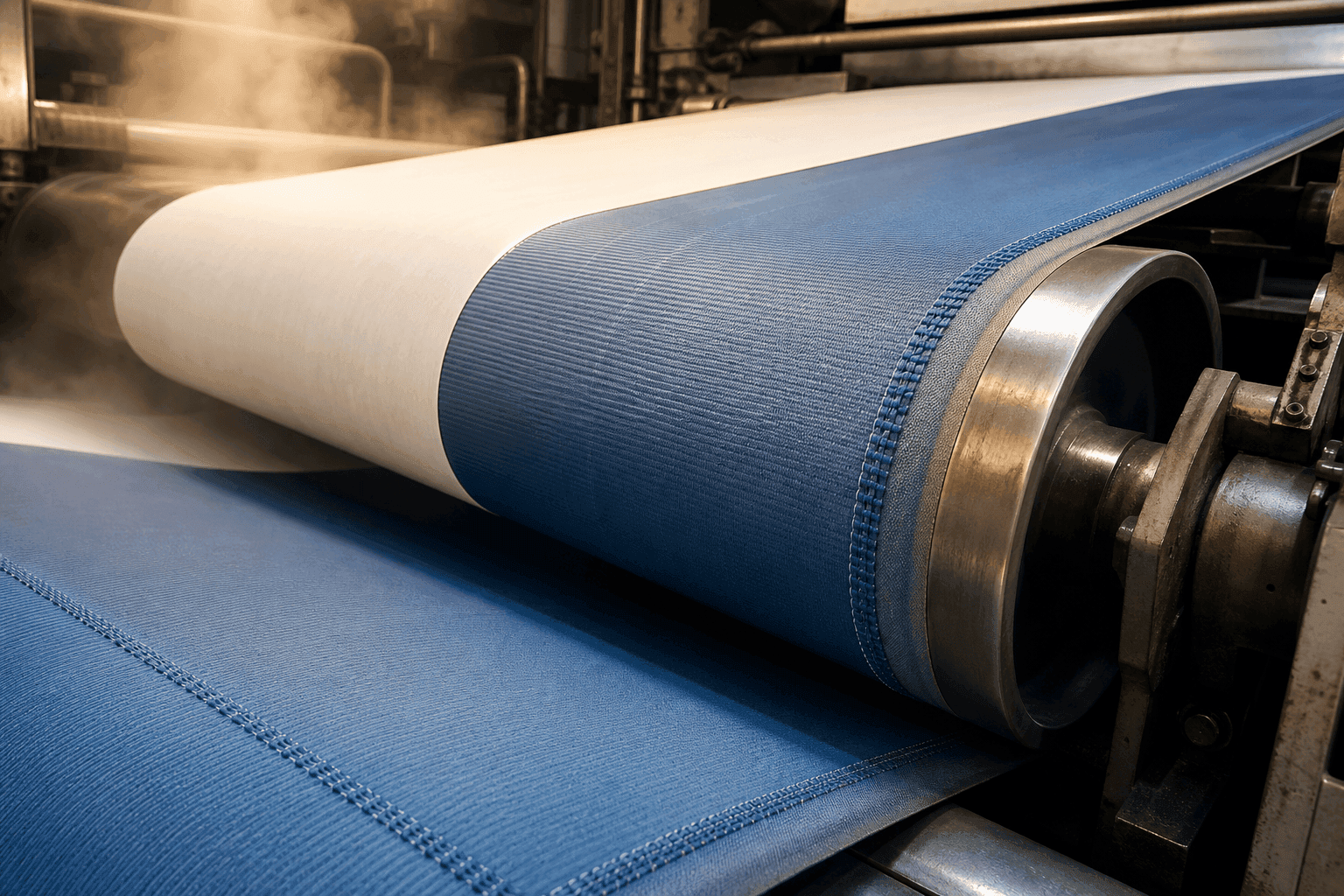
Dryer Fabric Selection Guide: Start with the Dryer Position
A dryer fabric is a Paper Machine Clothing (PMC) product used to support and guide the paper web through a specific dryer-group position. It should not be selected from a broad product label alone. The intended position, route, guiding arrangement, installation constraints and operating context define the questions that a useful technical review needs to answer.
This guide focuses on how to begin that review. It complements a replacement dryer-fabric field-data checklist: use the checklist when collecting detailed measurement and installation data; use this article to understand why the position must come first.
Start with the dryer position, not the fabric name
One paper machine can have multiple dryer groups and multiple fabric positions. Two fabrics may both be described as polyester dryer fabric, yet they can have different routes, seam needs and operating observations. Naming the exact position gives the purchasing, maintenance and supplier teams a common reference point before any construction is proposed.
Record the dryer group and position as clearly as possible. If the names used on site are different from a drawing, include both. A simple route sketch or safe photograph can make the starting point easier to confirm.
What a dryer fabric does in the PMC system
In a complete Paper Machine Clothing system, forming fabric supports the web in the wet end, press felt supports it through a press position, and dryer fabric supports it through the dryer section. The fabric follows the intended dryer-group path while the sheet moves through that part of the machine.
This is why dryer-fabric discussion often centres on the route, guiding and installation conditions. Those details are specific to the dryer position and cannot be assumed from a forming-fabric or press-felt description.
Four questions that make the review useful
Which dryer position is being reviewed?
Identify the dryer group, position and any information available about the paper side, machine side or running direction. The goal is not to create an unnecessarily complex form; it is to make sure everyone is discussing the same location.
What is the current fabric and why is it being reviewed?
Record the existing fabric identification, the reason for replacement or review, and any observations from the operating team. This gives the next discussion a practical baseline. It does not require the mill to diagnose the cause before contacting a supplier.
How is the fabric installed and guided?
The available installation access, seam or endless requirement, route and guiding arrangement are important parts of the position. Confirm them early so a proposed fabric can be discussed against the real route rather than a generic product image.
What paper and running information is already available?
Paper grade, machine width and the operating information already available are useful starting inputs. Share them as recorded facts. Where a value or condition is not known, state that clearly rather than filling the gap with an assumption.
Avoid treating one specification term as the answer
Terms such as flat yarn, spiral, permeability or seam describe aspects of a dryer fabric. They are not a complete selection decision by themselves. A useful proposal needs to connect those terms to the actual dryer position and the information available from the machine.
This approach also makes supplier comparisons more meaningful. Instead of comparing two labels in isolation, the team can check whether both proposals address the same position, route and installation constraints.
Prepare a concise technical brief
Before requesting a review, collect what is already available:
- dryer group and exact fabric position;
- paper grade and machine width;
- current fabric identification and replacement reason;
- route, guide and seam/endless information; and
- relevant photos, drawings or planned shutdown timing.
Use the PMC selection assistant to organise the first details, then contact PAPTEX for a position-specific discussion. The goal is to create a clear starting brief, not to force a final specification before the facts are available.
A practical conclusion
Start dryer-fabric selection with the specific dryer position. Then review the current fabric, route, guiding, installation conditions and available machine information together. This keeps the discussion grounded in the section where the fabric will run and supports a more useful PMC technical review.
Prepare a board-paper dryer-fabric RFQ
For a board-paper dryer position, use the board-paper dryer-fabric RFQ checklist to organize the position, current fabric, dimensions, seam constraints and review context before requesting a quote.
Move from selection to a position review
Browse the dryer fabric product families to establish a product-family starting point. A listed family is not a conclusion that every fabric suits a particular dryer position, route or operating condition.
For the next technical questions, review the existing guide to permeability, weave and seam and the pre-start seam inspection checklist. Then send the recorded position data, route information and installation constraints through contact PAPTEX for a position-specific discussion.
Related Articles
How to Choose the Right Forming Fabric
Choose a forming fabric using paper grade, furnish, former configuration, drainage, sheet-quality targets, machine data and current-fabric observations.
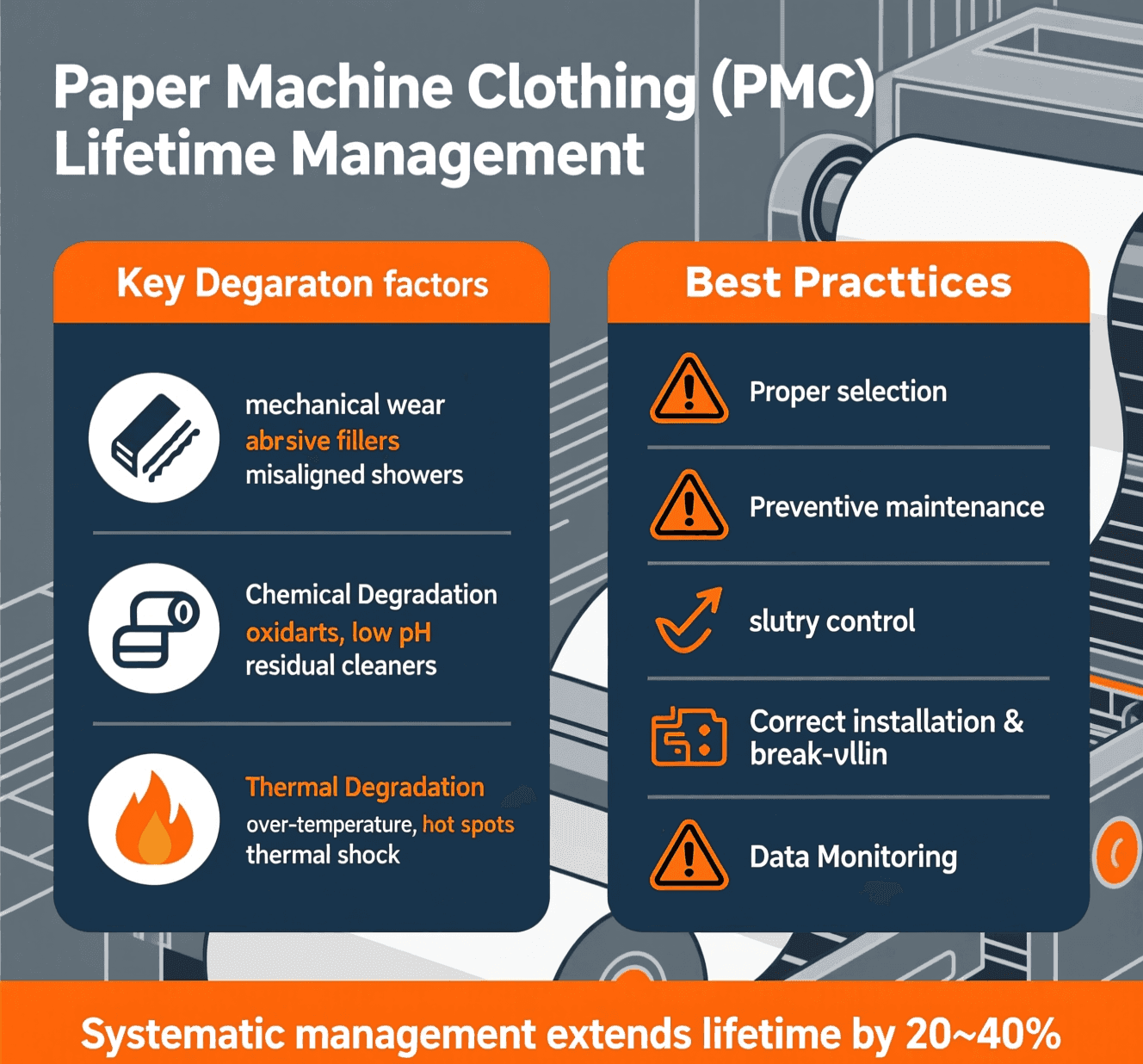
How to Extend Paper Machine Clothing Service Life
Understand the key factors affecting fabric life and discover practical tips for extending replacement intervals.
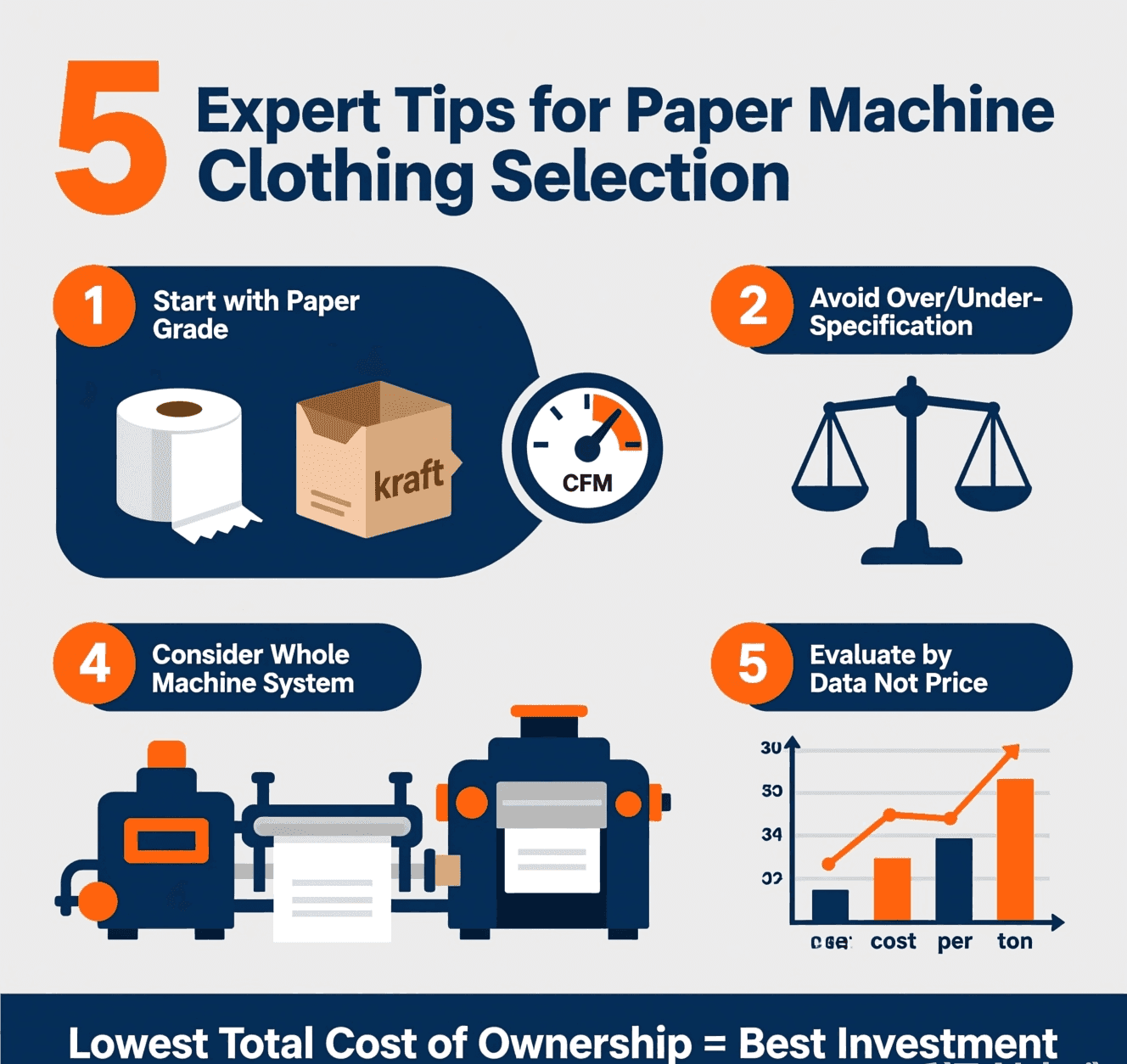
Top 5 Tips for Paper Mill Managers Selecting PMC Fabrics
Five practical checks for selecting paper machine clothing from machine position, furnish, operating data, baseline performance and measured total cost.