Paper Machine Clothing Installation and Maintenance: A Position-Specific Handover Checklist
A fabric change is a handover between the supplier's specification and the mill's actual machine. Before installation, agree on the exact fabric identity, position, dimensions, direction, seam construction, handling method and machine procedure. Record the start-up condition so a later guiding, dewatering or drying problem can be investigated against a real baseline. No single tension, shower pressure, cleaning pH, storage duration or service-life gain applies to every forming fabric, press felt and dryer fabric.
Before the machine stop: confirm the job
| Check | Record or confirm | Why it matters |
|---|---|---|
| Fabric identity | Product/model, roll label, machine position, running direction and supplier data sheet | Prevents fitting the wrong construction or orientation. |
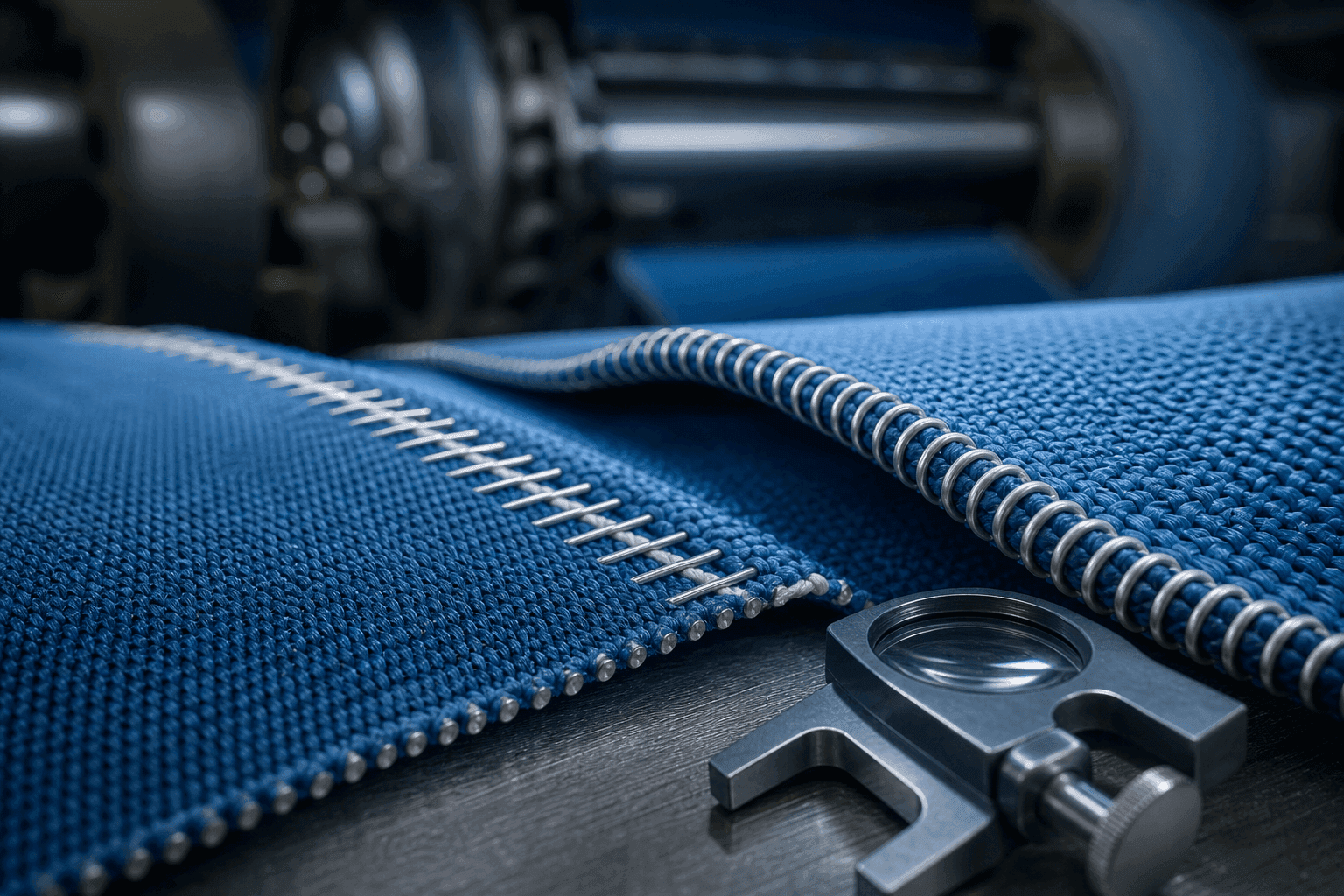
| Dimensions and seam | Width, length, seam type, join instructions and installation access | Avoids assuming every fabric has a field-joined seam. |
| Machine preparation | Approved isolation procedure, handling tools, clean route, roll and stationary-element condition | Protects people and prevents damage during the change. |
| Operating reference | The specific supplier's installation instructions and the mill's operating procedure | Sets the actual limits for tension, temperature and start-up, rather than an online average. |
| Existing problem | Photos, guide position, edge/seam condition, showers, vacuum and recent operating changes | Separates an old machine-side fault from a new fabric question. |
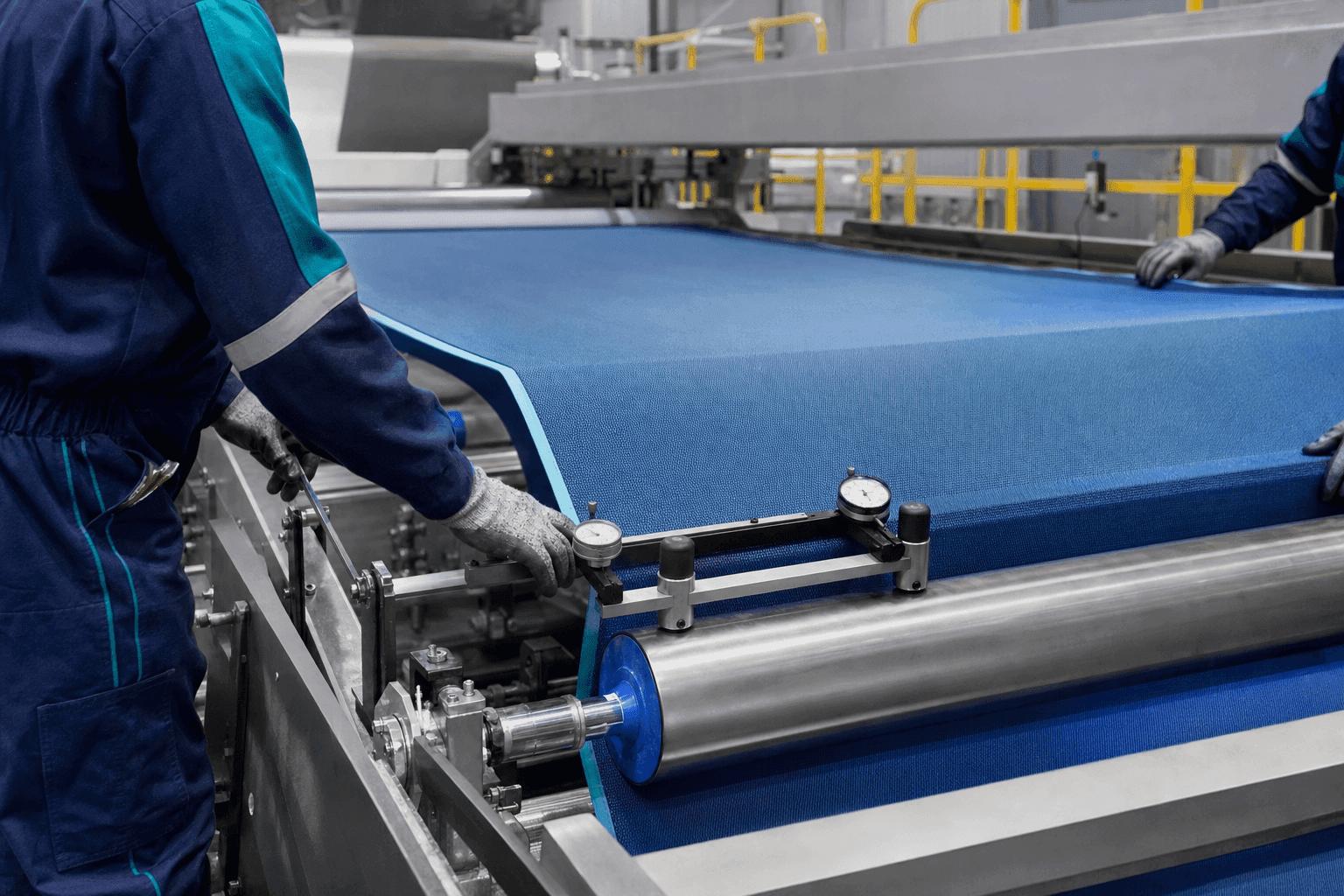
For forming fabrics, AstenJohnson's installation guidance emphasizes a planned crew and safe handling, checking misalignment before the new fabric goes on, protecting the sheet side and edges, and centering the fabric before tension is applied. These are general handling principles; the mill's safety procedure and the supplied fabric instructions control the actual job.
During installation and start-up
Follow the mill's lockout and machine-specific procedure. Check the roll route, fabric direction, edge protection and any seam against the delivered instructions. Document who approved each adjustment. At start-up, record the same machine position and conditions for guide response, fabric tracking, edge contact, relevant shower/vacuum observations and any sheet-quality symptom. Valmet's fabric-guiding procedure likewise calls for supplier-recommended tension and observation of the guide as speed changes; its machine examples are not universal settings for PAPTEX fabrics.
Section-specific observations
- Forming: note guide response, both edges, the roll and stationary-element path, drainage/formation changes and any recent shower or vacuum change. See the forming-fabric guiding diagnostic process.
- Press: note the exact press position, felt direction and seam, nip/dewatering observations, uhle-box and shower condition. A change in sheet moisture does not identify the felt as the sole cause. See the press-felt troubleshooting guide.
- Dryer: note dryer position, seam passage, guide and edge condition, deposits, ventilation and moisture-profile changes. See the dryer-fabric cleaning and plugging diagnosis.
Maintenance: compare like with like
Record observations at the frequency set by the mill's maintenance plan, with the same location, method, instrument and unit where a trend is needed. Inspect showers and contact elements; record abnormal guide travel, localized wear, deposits, seam damage and relevant changes in grade or machine operation. Valmet's cross-direction moisture checklist treats clothing cleaning, conditioning and supplier-recommended tension as parts of a wider machine diagnosis, rather than isolated fixes.
Do not select a chemical, pH, pressure or cleaning interval from a generic article. Identify the deposit and fabric material, then check the supplier's compatibility limits, equipment instructions and the mill's safety procedure. For storage, retain the supplied packaging/handling instructions and inspect the fabric before installation; do not assume a universal shelf life or stacking limit.
Handover record for a supplier review
Send the product label and data sheet, machine position and drawing, paper grade and speed range, the installation or operating change, dated observations and photos, and any measured values with their methods and units. The machine parameter form helps collect these details. A position-specific review can then determine whether the next action belongs with the fabric, the guide/roll path, conditioning or another machine condition. Contact PAPTEX with this record when a supplier review is needed.