Tissue Paper Production: Optimizing Forming Fabric Selection
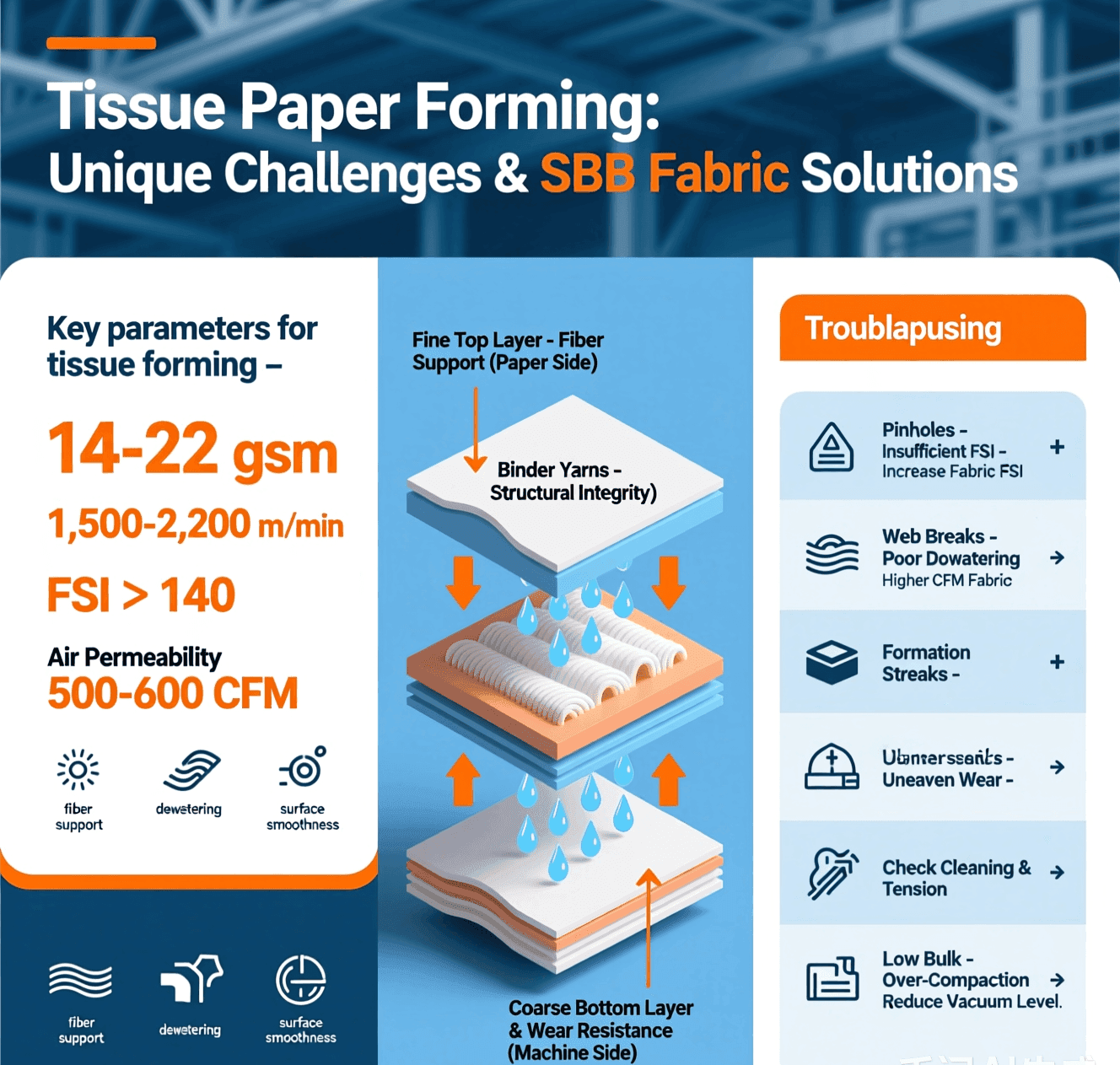
Tissue Paper: Unique Forming Challenges
Tissue production at 14–22 gsm presents unique challenges for forming fabric selection. The extremely low basis weight sheet requires precise fiber support while maintaining high dewatering rates for productivity.
Key Requirements for Tissue Forming
Fiber Support Index (FSI): Must exceed 140 for stable sheet formation at low basis weights.
Dewatering Capacity: Tissue machines operating at 1,500–2,200 m/min require:
- Air permeability of 500–600 CFM
- Optimized open area for rapid drainage
- Minimal flow resistance through the fabric structure
Surface Smoothness: Directly affects finished tissue softness.
SSB Triple-Layer Forming Fabrics for Tissue
The preferred construction for modern tissue machines:
- Fine top layer — fiber support on the sheet side
- Coarse bottom layer — wear resistance on the machine side
- Binder weft yarns — structural integrity
Common Tissue Forming Issues
| Problem | Likely Cause | Solution |
|---|---|---|
| Pinholes | Insufficient fiber support | Increase fabric FSI |
| Sheet Breaks | Poor dewatering | Use higher CFM fabric |
| Formation Streaks | Uneven fabric wear | Check cleaning and tension |
| Low Bulk | Over-compaction | Reduce vacuum levels |
Related forming-fabric resources: Compare the available forming fabric products for the machine position. If the issue involves tracking or edge movement, follow the forming fabric guiding problems guide before changing the fabric specification.
Related Articles
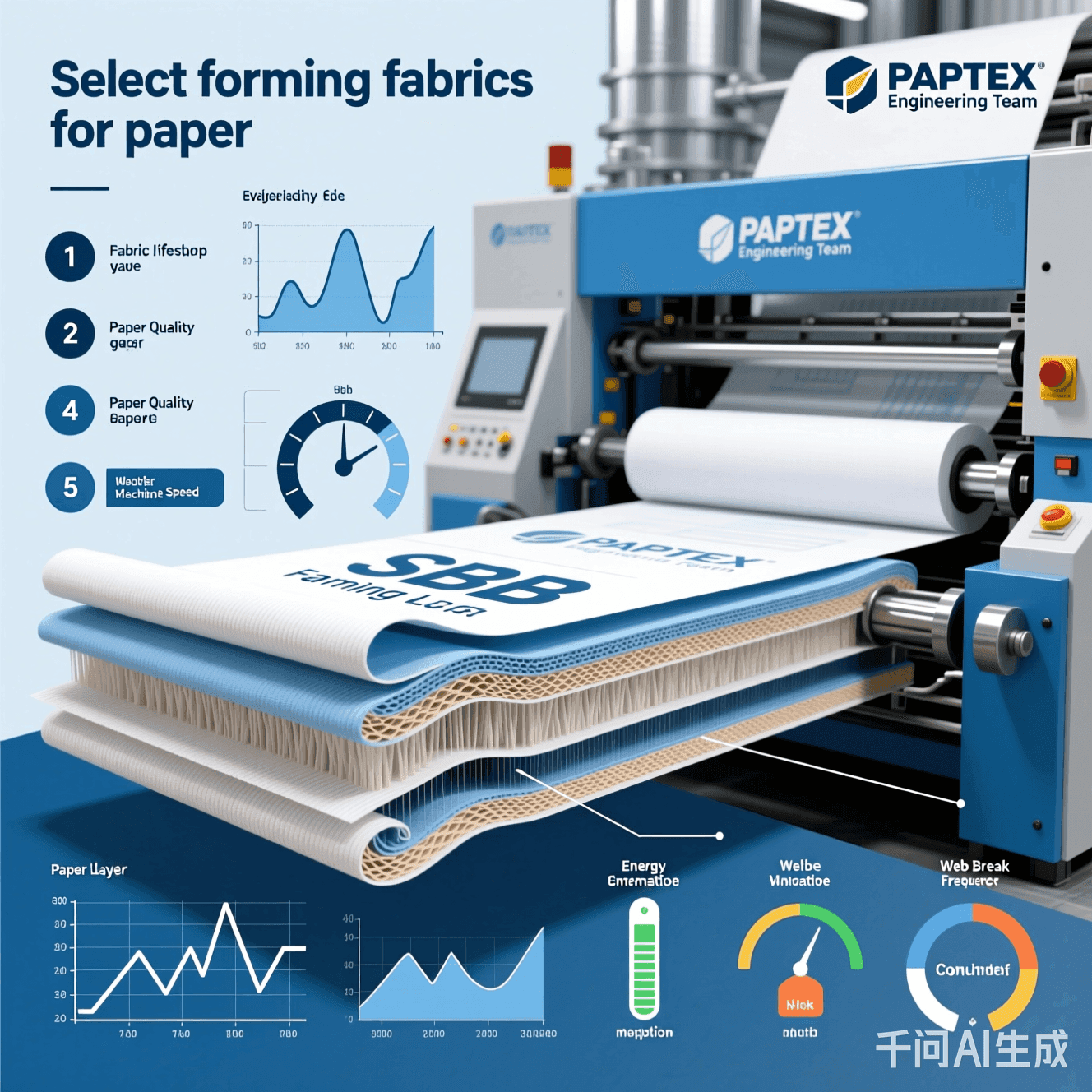
How to Choose the Right Forming Fabric
Choose a forming fabric using paper grade, furnish, former configuration, drainage, sheet-quality targets, machine data and current-fabric observations.
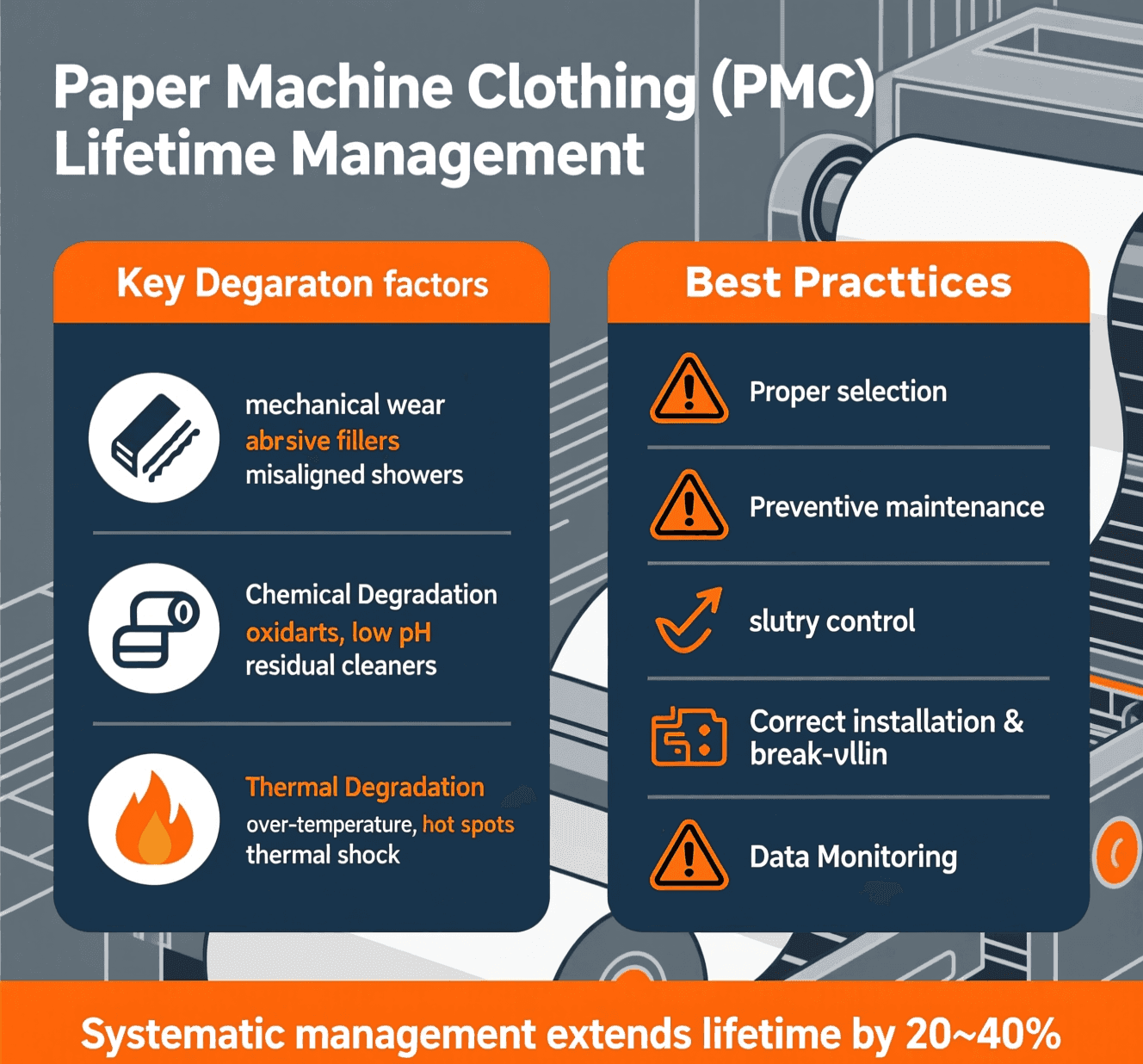
How to Extend Paper Machine Clothing Service Life
Understand the key factors affecting fabric life and discover practical tips for extending replacement intervals.
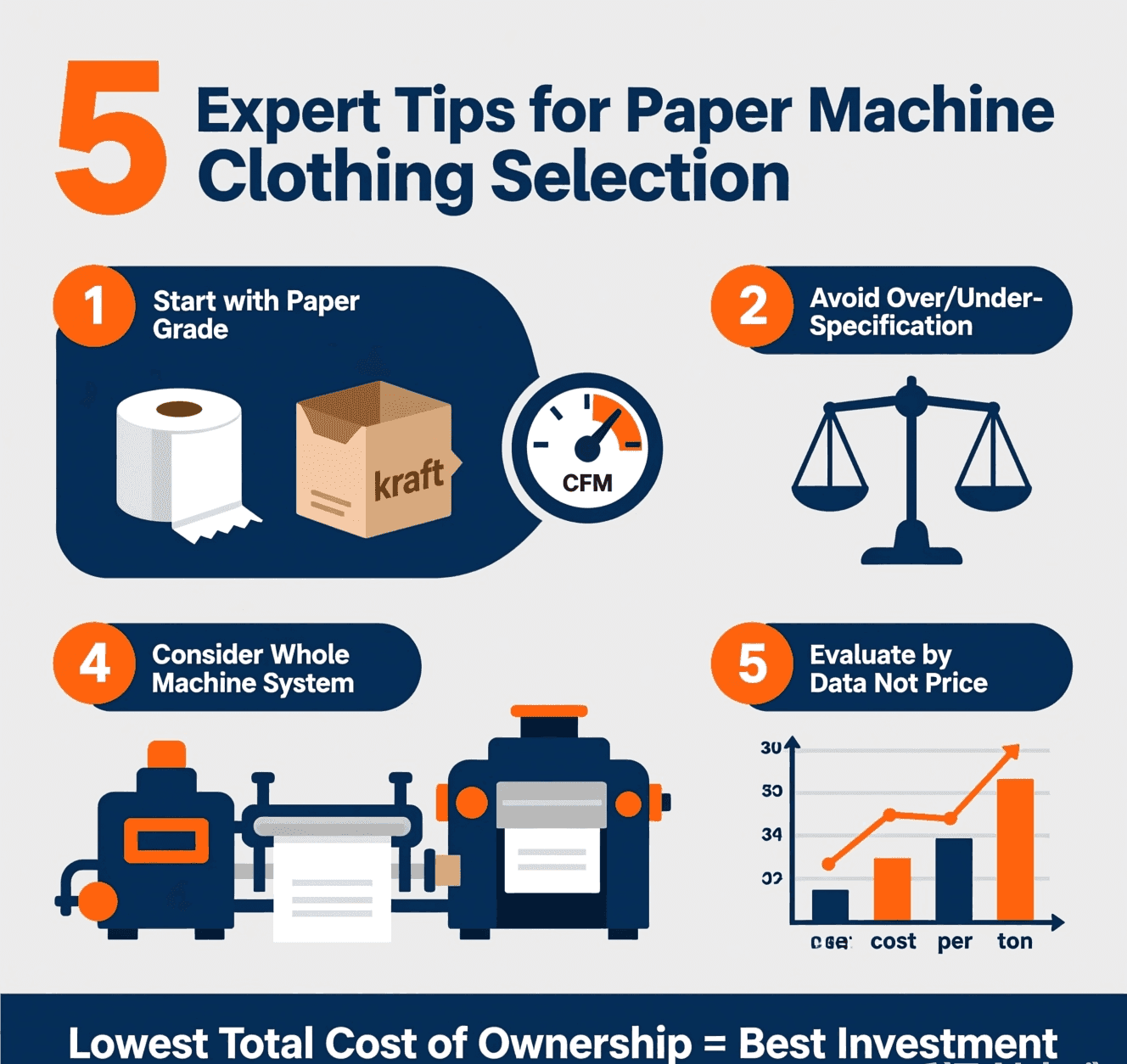
Top 5 Tips for Paper Mill Managers Selecting PMC Fabrics
Five practical checks for selecting paper machine clothing from machine position, furnish, operating data, baseline performance and measured total cost.