Press Felt Working Principle: How a Press Felt Supports the Press Section
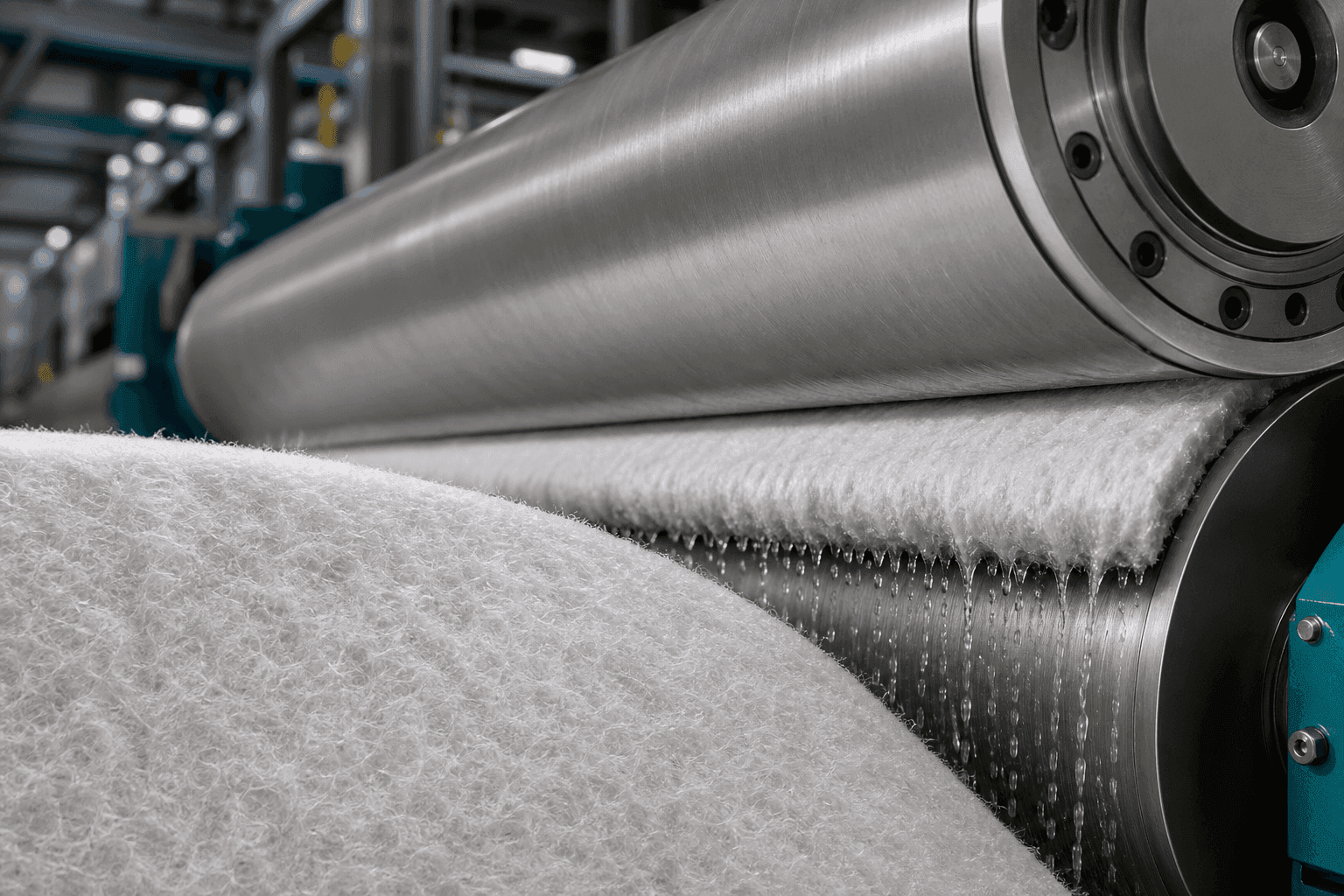
Press Felt Working Principle: How a Press Felt Supports the Press Section
A press felt is a Paper Machine Clothing (PMC) product used in the press section of a paper machine. It is selected for a specific press position rather than as a generic belt. The felt works alongside the press arrangement to carry the paper web through that position and provide a controlled path for the water handled there.
This article explains the working principle in practical terms. It is not a substitute for a machine-specific recommendation: the press position, paper grade, current felt and available operating information still need to be reviewed together.
Where a press felt fits in the PMC system
The press section sits between the wet end and the dryer section. A forming fabric supports the developing web in the forming section; a press felt is used around a press position; and a dryer fabric supports the sheet through dryer groups. Each product family belongs to one Paper Machine Clothing system, but their working environments are different.
For this reason, a press-felt enquiry should identify the exact press position before comparing materials, constructions or product names. A description that is useful for the forming section or dryer section may not answer the main questions for a press position.
What happens at the press position
At a press position, the paper web travels with the felt through the press arrangement. The felt provides support for the web and has an internal structure intended to receive and carry the water handled at that position. The press configuration, the paper grade and the existing operating condition affect which information is relevant to the review.
The useful question is therefore not simply “Which press felt is best?” It is “What does this particular press position need to handle, and what evidence is available from the current felt and run?” That framing helps the mill and supplier discuss the same machine location.
Three practical roles to review
Web support through the press section
The paper web must be carried through the intended press path. During a technical discussion, identify the exact location, the existing felt and any observations that relate to the web or route. This gives the review a defined starting point instead of relying on a product label alone.
Water-handling path at the position
The felt structure is reviewed with the press position and the machine conditions around it. The purpose is to understand whether the available product information, operating observations and replacement objective describe the same water-handling context. A single construction term or permeability value should not be treated as a complete selection brief.
Stable preparation for installation and follow-up
Before a felt change, the mill can record the press position, dimensions, current product identification, reason for replacement and planned shutdown window. After installation, early observations can be recorded against the same position. This creates a clearer basis for follow-up than an undocumented replacement.
Why press felt selection differs from forming and dryer fabric selection
Forming fabrics and dryer fabrics operate in different paper-machine sections. Forming-fabric discussions usually begin at the wet end, while dryer-fabric discussions often focus on dryer-group routing, guiding and installation access. Press-felt discussions begin with the exact press position and the web-support and water-handling context around that position.
All three require accurate machine information. The difference is the position-specific information that turns a general product request into a technical review.
What to prepare before asking for a press-felt review
Prepare only the information you have; a complete specification is not required to start the conversation.
- the press position and paper-machine section;
- paper grade, machine width and the available running information;
- the current felt identification and reason for review or replacement;
- any safe photos, drawings or route notes that help identify the position; and
- the planned change date if the work is tied to a shutdown.
You can use the PMC selection assistant to organise the initial details, or contact PAPTEX with the information already available. The follow-up discussion can then focus on the correct press position.
A practical conclusion
A press felt is one part of a complete PMC system, but it must be reviewed at the specific press position where it will run. Start with the position, the paper grade, the current felt and the reason for review. That gives a purchasing and technical team a useful common brief before comparing a proposed press-felt specification.
Related Articles
How to Choose the Right Forming Fabric
Choose a forming fabric using paper grade, furnish, former configuration, drainage, sheet-quality targets, machine data and current-fabric observations.
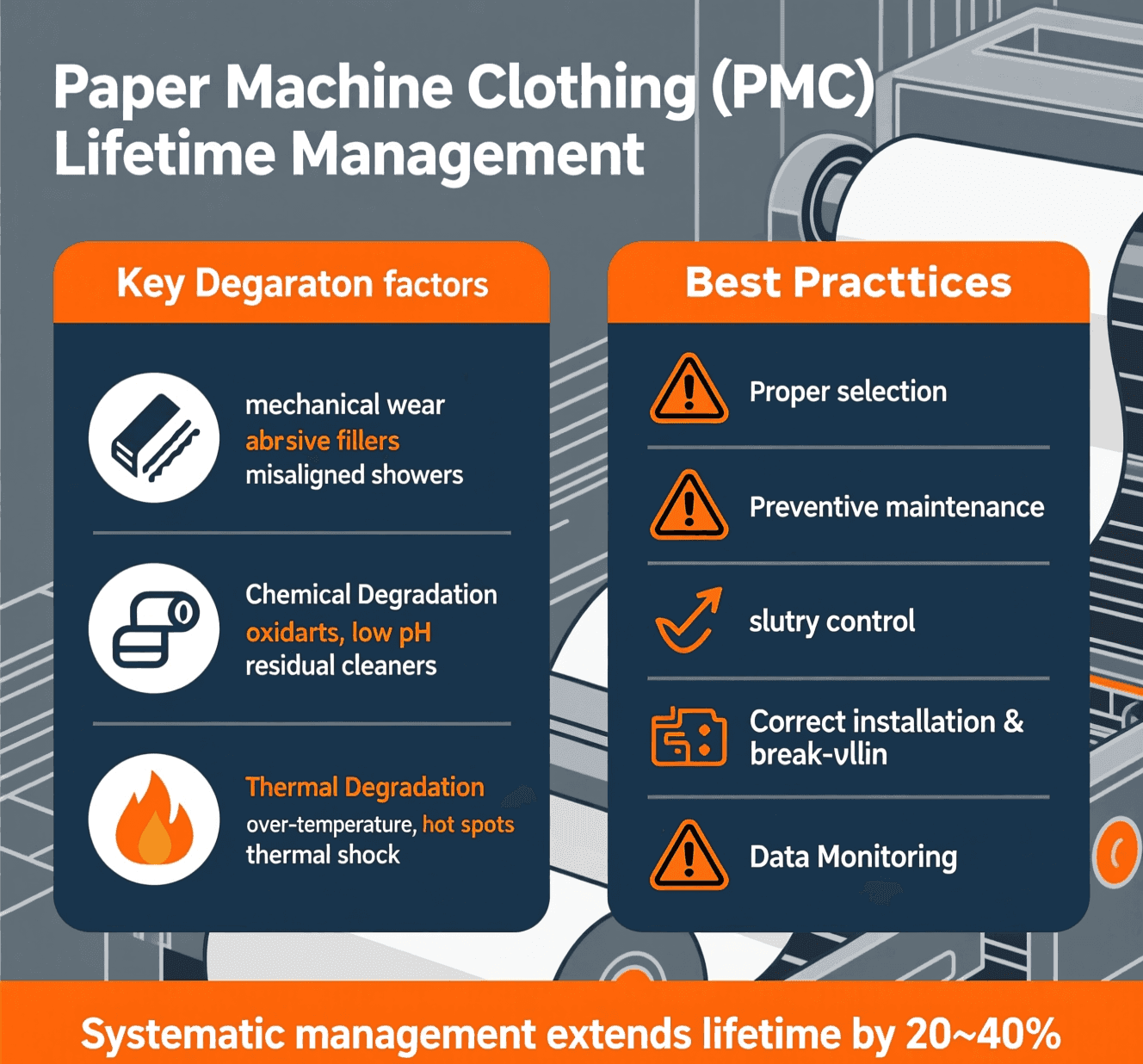
How to Extend Paper Machine Clothing Service Life
Understand the key factors affecting fabric life and discover practical tips for extending replacement intervals.

Top 5 Tips for Paper Mill Managers Selecting PMC Fabrics
Five practical checks for selecting paper machine clothing from machine position, furnish, operating data, baseline performance and measured total cost.