Forming Fabric vs Dryer Fabric: Different Roles in a Paper Machine
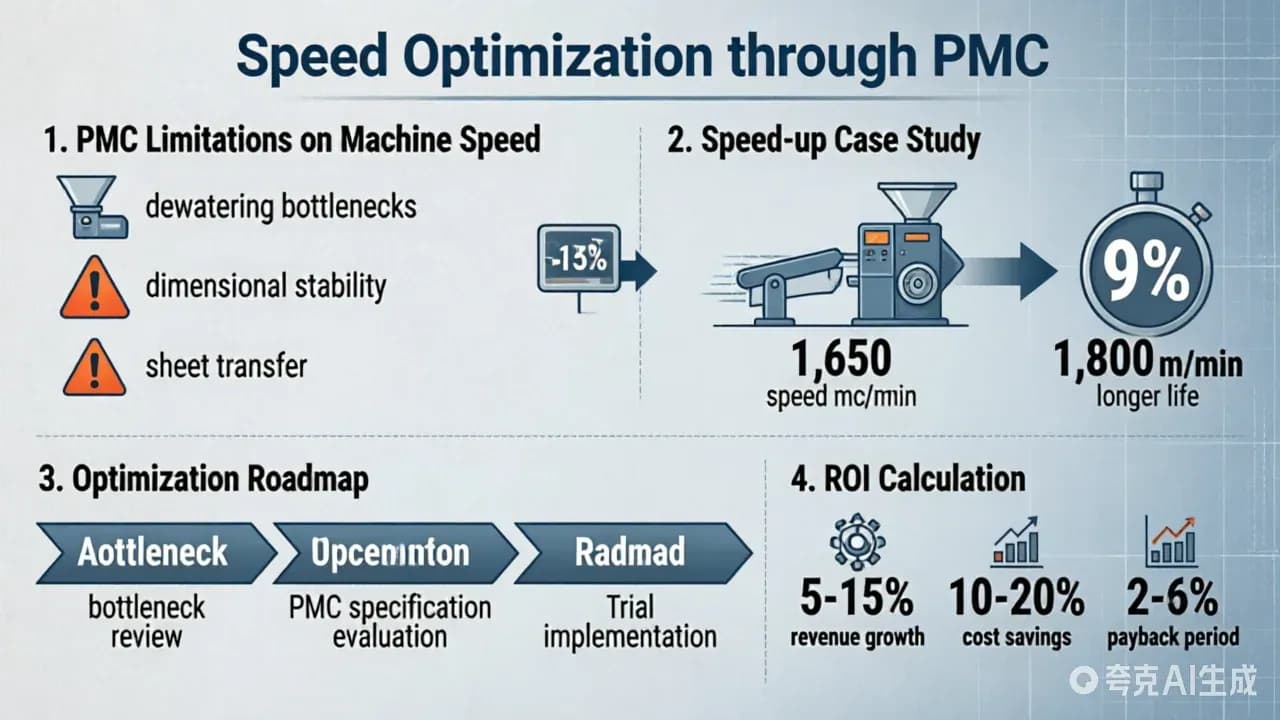
Forming Fabric vs Dryer Fabric: Different Roles in a Paper Machine
Forming fabrics and dryer fabrics are both part of Paper Machine Clothing (PMC), yet they are not interchangeable products. They run in different environments, handle the sheet at different stages and must be reviewed against different machine information. Treating them as one generic “paper machine belt” can make an otherwise useful quotation difficult to apply on the machine.
This comparison explains the role of each product family in practical terms. It does not replace a machine-specific review: the correct construction still depends on the exact position and operating context.
Where each fabric works
A forming fabric operates at the wet end. Its job is to carry the fibre suspension through the forming section while water is removed through the fabric and forming elements. The paper-side support, drainage path, machine direction stability and relationship with the forming section all matter at this stage.
A dryer fabric operates after pressing, in the dryer section. It supports and guides the sheet through dryer groups. The fabric path, guide arrangement, seam requirement and the conditions around the dryer group become central questions.
The two products belong to the same PMC system, but the paper sheet they see is at a very different condition. That is why the same selection language should not be copied from one section to the other.
The selection questions are different
For a forming fabric, a technical discussion normally starts with the paper grade, furnish, machine position, forming configuration, current drainage or sheet-quality observations, width and running information. The aim is to understand the wet-web support and drainage context, not to promise a result from one generic number.
For a dryer fabric, the discussion starts with the dryer group and exact position, fabric route, guiding, available installation access, seam or endless requirement, and the condition of the current fabric. These details help the mill and supplier confirm that the product can be received, installed and reviewed in the intended position.
| Question | Forming fabric | Dryer fabric |
|---|---|---|
| Machine stage | Forming section at the wet end | Dryer section after pressing |
| Sheet condition | Fibre suspension becoming a wet web | Paper sheet moving through dryer groups |
| Main review context | Forming configuration, drainage and fibre support | Route, guiding, seam/access and dryer-group conditions |
| Installation discussion | Fabric route and alignment in the forming section | Dryer-group route, seam/endless details and accessible joining points |
| Useful baseline | Current fabric identification and wet-end observations | Current fabric identification and dryer-section operating observations |
Do not select only from a product label
Terms such as “polyester fabric”, “flat yarn” or “high permeability” are not a complete selection brief. Product terminology can describe part of a construction, but it does not identify the correct machine position by itself. A useful request for quotation names the section, position and the available operating information.
For example, a mill may be replacing a forming fabric because the wet-end team wants to review sheet support or a visible running issue. That enquiry should not be copied unchanged into a dryer-fabric request, where routing and seam details may be the immediate concern. The more accurately the initial information identifies the question, the easier it is to compare supplier responses.
What both product families have in common
Both forming and dryer fabrics should arrive with a clear product identification that can be matched to the order and machine position. Both require the mill to confirm dimensions and the intended location before installation. Both benefit from a record of the outgoing product, the reason for replacement and the early observations after the new product is running.
This common discipline is one reason to view PMC as a system. The product families differ, but the working method—collect facts, identify the position, document the received item and review the first run—should be consistent across the paper machine.
A practical way to prepare an enquiry
Before contacting a supplier, prepare the following:
- the machine section and exact position;
- paper grade and machine width;
- current product identification and the reason for review or replacement;
- photos or a safe description of the relevant route and guide arrangement; and
- the planned date if the product will be changed during a shutdown.
Use the PMC selection assistant to organise the starting information, or contact PAPTEX with the details already available. A supplier can then ask the right follow-up questions instead of guessing from a short product label.
The decision in one sentence
Choose a forming fabric by reviewing what the wet end needs at that specific forming position. Choose a dryer fabric by reviewing the dryer-group position, route and installation conditions. Both decisions belong inside the same Paper Machine Clothing plan, but they should never be treated as the same technical question.
Related Articles
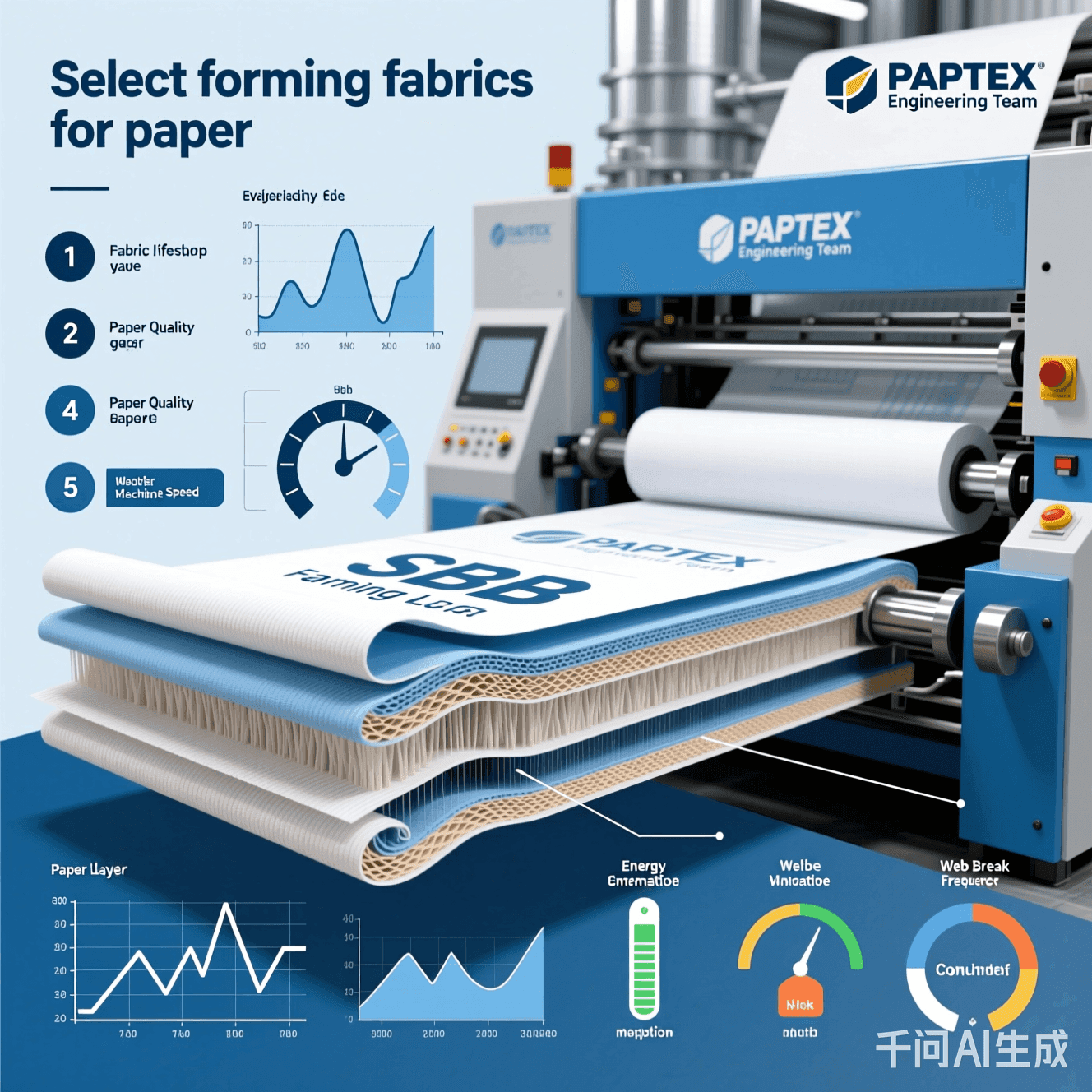
How to Choose the Right Forming Fabric
Choose a forming fabric using paper grade, furnish, former configuration, drainage, sheet-quality targets, machine data and current-fabric observations.
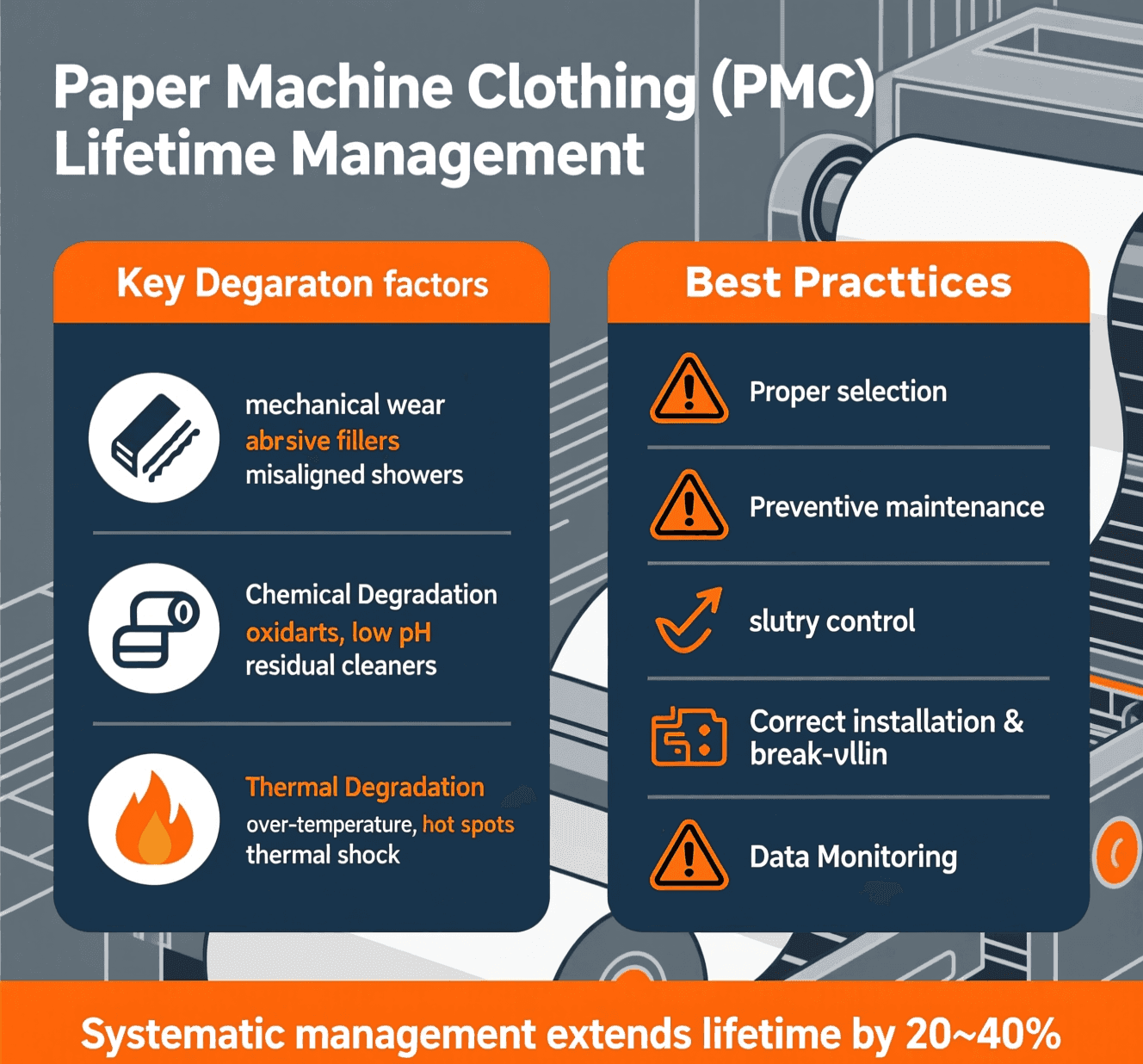
How to Extend Paper Machine Clothing Service Life
Understand the key factors affecting fabric life and discover practical tips for extending replacement intervals.
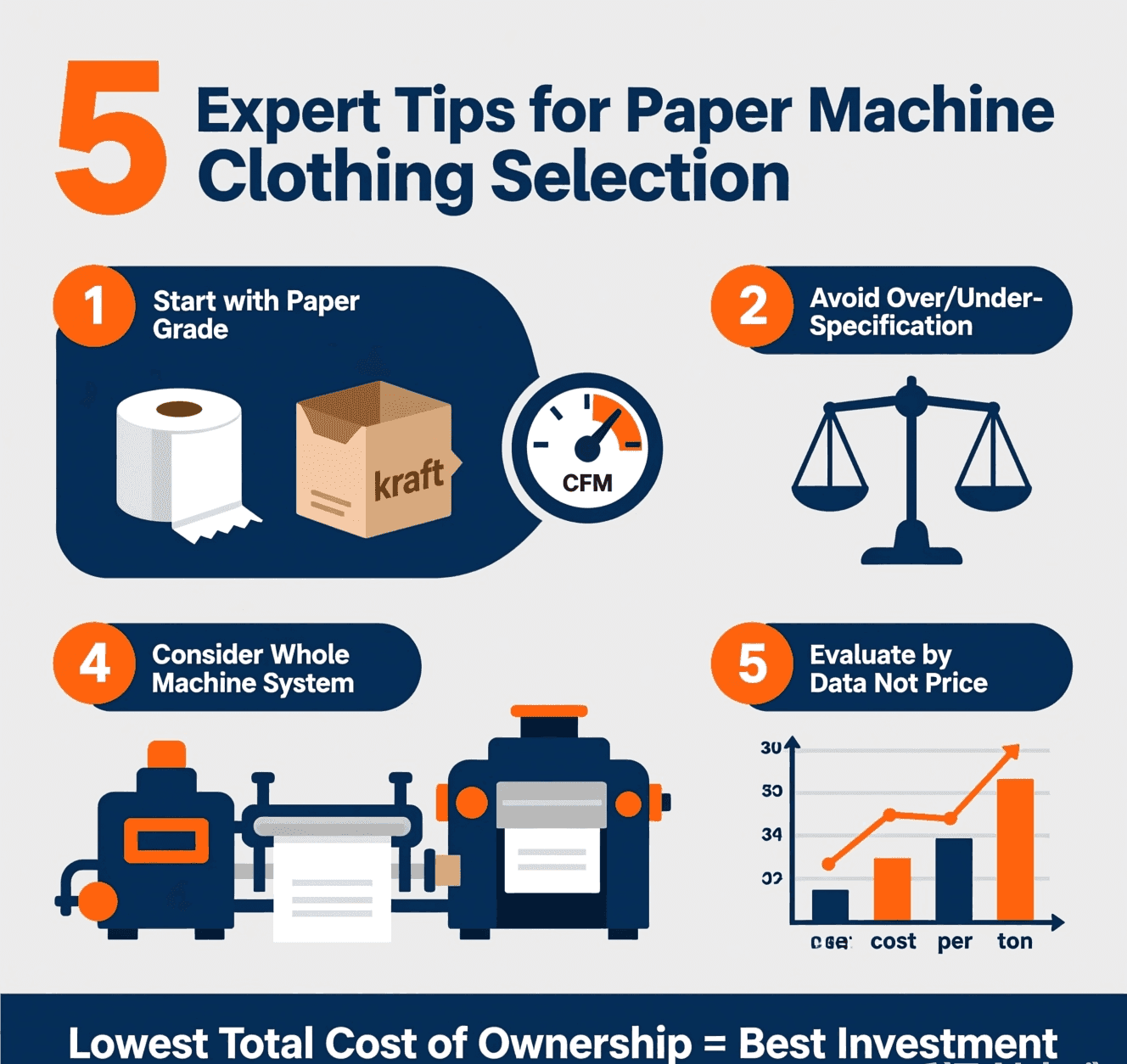
Top 5 Tips for Paper Mill Managers Selecting PMC Fabrics
Five practical checks for selecting paper machine clothing from machine position, furnish, operating data, baseline performance and measured total cost.