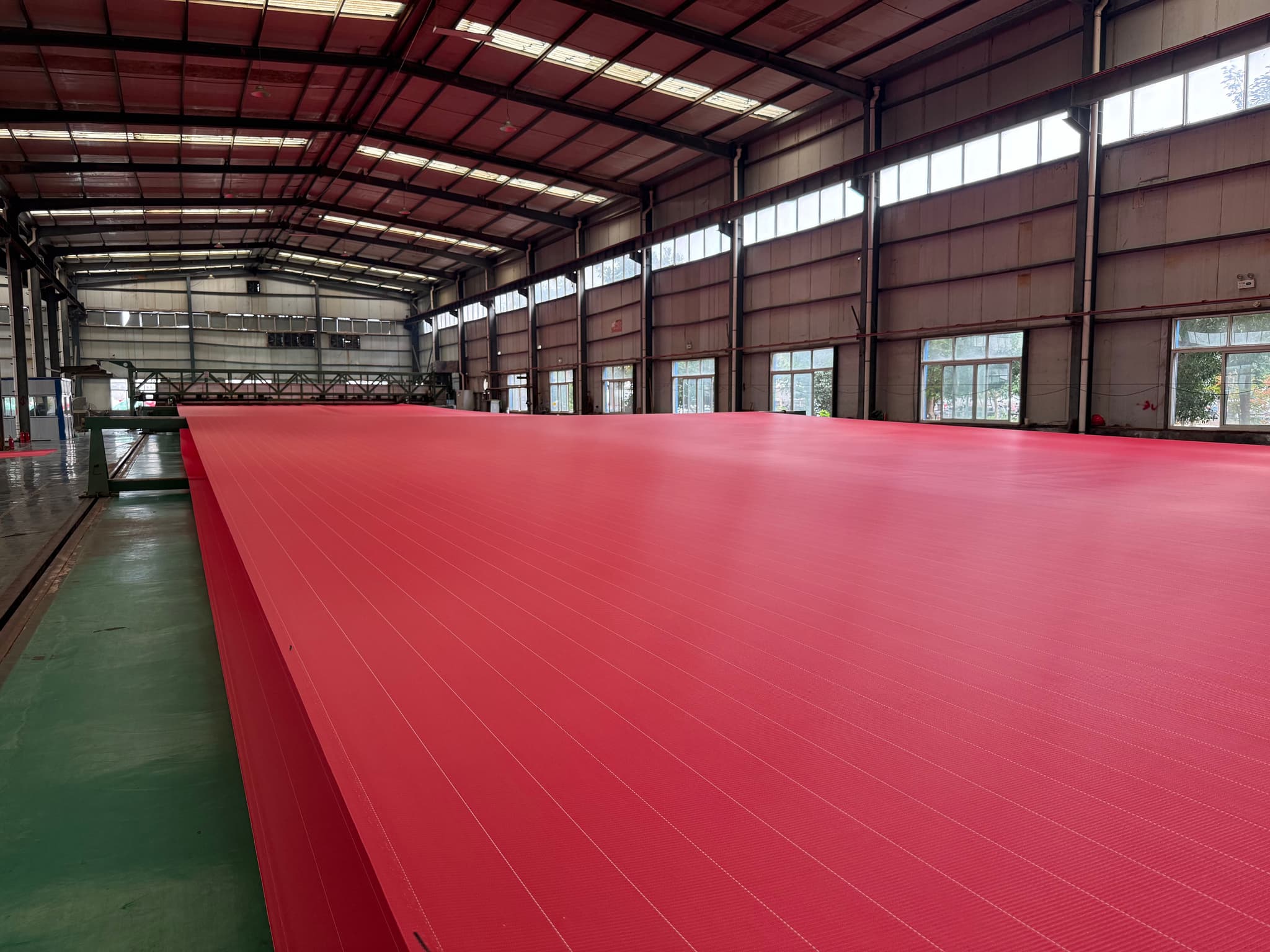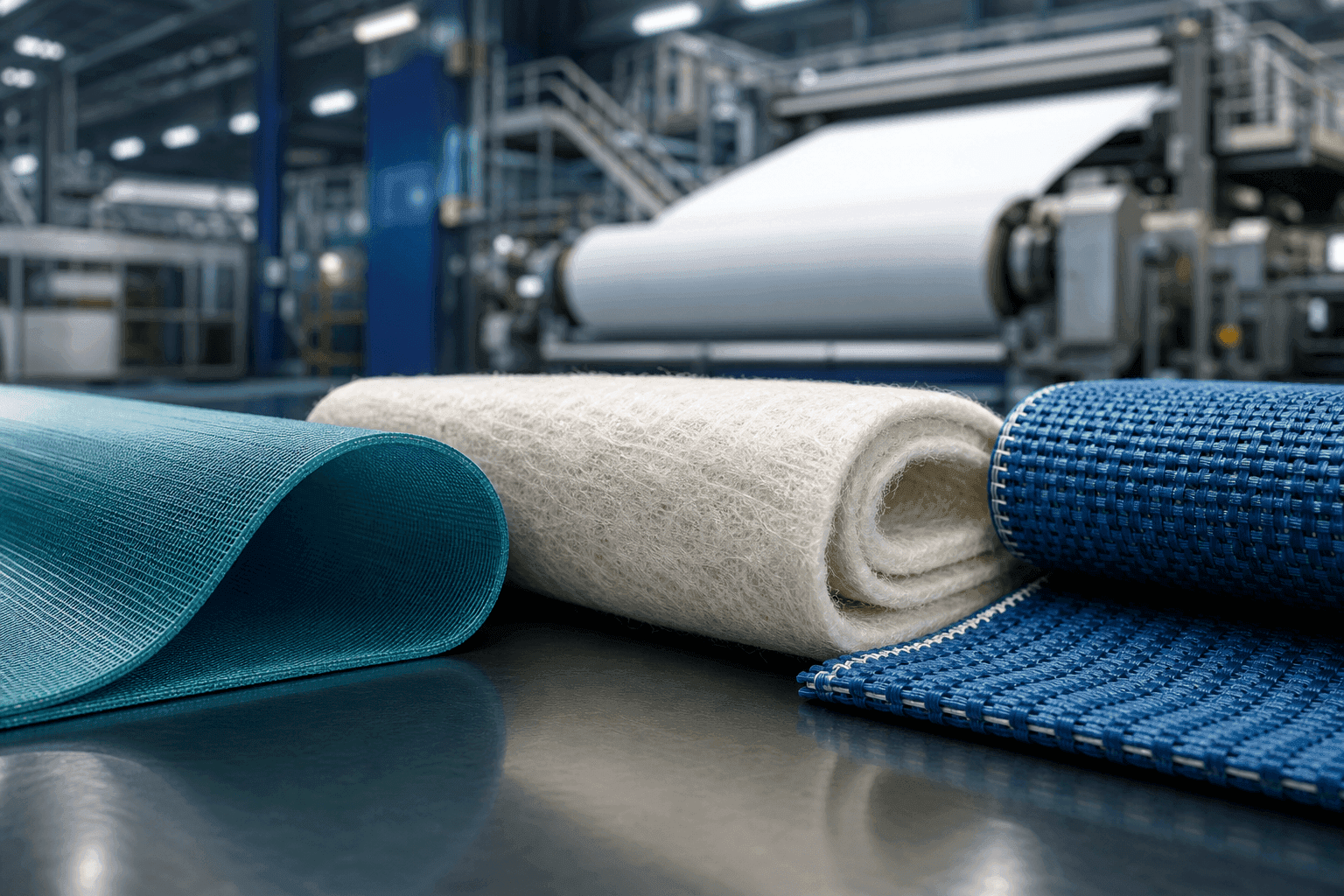
Paper machine clothing is the fabric system that carries the sheet
Paper Machine Clothing (PMC) is the collective term for engineered forming fabrics, press felts and dryer fabrics used through a paper machine. Each product works at a different stage, but the system must be evaluated together because a change in drainage, pressing, sheet handling or drying can affect the next section.
The three PMC families
| Machine section | PMC product | Main functions | Position-specific data |
|---|---|---|---|
| Forming | Forming fabric | Support fibers, distribute drainage, transport the wet web and run over forming elements | Structure, permeability test, support, thickness, dimensions, tension, vacuum and furnish |
| Press | Press felt | Receive water under nip loading, support the sheet and recover void volume between nips | Base construction, batt, grammage, permeability, compressibility, dimensions, nip and conditioning |
| Dryer | Dryer fabric | Hold and guide the sheet through dryer groups while supporting heat and moisture transfer | Structure, permeability, contact, seam, temperature, hydrolysis risk, run path and pocket conditions |
The table describes functions, not guaranteed performance. The correct specification changes by machine position and operating baseline.
Core PMC terminology
- Permeability: a measured flow property that must include the test method, pressure differential and units.
- Fiber support: how the paper-side yarn arrangement supports the furnish; it is not interchangeable with permeability.
- Caliper and void structure: affect water handling, compaction, cleaning and stability differently in each section.
- Seam or joining: must match installation space, run direction, loading and sheet-quality requirements.
- Machine direction and cross direction: define yarn orientation, stability and how the fabric is installed.
- Conditioning: showers, vacuum, cleaning and operating practice used to keep the PMC working as designed.
Why position-specific selection matters
Paper quality, drainage, moisture, breaks, cleaning, energy and fabric removal can have several simultaneous causes. A new PMC cannot be evaluated fairly unless grade mix, furnish, speed, vacuum or nip, steam, tension and major process changes are recorded.
Use identified product data sheets rather than generic family numbers. PAPTEX source material includes model-specific forming, press and dryer examples, but those values apply only to the named construction and test conditions.
Information for an engineering review
Provide the machine section and exact position, paper grade and basis weight, furnish, width and speed, current specification, operating data, service history, removal reason, photos and the objective for the change. For a trial, agree on baseline and success measures before installation.
Explore PAPTEX product families or send your machine data to an engineer.