Start With the Press Position and the Evidence
Poor nip dewatering is a press-section symptom, not a diagnosis. A change in post-press moisture or sheet behavior can be associated with the felt, but it can also follow changes in loading practice, roll surfaces, Uhle-box operation, shower coverage, stock conditions or the way the machine is being run.
Before changing a press felt specification, identify the press position and capture the evidence that is available under the normal mill procedure. A useful review starts with what changed, where the change is visible and whether it repeats across comparable runs.
1. Describe the Symptom Precisely
Record the press position, paper grade, machine condition and the observation that triggered the review. Avoid descriptions that combine several issues into one label such as “the felt is bad.”
| Observation | Evidence to retain | Why it matters |
|---|---|---|
| Higher post-press moisture | Mill trend or profile using the normal method | Connects the symptom to a particular press position and period |
| Localized moisture variation | Cross-machine profile and sheet sample location | Helps distinguish a local influence from a whole-width change |
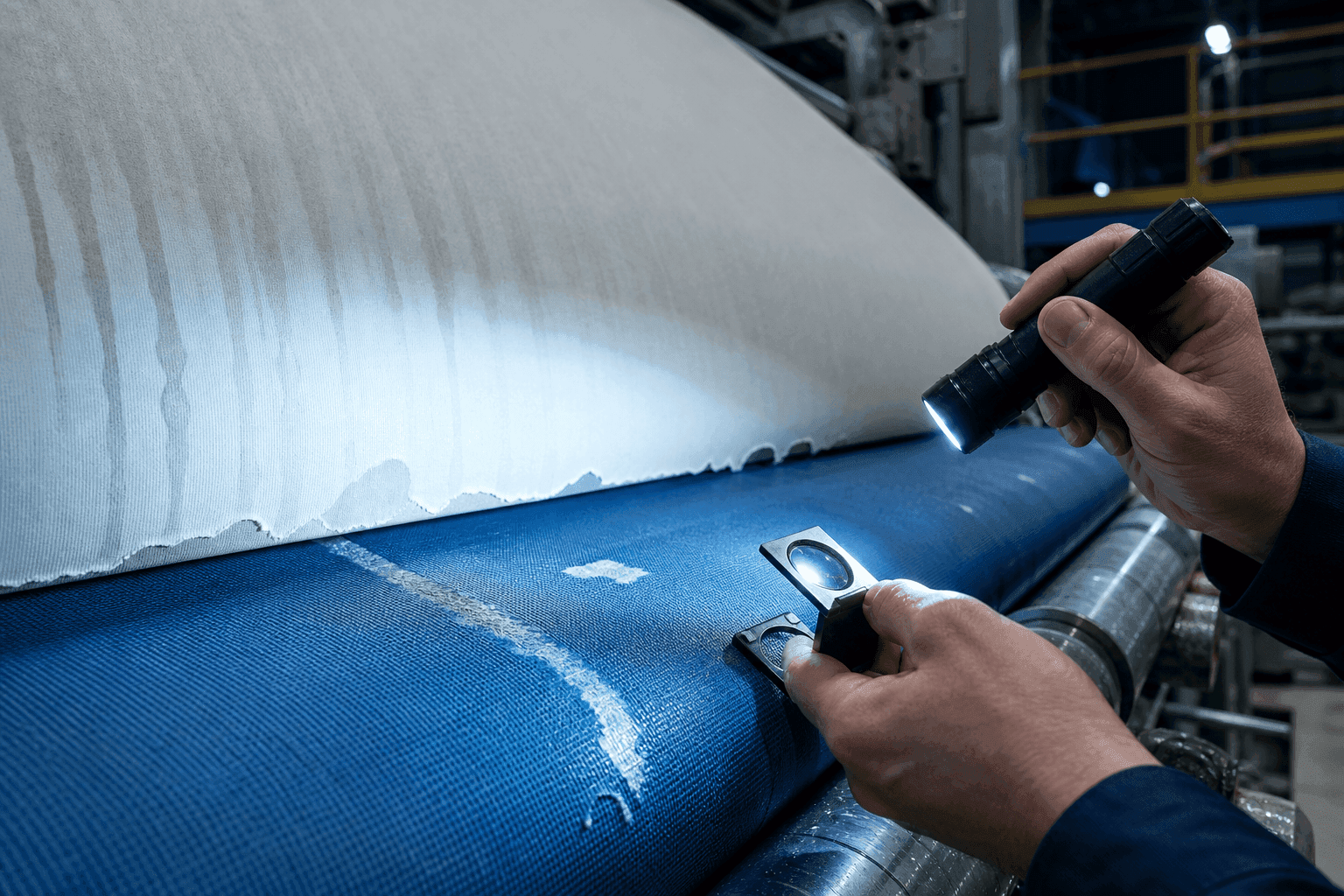
| Visible felt deposits or glazing | Photos before cleaning | Records what was actually present on the felt surface |
| Sudden change after maintenance | Work order and time of change | Identifies a mechanical or operating event to review |
Do not compare numbers taken with different methods or at different machine conditions as if they were a direct trend.
2. Review the Felt Without Assuming It Is the Cause
Inspect the felt identification, installation date, press position, edges, seam area where applicable, surface condition and any localized damage. Retain photos before cleaning or removal. Compare the observation with the machine's stable period and with the supplier data sheet for that specific construction.
A plugged, compacted or damaged area can be relevant evidence. It does not by itself establish why the condition developed. The cleaning history, shower pattern, contamination sources and press-side hardware still need to be considered.
For condition-specific questions, see the press-felt troubleshooting guide.
3. Check the Water-Handling System Around the Nip
The felt operates with the press system, not in isolation. Review the items that influence water removal and felt conditioning according to the mill's approved maintenance process.
| Check area | Question to record | Suggested evidence |
|---|---|---|
| Shower system | Is coverage across the working width complete and stable? | Nozzle/filtration inspection and observed pattern |
| Uhle-box system | Are the box, seals and slots in their normal condition? | Maintenance observations and relevant operating record |
| Roll surfaces | Did roll work, cover condition or a contact issue change recently? | Work order, inspection notes and photos where permitted |
| Press configuration | Is the symptom tied to one position, grade or operating condition? | Press position, grade log and time sequence |
If a confirmed equipment issue is found, correct it through the mill process before treating a new felt as the automatic solution.
4. Include Stock and Operating Changes
Ask whether furnish, basis weight, additives, speed, draw, press loading practice or shutdown history changed shortly before the problem appeared. These changes can alter the duty experienced by the felt and the press section even when the felt itself has not changed.
Build a short timeline: stable period, change event, first observation and each corrective action. A timeline is often more useful to a technical review than an isolated moisture result.
5. Make One Controlled Change at a Time
When a correction is approved, document the baseline, make one permitted change and observe the response under comparable conditions. Altering several variables together makes it difficult to know what affected the result.
| Stage | Keep in the record |
|---|---|
| Baseline | press position, grade, observation, photos and relevant trends |
| Adjustment | one approved machine, cleaning or operating change |
| Follow-up | the same observation method after the machine stabilizes |
| Escalation | current felt details and the changes already attempted |
The goal is a traceable operating review, not a universal setting for every paper machine.
6. Prepare a Better Technical Request
If the evidence supports a felt review, send the supplier the press position, current felt identification, dimensions, paper grade, running history, photos, cleaning practice, relevant machine observations and a summary of the steps already taken. Include the exact question: confirm the current felt duty, investigate a machine-side contributor or evaluate an alternative construction.
Review the press fabric range, read the press felt working principle, prepare a permeability-test record for a replacement RFQ, or submit the evidence through the engineering contact form.