What is the Difference Between Single, Double, and Triple Layer Forming Fabrics?
FAQ
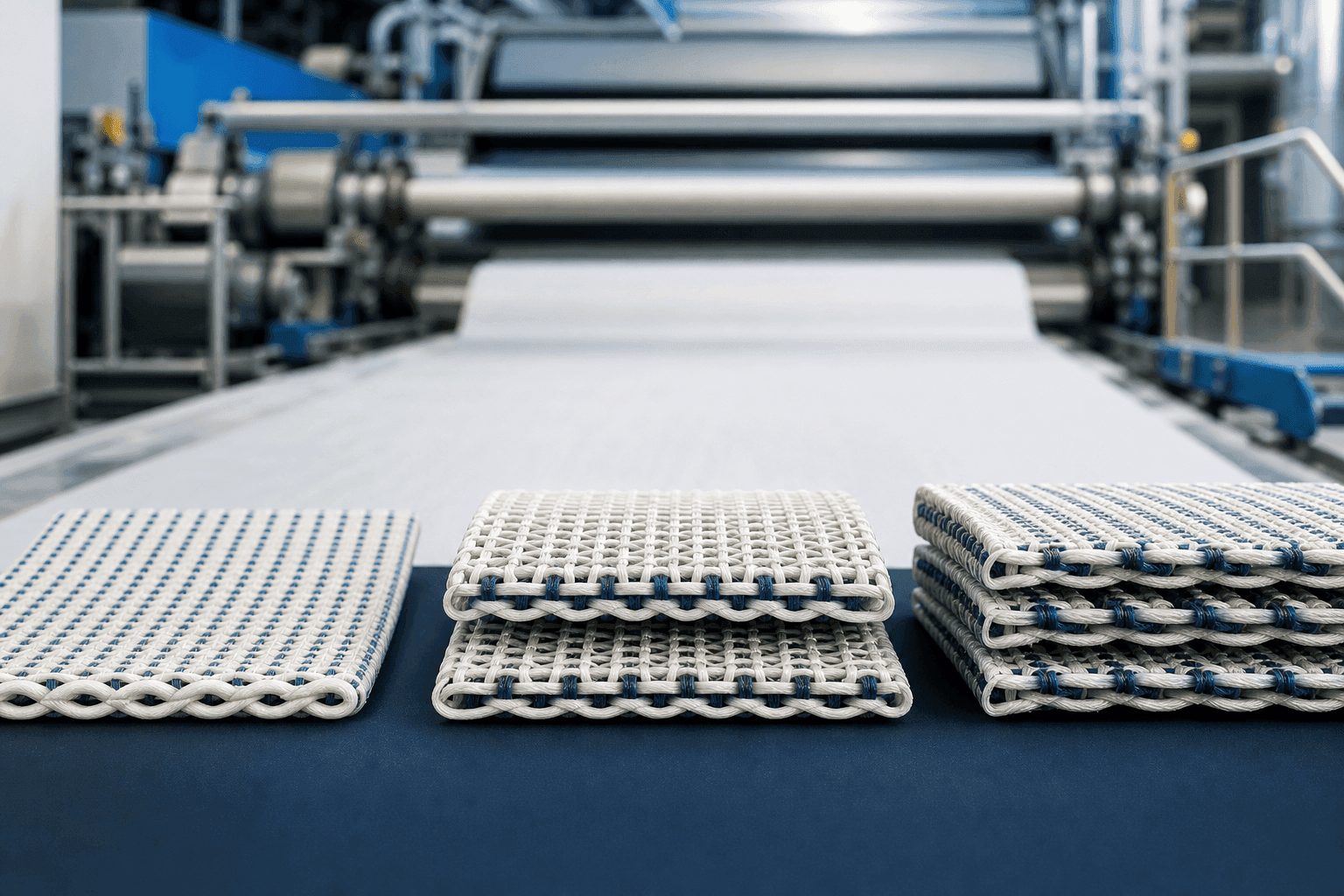
Single Layer: One set of MD + CD yarns, best drainage (500-800 CFM), lowest FSI (50-80), suitable for low-speed heavy-weight grades.
Double Layer: Two sets of CD yarns, FSI 80-120, CFM 400-650, the mid-speed workhorse.
Triple Layer: Separate top (fine) and bottom (wear-resistant) weaves bonded by binder yarns, FSI 130-200+, CFM 250-500, typical life 60-150 days.
SSB (Sheet Support Binder): A premium triple-layer variant with an optimized binder design intended to balance sheet support, drainage, marking risk and wear resistance. Confirm the expected trade-offs against the exact construction and machine conditions.
Technical Background
This answer is based on PAPTEX's expertise in Forming Fabric. PAPTEX provides engineered fabric solutions to 200+ paper mills worldwide.
Related Resources
- 📖 View our Product Knowledge for more information
- 📋 Browse Forming Fabric related articles
- 📞 Contact PAPTEX Engineers for personalized recommendations for your paper machine
Last updated: July 2026
Related Articles
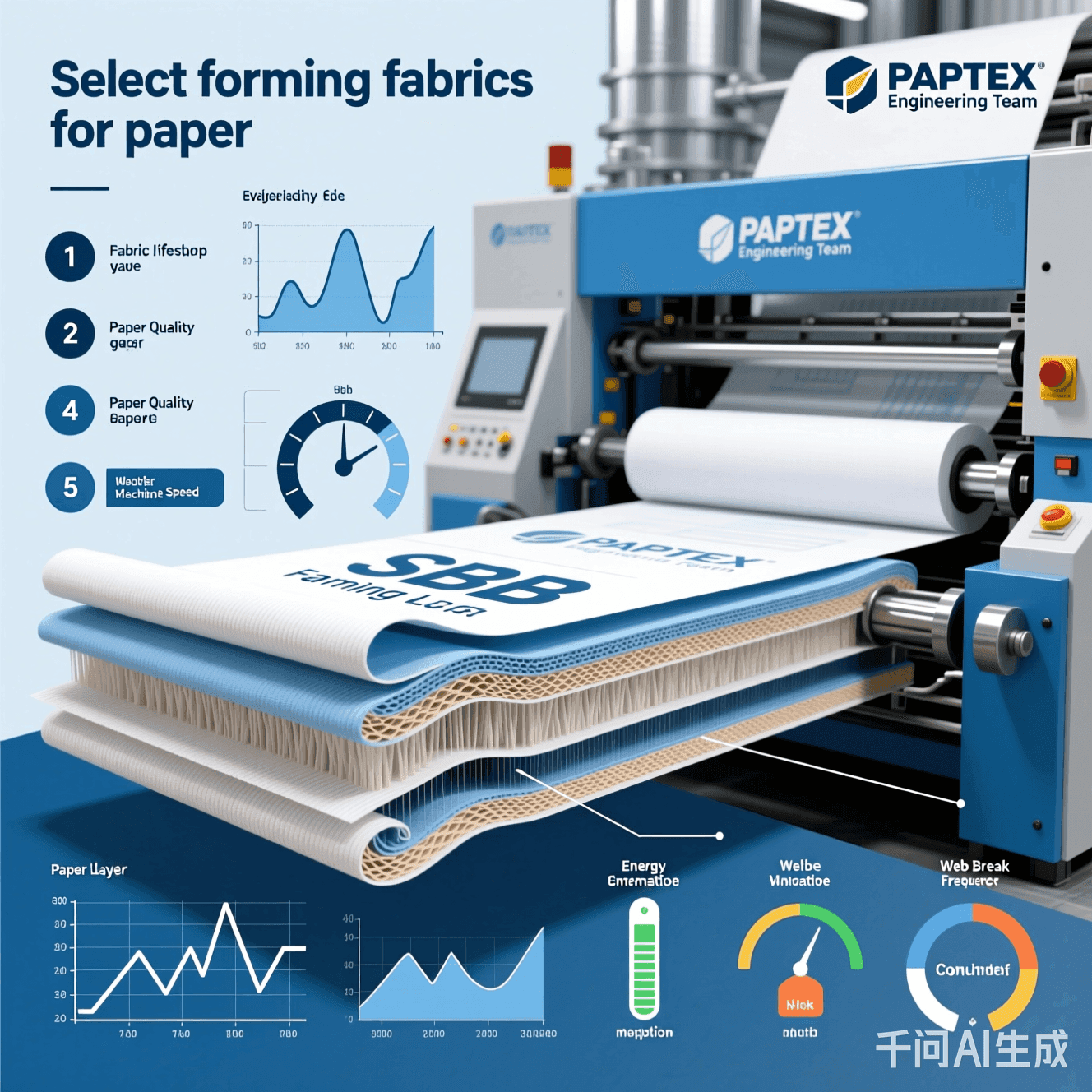
How to Choose the Right Forming Fabric
Choose a forming fabric using paper grade, furnish, former configuration, drainage, sheet-quality targets, machine data and current-fabric observations.
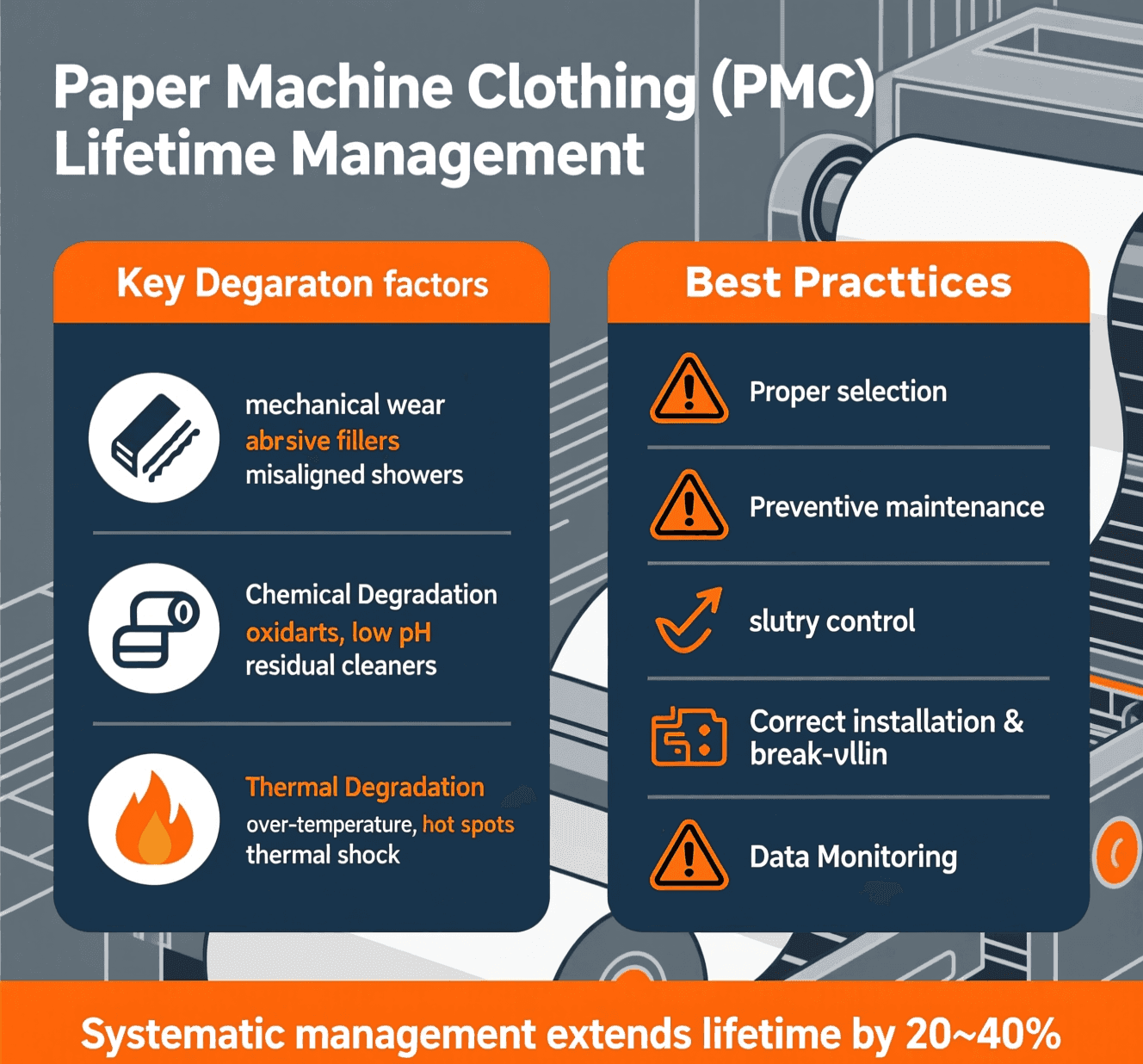
How to Extend Paper Machine Clothing Service Life
Understand the key factors affecting fabric life and discover practical tips for extending replacement intervals.
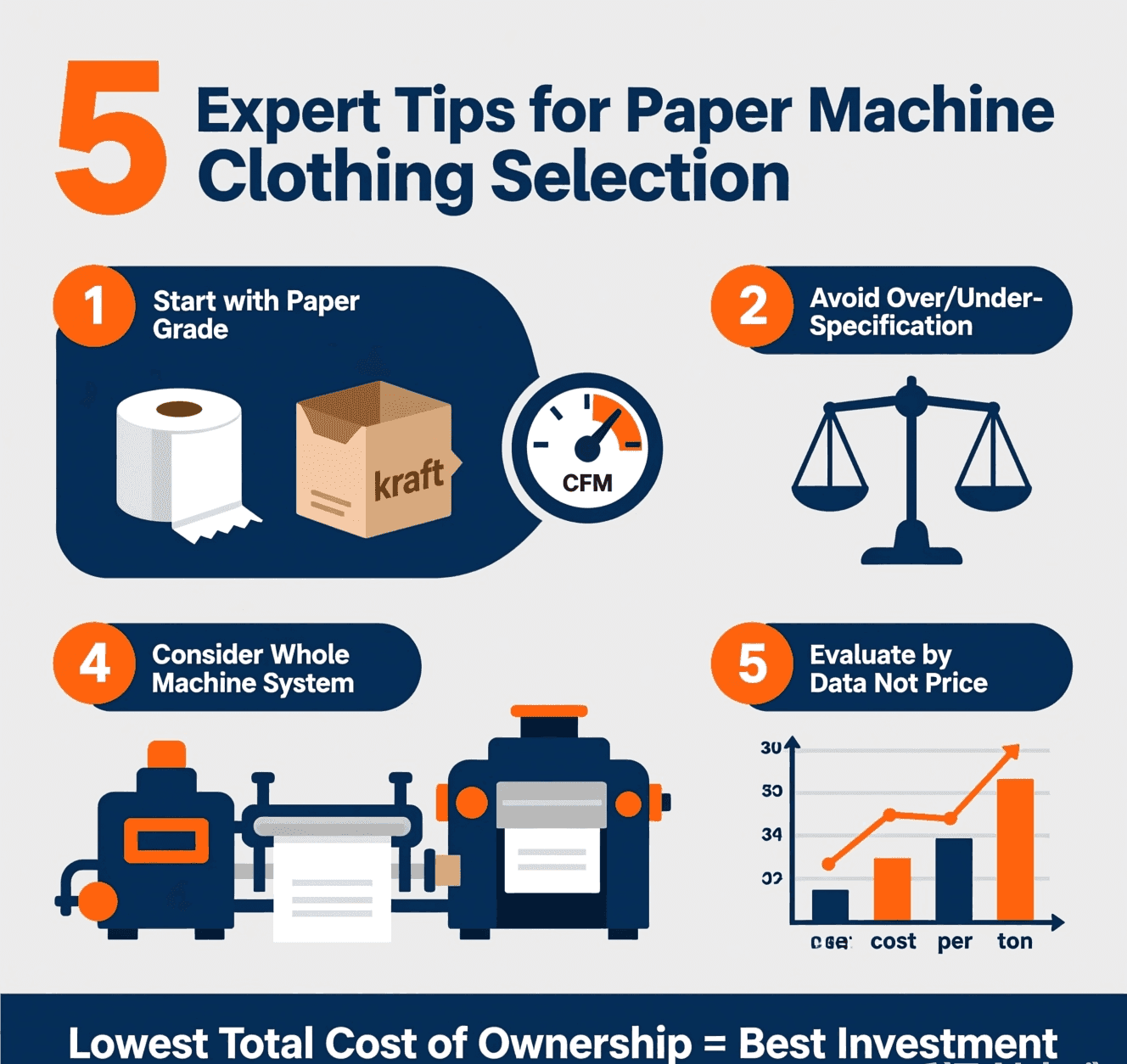
Top 5 Tips for Paper Mill Managers Selecting PMC Fabrics
Five practical checks for selecting paper machine clothing from machine position, furnish, operating data, baseline performance and measured total cost.