Troubleshooting Guide
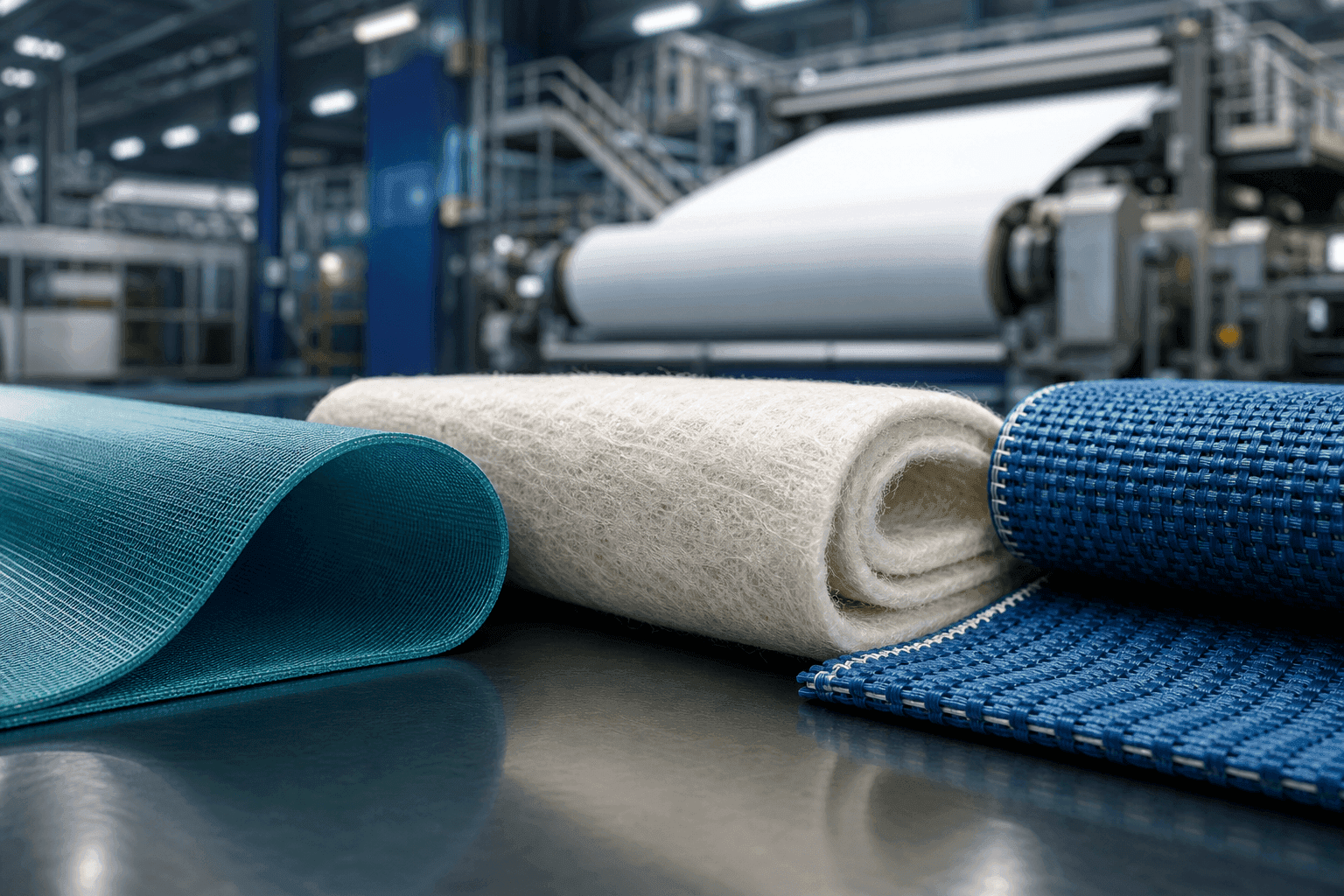
Systematic Diagnosis of Common Paper Machine Clothing Issues
Paper machine problems are the #1 killer of machine efficiency. This guide provides systematic diagnostic methods.
Diagnostic Methodology
- Identify Problem Pattern: Fixed location or moving? Immediate or gradual onset?
- Rule Out Variables: Check raw materials, chemicals, machine settings
- Fabric vs. Machine: Mark fabric edge — does defect follow fabric or stay?
- Systematic Inspection: From headbox to reel, check each section
- Data Collection: Record speed, vacuum levels, tensions, temperatures
Forming Fabric Issues
Sheet Marking (Wire Marks)
- Symptoms: Visible pattern on paper surface
- Causes: Binder knuckle protrusion (standard triple-layer most common), insufficient tension, mesh too coarse for basis weight, excessive vacuum
- Solutions: Upgrade to SSB, increase tension within 4-8 kN/m, optimize mesh count, reduce vacuum to minimum needed
Edge Wear / Cracking
- Causes: Excessive deckle pressure, roll misalignment (high edge tension), uneven tension, fabric-frame friction, chemical attack from edge showers
- Diagnosis: Clean cut = alignment issue. Multiple small cracks = tension/support issue
Short Life
- Investigation: Check stock changes (fiber source, recycled %, new fillers), machine changes (foil/vacuum/roll adjustments), cleaning system failures, chemical changes
- Corrective: PA yarns in wear zones, higher shower pressure (25-40 bar), more frequent inspection
Press Felt Issues
Rapid Plugging / Filling
- Causes: Inadequate showering (<20 bar) or clogged nozzles, chemical precipitation, excessive carryover from forming section, felt too dense for stock
- Solutions: Weekly nozzle inspection, check pH and implement chemical cleaning, improve retention, specify more open fiber layer
Premature Edge Wear
- Causes: Deckle board friction (adjust to 3-5mm gap), roll misalignment (laser alignment), uneven tension, vacuum box edge seal issues
- Diagnosis: Mechanical damage (cuts) vs. fatigue cracks
Nip Dryness Drop >3%
- ≈12% more steam consumption
- Check: Felt void volume/CFM (<60% of new = replace), shower pressure (20-35 bar), nozzle condition, uhle box vacuum (30-50 kPa), nip load settings, press roll surface condition
- Gradual decline = felt degradation. Sudden = process/mechanical issue
Dryer Fabric Issues
Fabric Tracking / Misalignment
- Check: Uniform cross-machine tension, annual laser alignment of all rolls, gradual temperature ramp-up (10-15°C/30min) to prevent shrinkage, monthly guide board/roll inspection
- PAPTEX dryer fabrics: <0.5% width shrinkage at 180°C
Seam Failure
- Causes: Seam material unsuitable for temperature, rapid heating, seam passing over stationary elements, uneven tension, pin line wear from insufficient lubrication, seam not perpendicular to machine direction
- Prevention: Verify material grade, follow 10-15°C/30min ramp, proper lubrication schedule
Moisture Streaks After Dryer Section
- Check: Uneven dryer fabric CFM distribution, seam CFM mismatch (streak frequency = seam spacing), blocked pocket ventilation, press section cross-machine moisture profile, condensate removal issues
When to Contact PAPTEX Immediately
Contact PAPTEX when:
- Life drops unexpectedly >30%
- Catastrophic failure occurs
- Quality issues can't be resolved within 24 hours
- Planning major process changes
- Installation guidance needed
- Any safety concerns
24/7 WhatsApp or engineering@paptex.com. Provide photos, videos, data, and fabric samples.
Related Articles
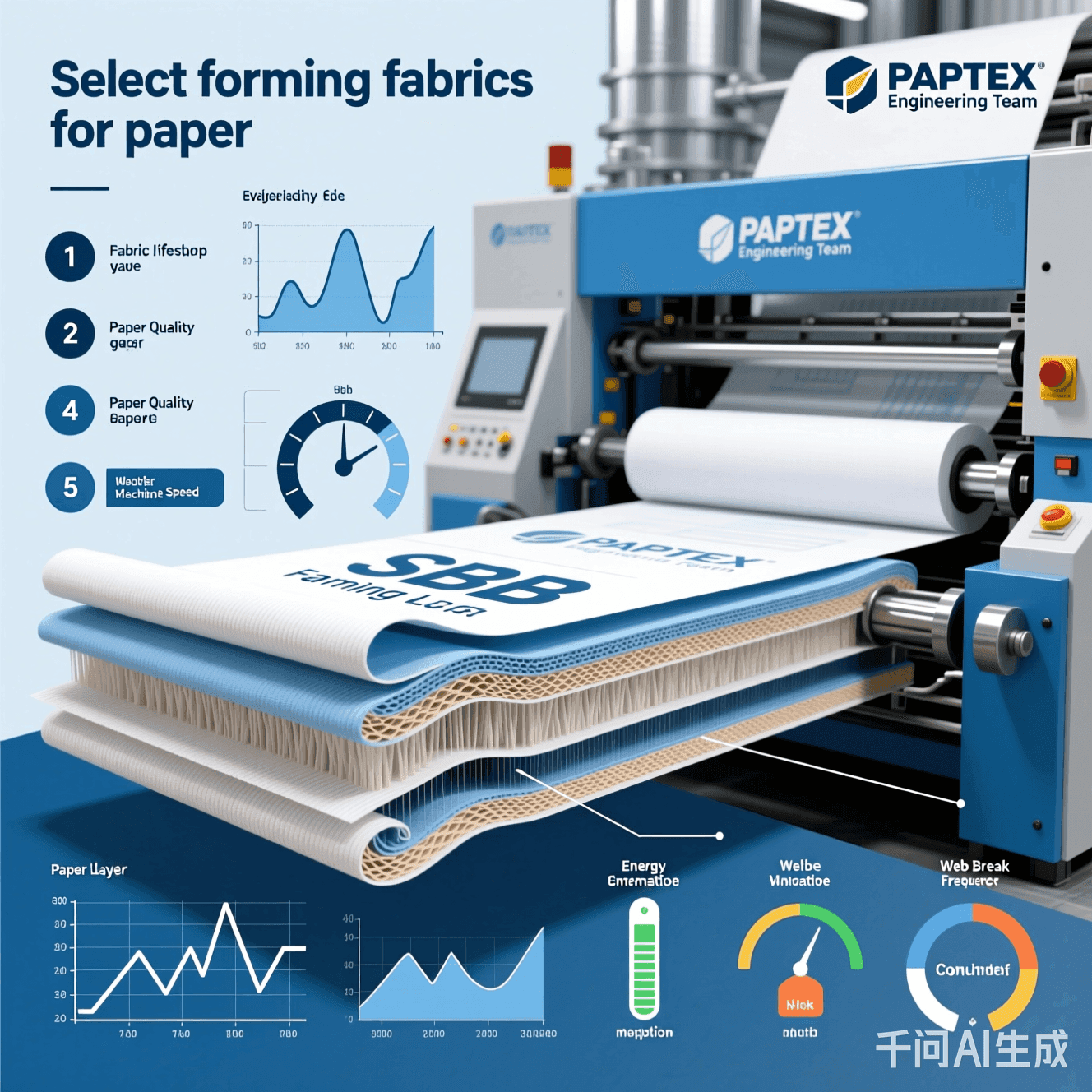
How to Choose the Right Forming Fabric
Choose a forming fabric using paper grade, furnish, former configuration, drainage, sheet-quality targets, machine data and current-fabric observations.
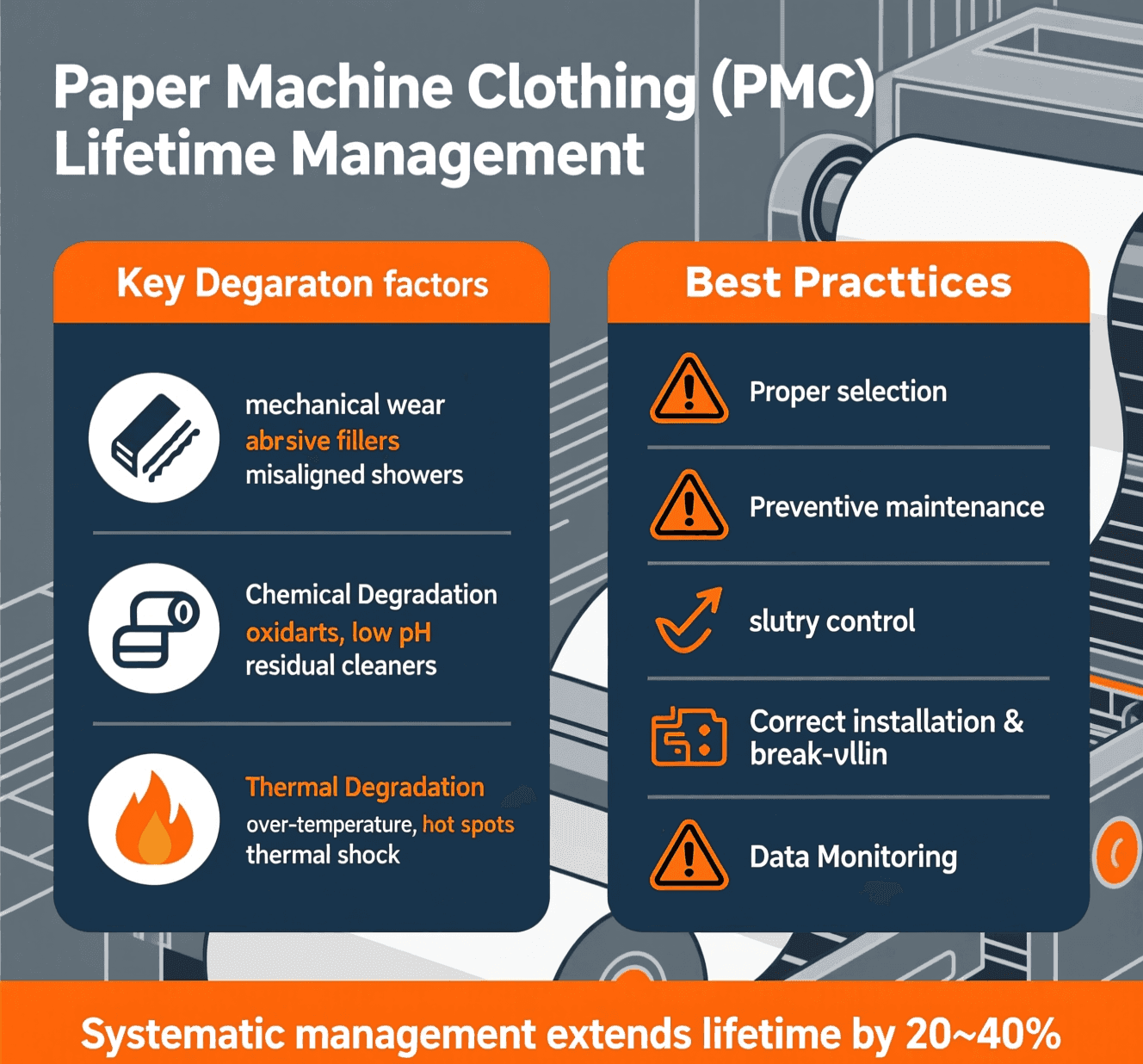
How to Extend Paper Machine Clothing Service Life
Understand the key factors affecting fabric life and discover practical tips for extending replacement intervals.
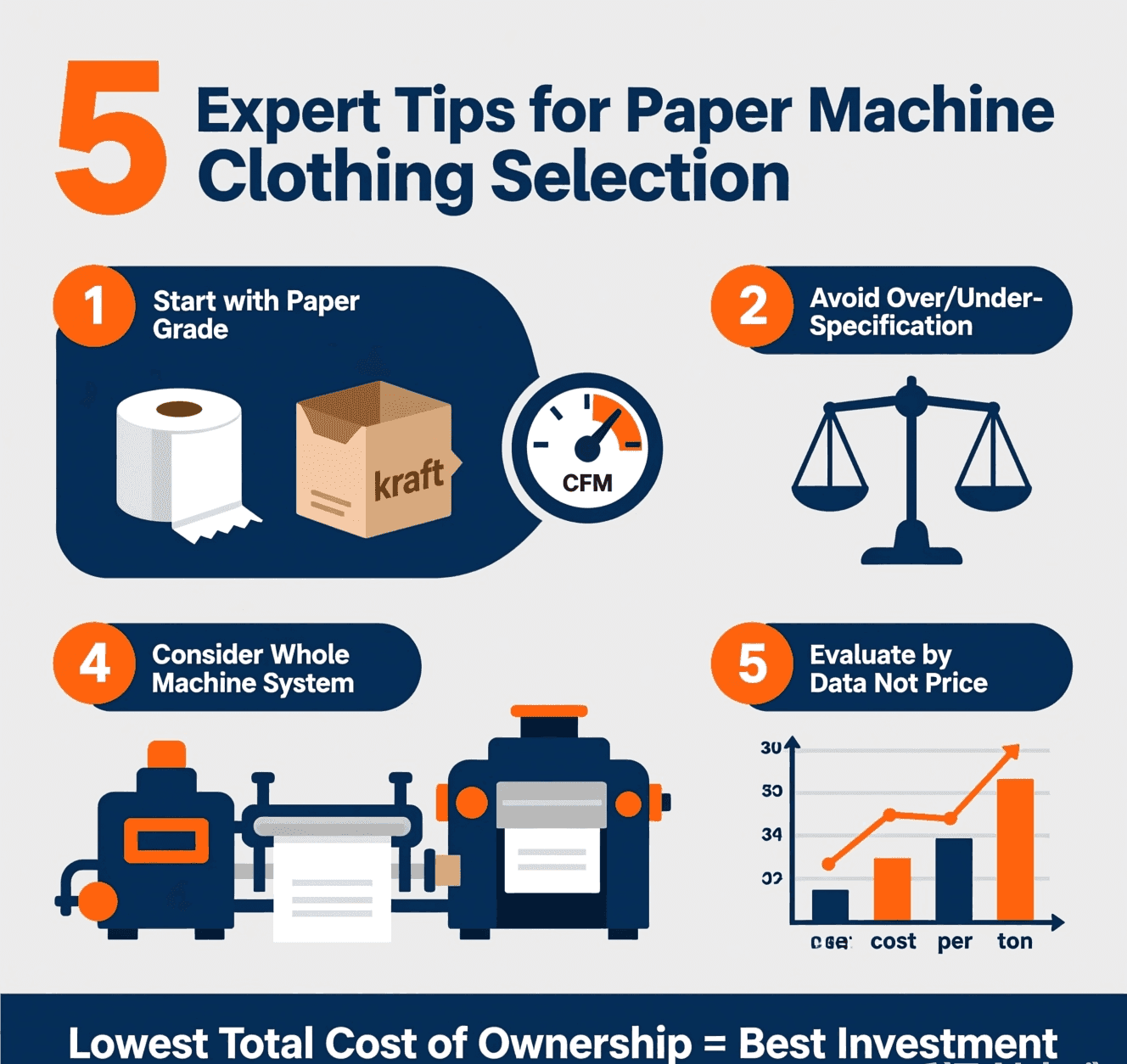
Top 5 Tips for Paper Mill Managers Selecting PMC Fabrics
Five practical checks for selecting paper machine clothing from machine position, furnish, operating data, baseline performance and measured total cost.