Paper Machine Clothing Guide
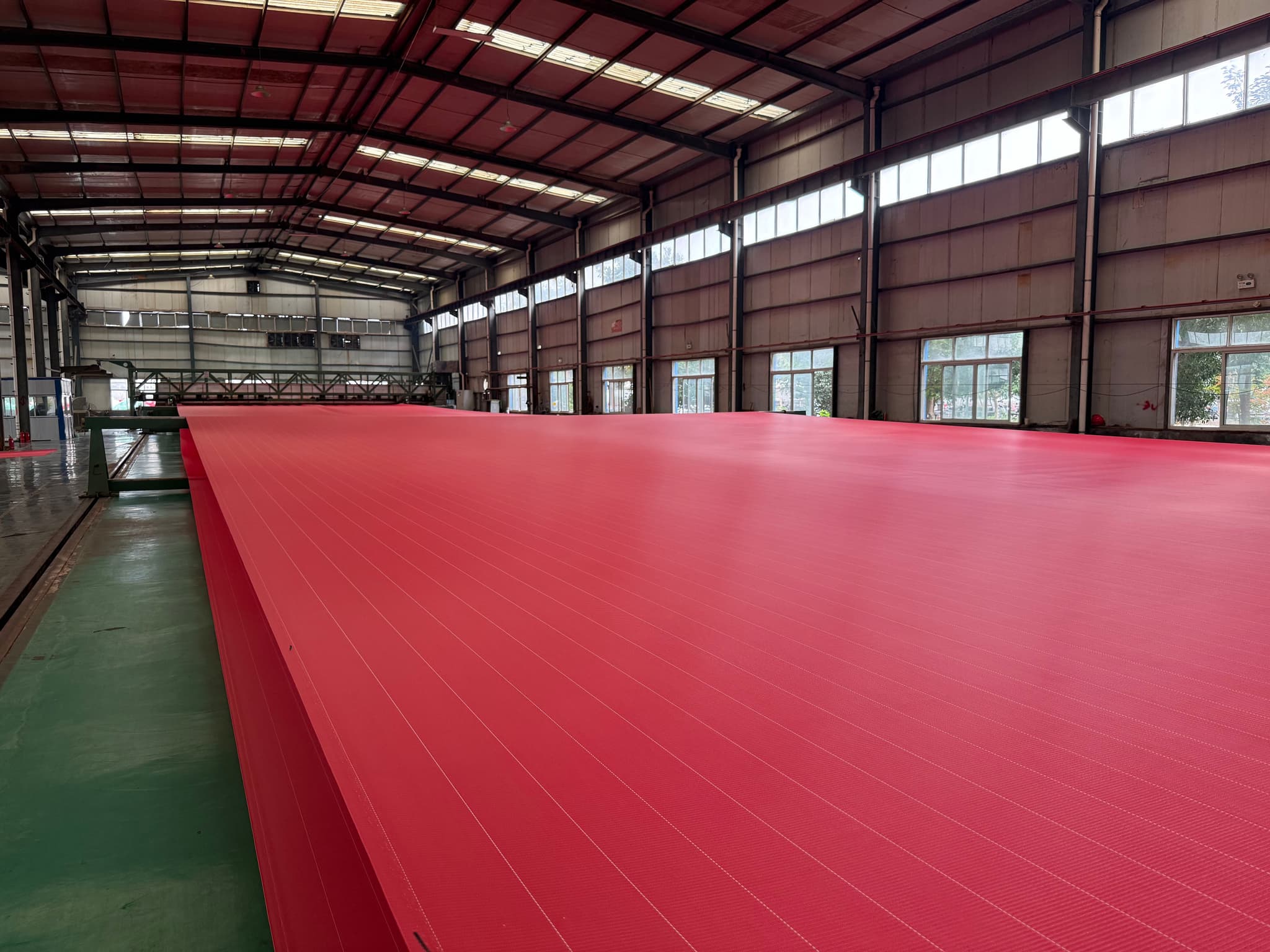
Paper machine clothing (PMC) is the group of engineered fabrics used in the forming, press and dryer sections of a paper machine. Each section has a different job, so a useful product review starts with the machine position and operating conditions rather than a generic fabric name.
This guide explains the role of each PMC family, the information a supplier needs, and the next step for a position-specific review.
The three paper machine clothing families
| Machine section | Clothing family | Main role | Start the review with |
|---|---|---|---|
| Forming section | Forming fabric | Support the sheet while water leaves the stock | Paper grade, furnish, forming configuration, speed, drainage and sheet-quality concerns |
| Press section | Press felt | Carry water away from the sheet through the press nip | Press position, nip configuration, conditioning system, moisture profile and current-felt condition |
| Dryer section | Dryer fabric | Guide and support the sheet through the dryer section | Dryer group, pocket ventilation, seam requirements, contamination and guiding history |
The table is a starting point. Final construction, dimensions and joining details depend on the actual position and must be confirmed from machine data.
Forming fabrics
A forming fabric supports the fibre mat while drainage and sheet formation develop. The selection question is not simply whether a construction has one, two or more layers. The useful question is which construction balances sheet support, drainage, stability, wear behaviour and cleaning for the actual forming position.
Prepare the paper grade, basis-weight range, furnish, machine speed, former type, high-pressure shower arrangement and the symptoms seen on the current fabric. Formation variation, wire marks, retention changes, guiding instability and abnormal wear point to different review paths.
See the forming fabric product family for available construction categories.
Press felts
A press felt receives water expressed in the nip and carries it away while supporting the sheet. Press position, base-fabric construction, batt design, surface condition and void structure must be considered together with the press configuration and conditioning system.
For a useful review, identify the exact press position and provide the nip arrangement, current felt construction, installed dimensions, operating speed, shower and vacuum information, moisture profile, startup behaviour and the observed problem. Plugging, crushing, edge wear, vibration and uneven moisture should be described separately because they do not share one universal cause.
See the press felt product family for the main construction options.
Dryer fabrics
A dryer fabric supports and guides the sheet through the dryer section while allowing air movement around the sheet and cylinders. Fabric structure, permeability, seam profile, dimensional stability, contamination behaviour and guiding all affect suitability for a given dryer group.
Record the dryer group, machine speed, installed length and width, seam type, pocket-ventilation arrangement, temperature and humidity observations, cleaning method, contamination type and the failure mode of the current fabric. A fabric chosen for one group should not be copied to another group without checking those conditions.
See the dryer fabric product family for flat-yarn, spiral and other available structures.
Information needed for a technical review
Use the original plant units and provide measured values instead of estimates where possible:
- mill and paper-machine identification;
- machine section and exact clothing position;
- paper grade, basis-weight range and furnish details;
- operating speed and normal operating range;
- finished length, width, seam or joining requirement;
- current clothing supplier, construction and installation date if known;
- relevant vacuum, shower, nip, tension, permeability, temperature or humidity data for that section;
- the observed symptom, when it started and where it appears;
- clear photos, drawings or profiles that show the position and problem;
- the main trial objective and how the mill will judge the result.
Download the paper machine parameter form to collect these details in one file. Keep the original units and attach supporting photos or drawings.
How to choose the next step
If you are still identifying the product family, use the fabric selection tool. If you already know the machine position, send the completed parameter form through the technical contact page.
PAPTEX will use the supplied machine and operating data to review the applicable product family and identify which dimensions or operating details still need confirmation before a recommendation or quotation.
Related Articles
How to Choose the Right Forming Fabric
Choose a forming fabric using paper grade, furnish, former configuration, drainage, sheet-quality targets, machine data and current-fabric observations.
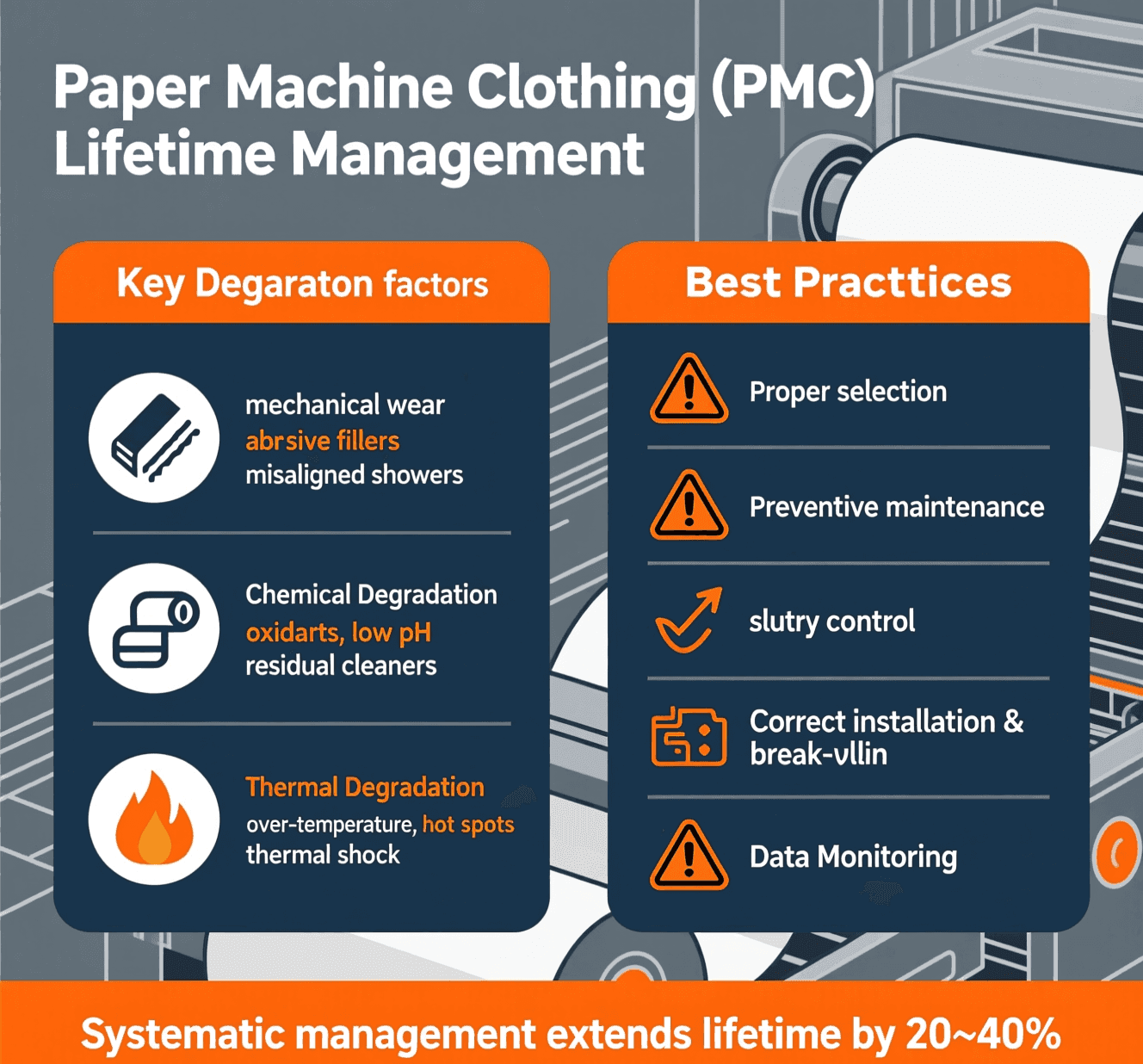
How to Extend Paper Machine Clothing Service Life
Understand the key factors affecting fabric life and discover practical tips for extending replacement intervals.
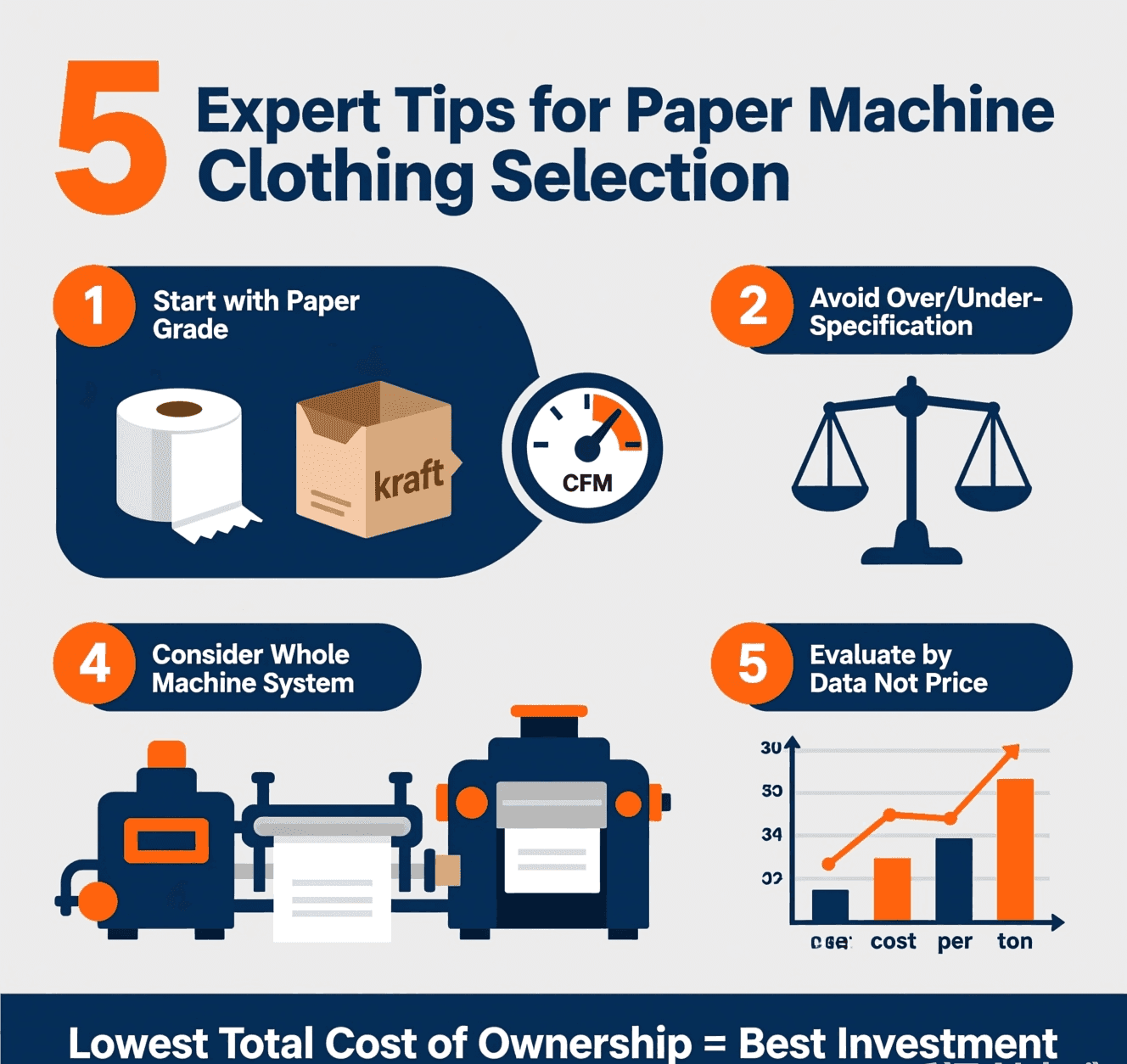
Top 5 Tips for Paper Mill Managers Selecting PMC Fabrics
Five practical checks for selecting paper machine clothing from machine position, furnish, operating data, baseline performance and measured total cost.