Procurement Guide
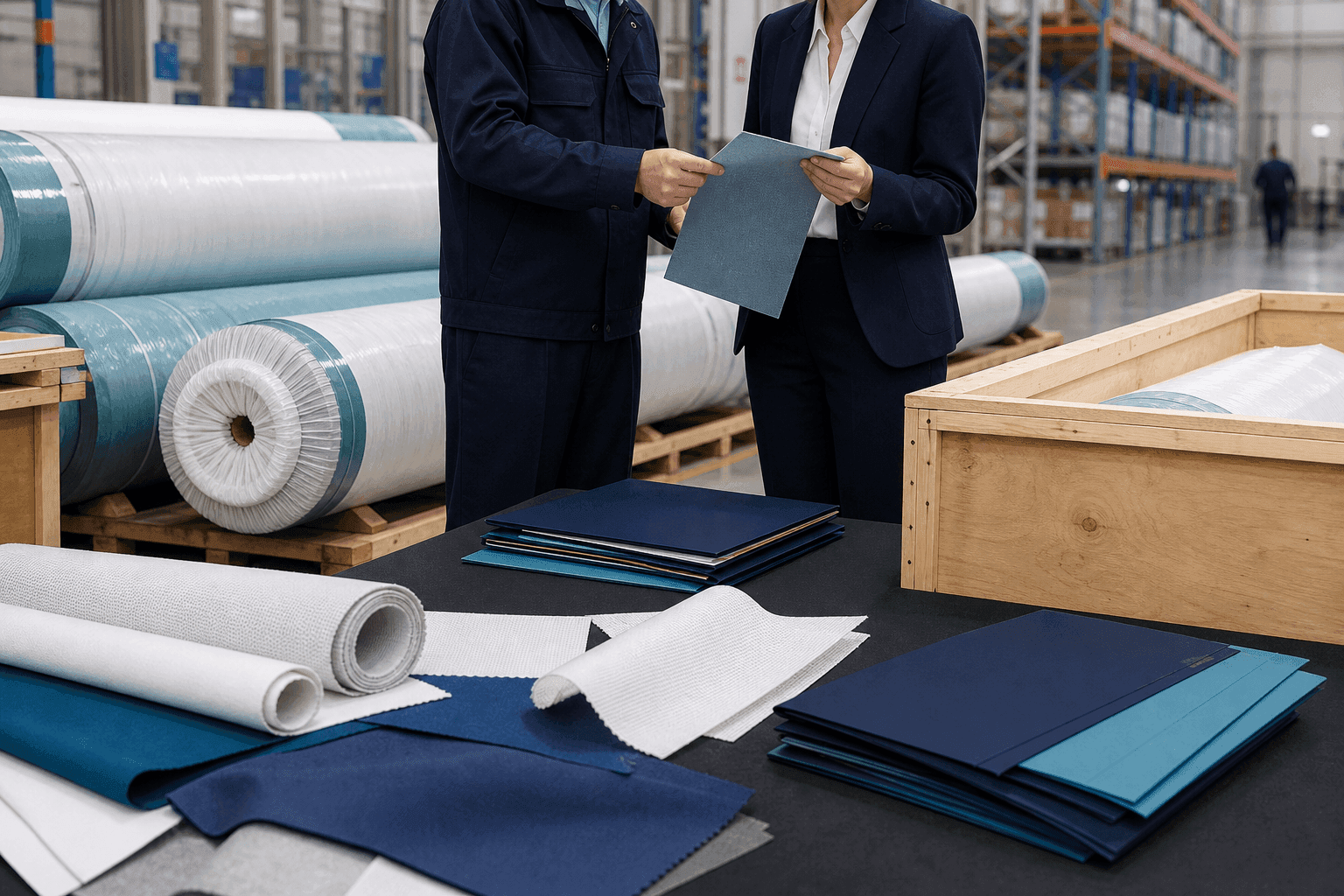
Complete Paper Machine Clothing Procurement Framework
Purchasing paper machine clothing is about more than price comparison. This guide provides a systematic procurement decision framework.
Step 1: Specify Requirements
Machine Information Collection Checklist
- Machine manufacturer and model
- Machine type (fourdrinier / twin-wire / hybrid)
- Machine width (deckle) and wire width
- Design speed and current operating speed
- Grades produced (type, basis weight range, furnish)
- Current fabric specifications and performance
- Annual consumption quantities per position
- Performance goals and pain points
Performance Baseline Documentation
- Current fabric life (days and tons)
- Current machine efficiency (%)
- Sheet quality metrics (formation, moisture profile, strength)
- Steam consumption (tons steam / ton paper)
- Downtime frequency and causes
Step 2: Supplier Evaluation (5 Dimensions)
Dimension 1: Technical Capability
- In-house design and engineering team
- Raw material quality and traceability (Teijin PET, Nextrusion PA, etc.)
- Testing laboratory: ISO 9237 (permeability), ISO 9073 (tensile), ISO 12947 (abrasion)
- Machine-specific design capability (not just off-the-shelf)
- R&D investment and innovation pipeline
Dimension 2: Quality Systems
- ISO 9001:2015 certification
- Raw material traceability (complete chain of custody)
- Pre-shipment testing (every fabric tested before dispatch)
- Statistical process control in manufacturing
- Defect rate and claim history
Dimension 3: Service & Support
- Installation guidance (especially for new customers)
- Performance monitoring and optimization
- Troubleshooting response time (24h target)
- Technical training for mill personnel
- Dedicated account engineer or rotating support
Dimension 4: Commercial Terms
- Pricing transparency (fabric cost + freight + any extras)
- Payment terms (30% advance + 70% before shipment is standard; L/C for >$50K)
- Delivery lead time (standard: 15-25 days forming/dryer, 20-30 days complex press)
- Consignment inventory program availability
- Warranty and claims process
Dimension 5: Track Record
- Similar machine references (same manufacturer, grade, speed)
- Customer retention rate
- Average fabric life on comparable applications
- Case studies with measurable results
Step 3: TCO Analysis (Total Cost of Ownership)
Compare cost per ton, not fabric price:
| Cost Element | Lower-Price Supplier | PAPTEX Premium | Difference |
|---|---|---|---|
| Fabric price per set | Lower | Higher | +15-20% |
| Fabric life (days) | Shorter | Longer | +30-50% |
| Annual fabric sets needed | More | Fewer | -20-30% |
| Annual fabric cost | Moderate | Comparable | ~Even |
| Machine efficiency | Lower | Higher | +2-5% |
| Steam savings | Baseline | -8-15% | Significant |
| Quality claims / waste | More | Less | Reduced |
| Total cost per ton | Higher | Lower | PAPTEX wins |
Step 4: RFQ Preparation
Essential Information to Include:
- Full machine specifications (manufacturer, model, year, type, width, speed range)
- Position details (which press/forming/dryer position)
- Current fabric: type, make, specifications, performance (life, issues)
- Paper grades produced: type, basis weight range, furnish composition
- Operating conditions: speed, temperature, pH, chemical additives
- Shower details: type, pressure, chemical use
- Performance targets: desired life improvement, quality goals, energy targets
- Quantity: annual estimated usage, trial order size
- Delivery requirements: lead time expectations, shipping terms (FOB/CIF)
- Quality documentation: test certificates required, inspection protocols
Step 5: Trial and Validation
Trial Protocol:
- Start with 1-2 positions (not entire machine)
- Document baseline performance comprehensively
- Run trial fabric for full expected life
- Compare: life (days & tons), machine efficiency, sheet quality, energy consumption
- Calculate actual TCO vs. previous supplier
Quality Verification on Receipt:
- Visual inspection (packaging integrity, fabric appearance)
- Dimensional check (width, length per order)
- Weight verification (for press felts)
- Permeability check (CFM meter)
- Seam integrity inspection
- Compare against order specifications and pre-shipment certificates
PAPTEX Commercial Summary
| Item | Standard | Notes |
|---|---|---|
| Pricing | Mid-upper tier | 10-20% above local/regional; 15-30% below top European |
| Lead Time | 15-25 days (forming/dryer) | 20-30 days (complex press felts) |
| Expedite | 7-10 days | Emergency orders |
| Payment | 30% advance + 70% before shipment (T/T) | L/C at sight for >$50K |
| Shipping | FOB Shanghai/Ningbo (standard) | CIF available; Air freight for urgent |
| Packaging | ISPM 15 wooden crates + moisture barrier | Custom labeling available |
| MOQ | 1 piece per design | Recommended first order: 2 forming (1 running + 1 spare) |
| After-Sales | Installation guidance, performance monitoring, 24h troubleshooting response, quarterly reviews | By 38+ engineer team — not sales reps |
| Samples | A4 fabric swatches (free for qualified inquiries) | Trial fabric at discounted price + engineer support |
| Consignment | Available for regular customers | Pay only upon shipment from consignment stock |
Related Articles
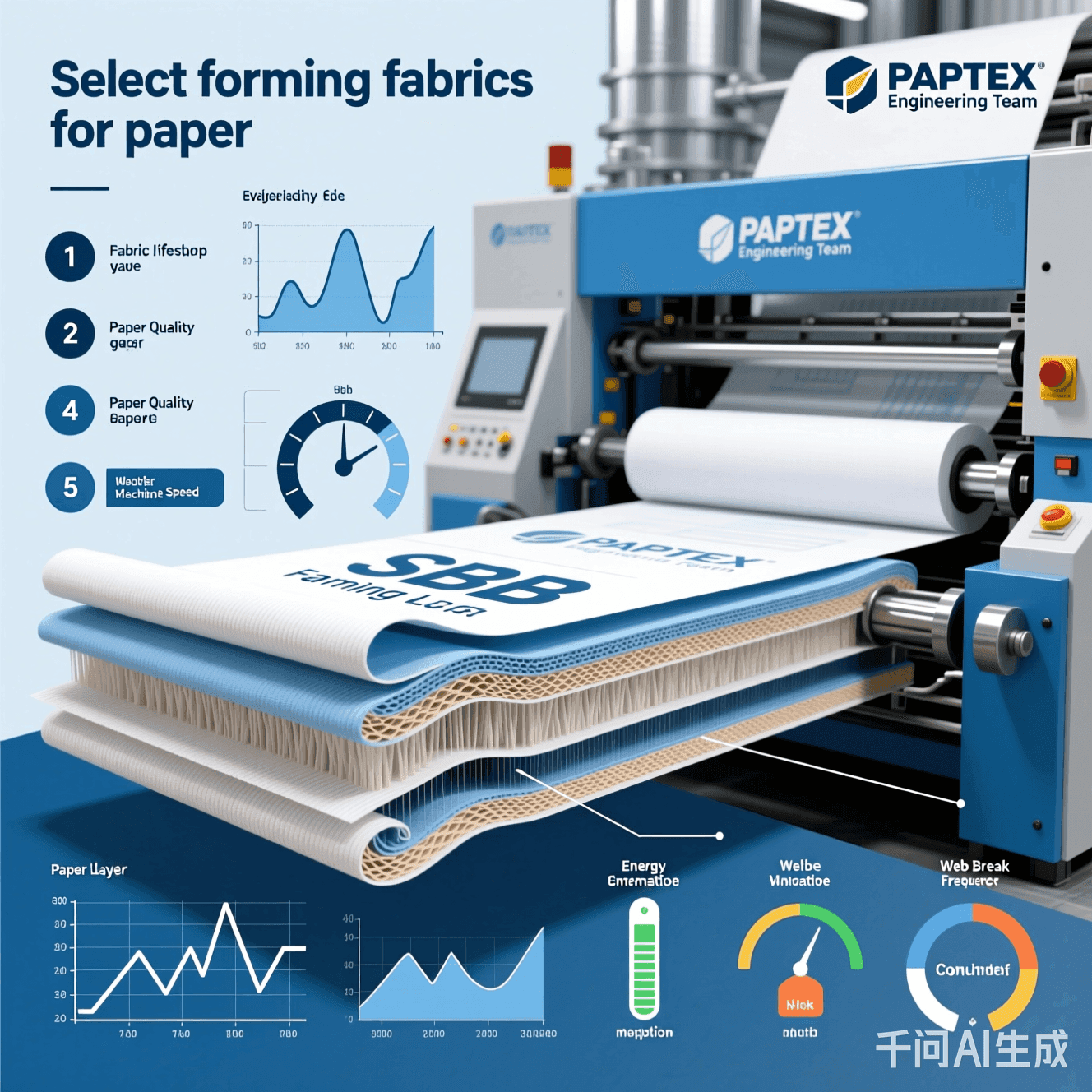
How to Choose the Right Forming Fabric
Choose a forming fabric using paper grade, furnish, former configuration, drainage, sheet-quality targets, machine data and current-fabric observations.
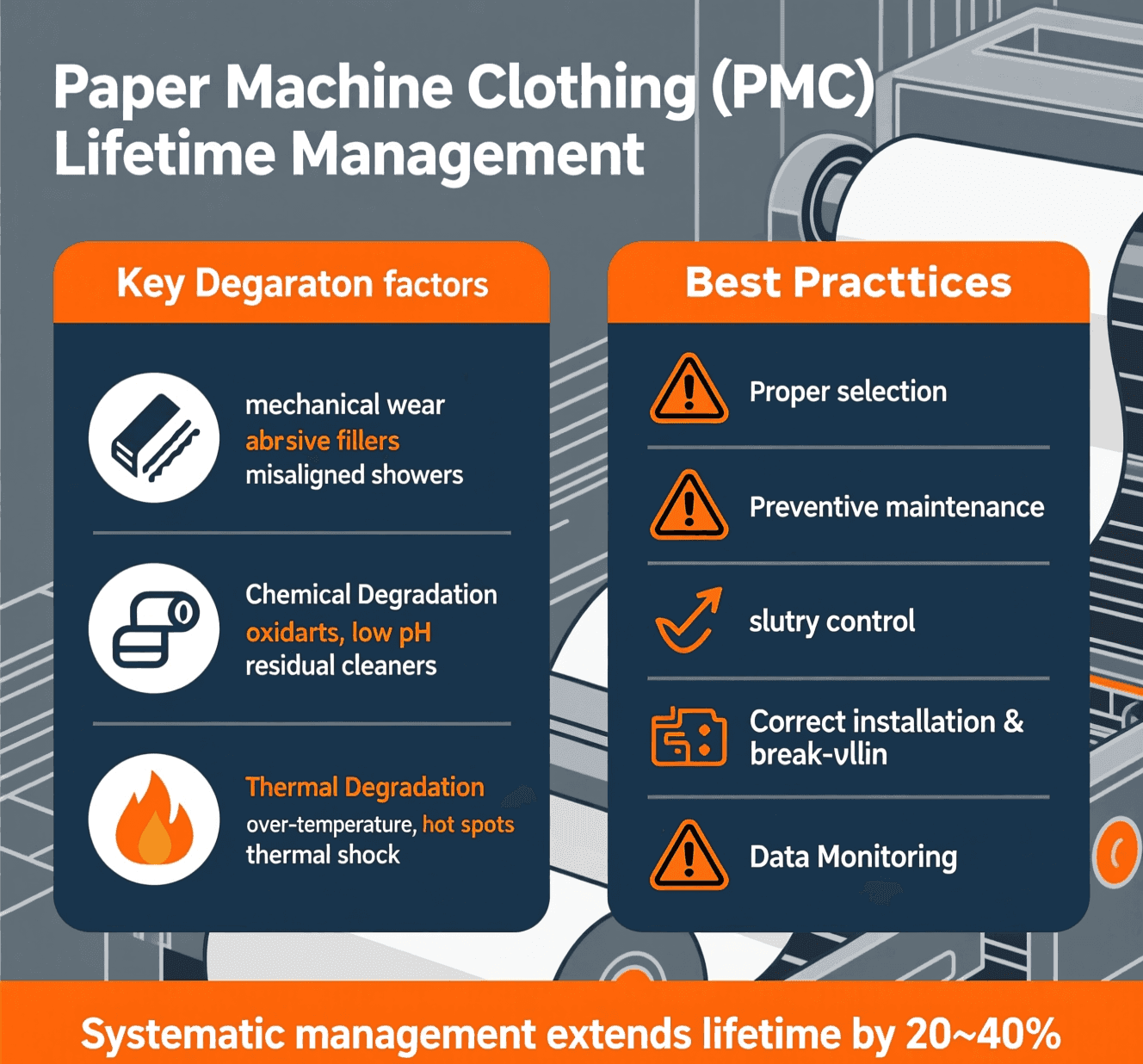
How to Extend Paper Machine Clothing Service Life
Understand the key factors affecting fabric life and discover practical tips for extending replacement intervals.
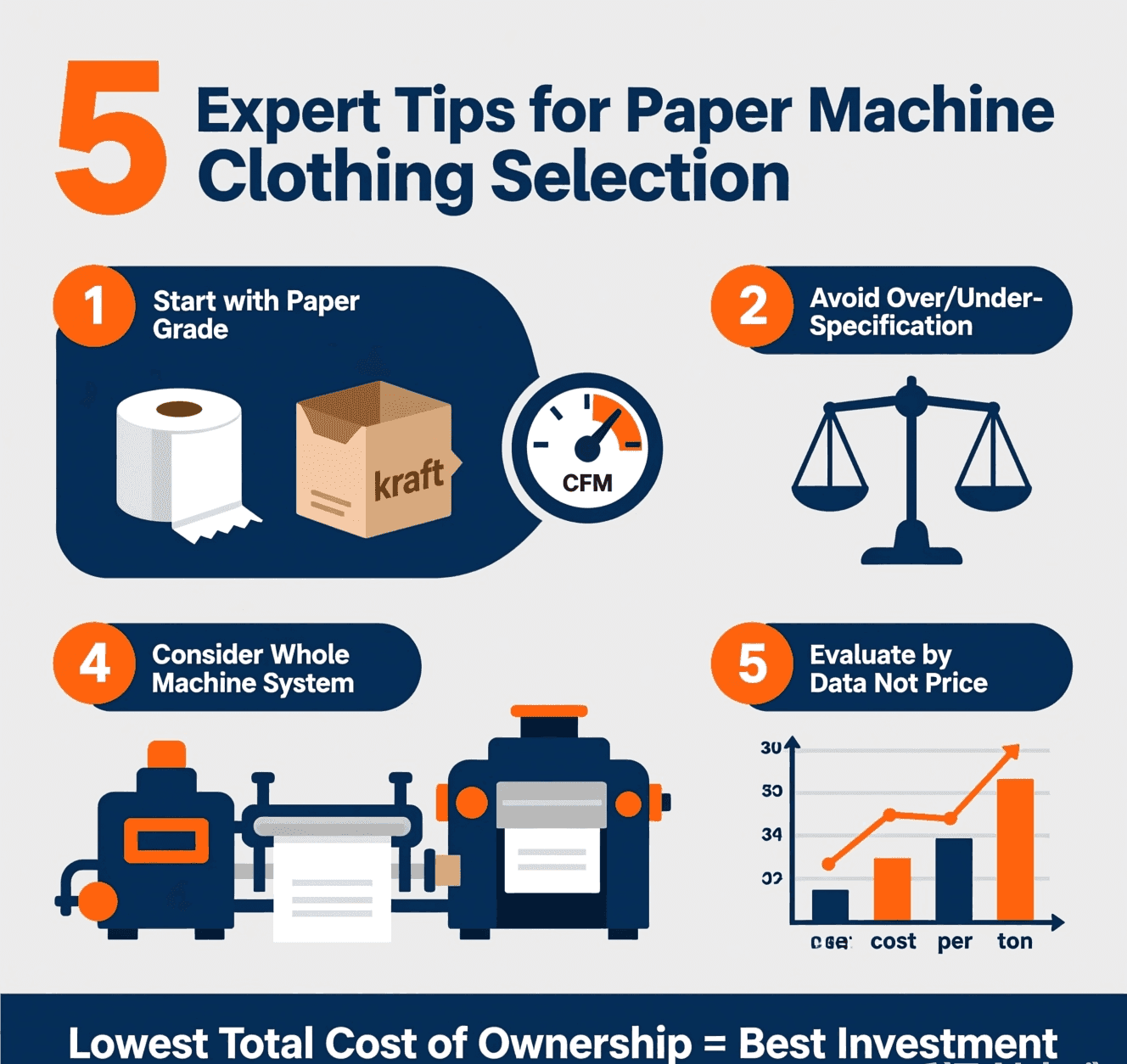
Top 5 Tips for Paper Mill Managers Selecting PMC Fabrics
Five practical checks for selecting paper machine clothing from machine position, furnish, operating data, baseline performance and measured total cost.