Press Fabric Technology: Maximizing Nip Dewatering Efficiency
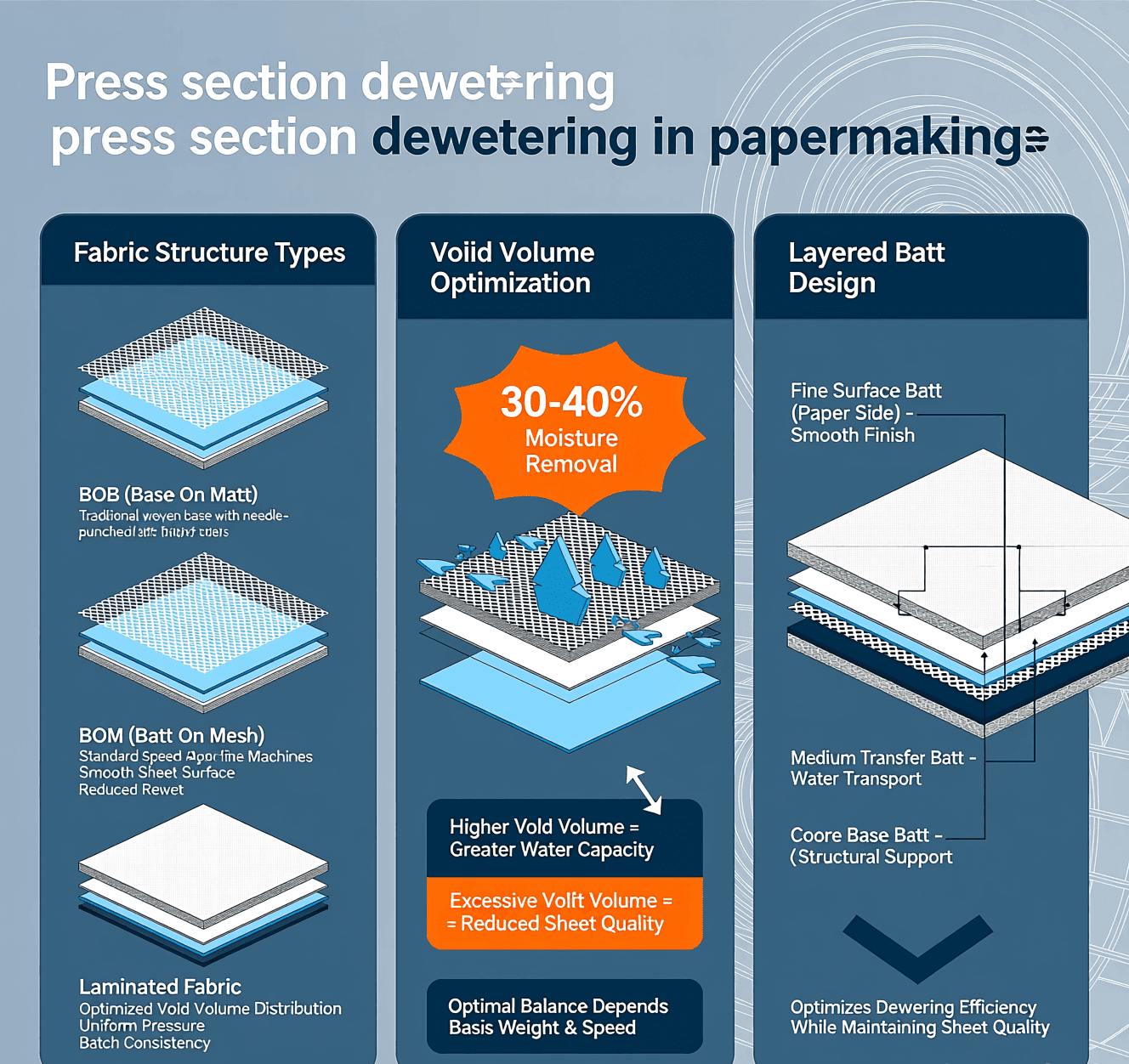
The Science of Press Section Dewatering
The press section removes approximately 30–40% of the water from the sheet, making it the most cost-effective dewatering stage. Press fabric design directly affects nip dewatering efficiency.
Press Fabric Construction Types
Batt-on-Base (BOB):
Traditional design with needled batt layers on a woven base fabric. Suitable for standard applications.
Batt-on-Mesh (BOM):
Finer surface batt layers over an open mesh base. Superior performance for:
- High-speed machines
- Smooth sheet surface requirements
- Reduced sheet rewet
Laminated Press Fabrics:
Multi-layer construction optimized for:
- Void volume distribution
- Pressure uniformity
- Batch-to-batch consistency
Void Volume Optimization
Void volume determines how much water the fabric can handle:
- Higher void volume = Greater water handling capacity
- But excessive void volume can reduce sheet surface quality
- The optimal balance depends on basis weight and speed
Stratified Batt Design
Advanced press fabrics use layered batt construction:
- Fine surface batt layer (sheet side) — smooth finish
- Medium intermediate batt layer — water transfer
- Coarse base batt layer — structural support
This stratified approach optimizes dewatering efficiency while maintaining sheet quality.
Related Articles
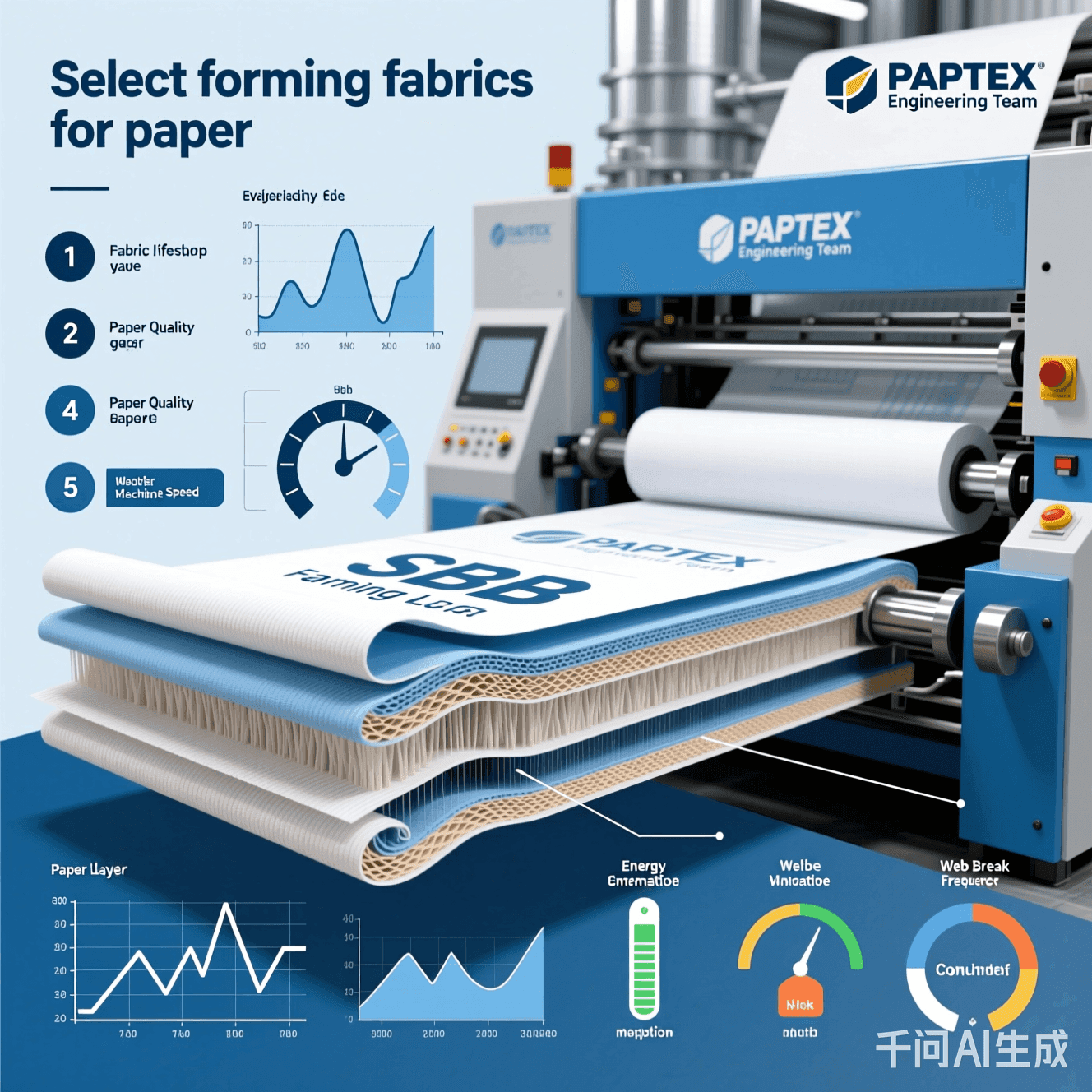
How to Choose the Right Forming Fabric
Choose a forming fabric using paper grade, furnish, former configuration, drainage, sheet-quality targets, machine data and current-fabric observations.
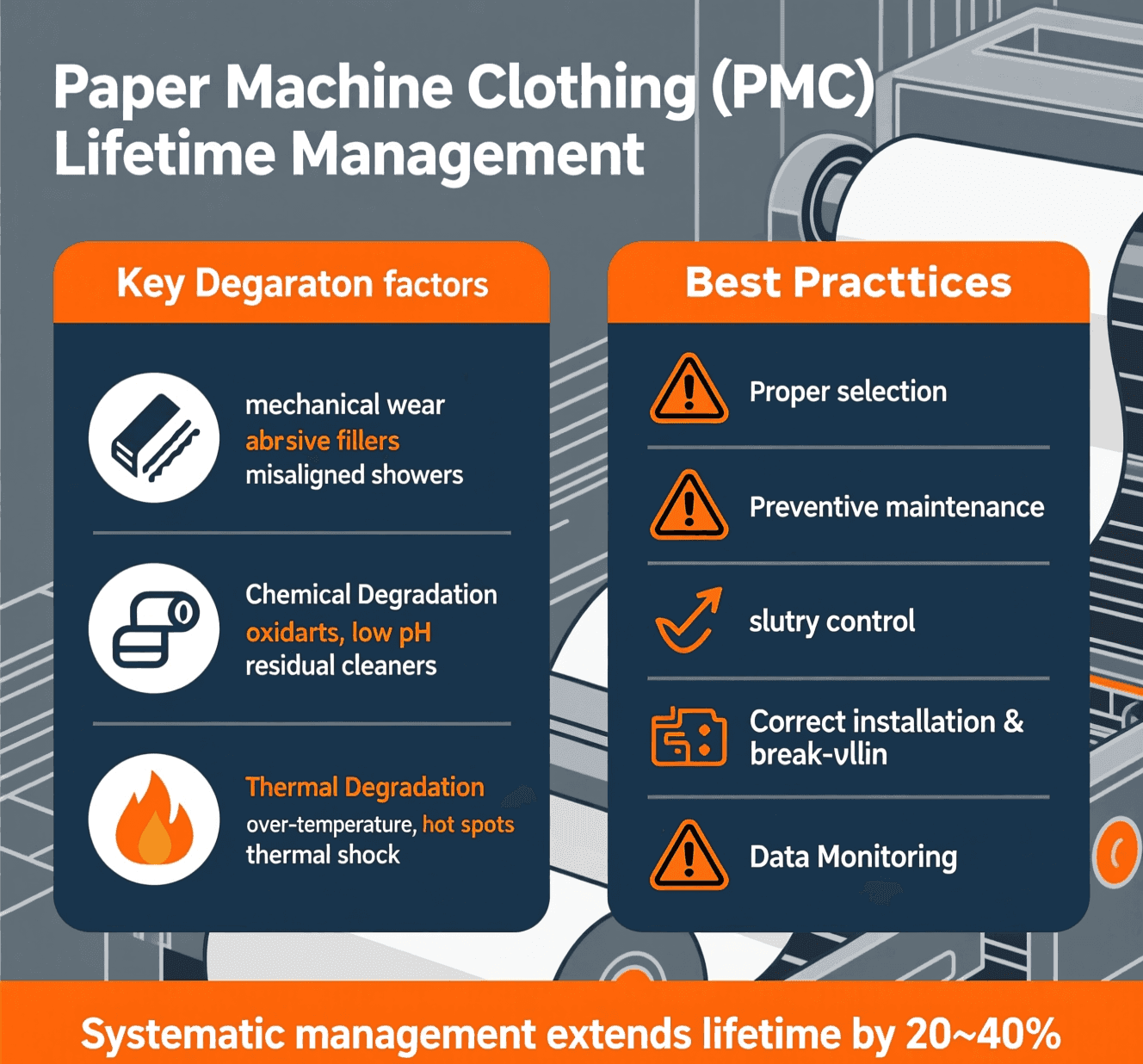
How to Extend Paper Machine Clothing Service Life
Understand the key factors affecting fabric life and discover practical tips for extending replacement intervals.
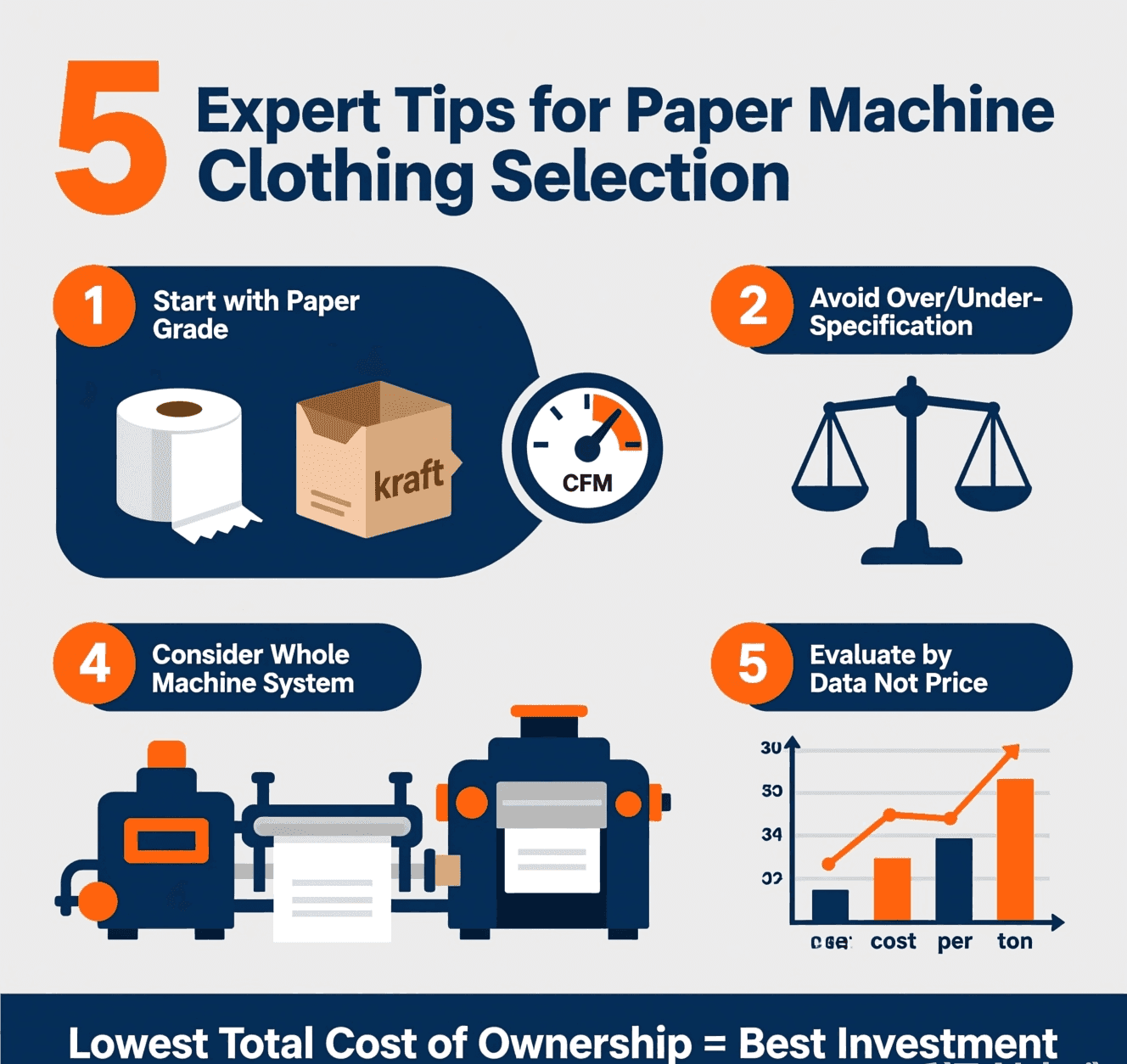
Top 5 Tips for Paper Mill Managers Selecting PMC Fabrics
Five practical checks for selecting paper machine clothing from machine position, furnish, operating data, baseline performance and measured total cost.