PET or PA — Which Material for Forming Fabrics?
FAQ
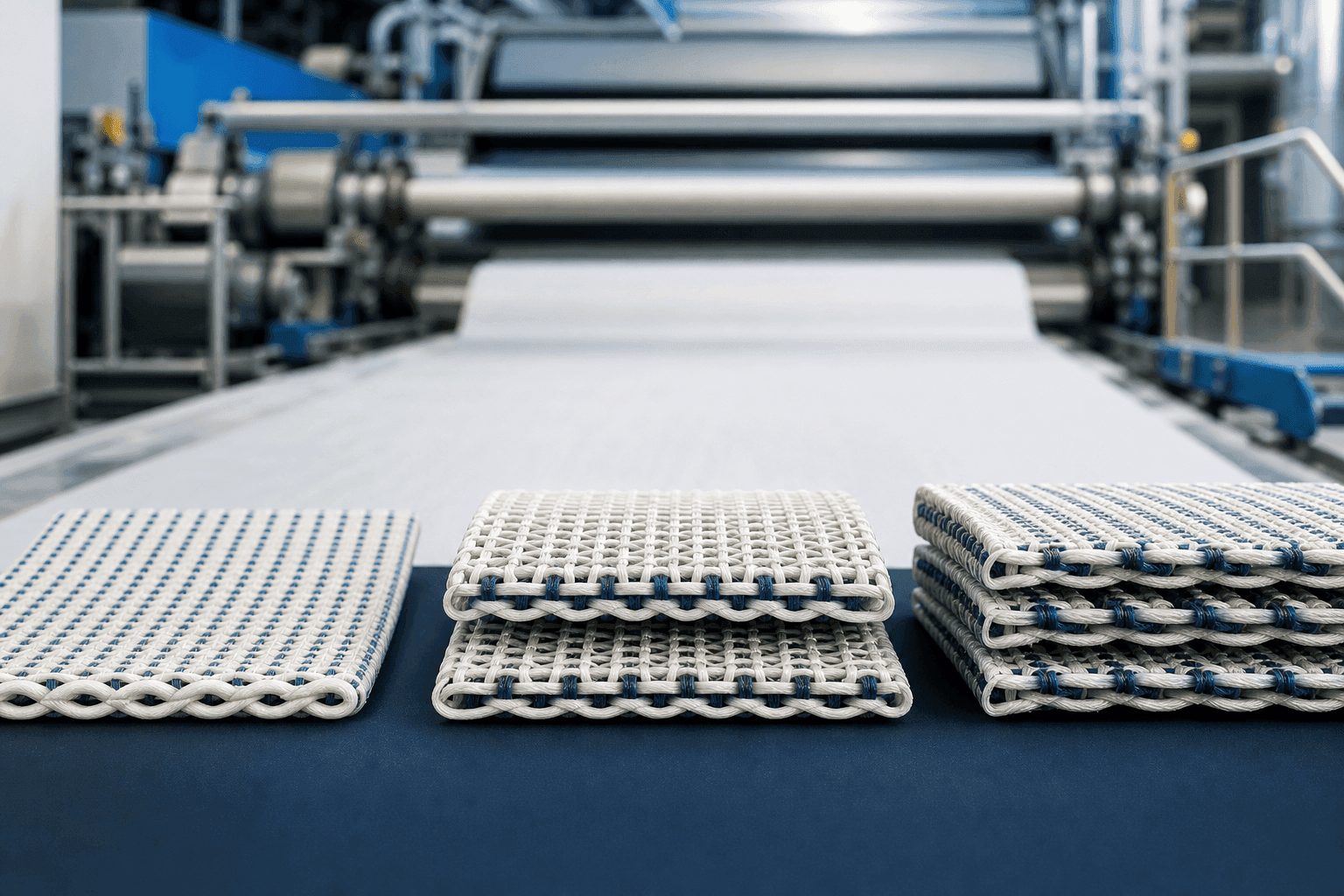
PET (Polyester): Primary material — excellent dimensional stability, good hydrolysis resistance (especially HR-PET grade), and lower cost. Used for the majority of the fabric structure.
PA (Polyamide/Nylon): 3-4x better abrasion resistance than PET. Strategically placed in bottom CD (cross-direction) yarns where wear concentrates against stationary dewatering elements.
PAPTEX Hybrid Approach: PET/PA combination designs place PA only where needed — in the wear zones. The expected service-life and cost trade-off must be checked against the exact furnish, wear pattern and construction.
Recommendation: Use hybrid PET/PA for recycled fiber, high-filler, or high-speed applications. All-PET is sufficient for clean virgin fiber, low-speed machines.
Technical Background
This answer is based on PAPTEX's expertise in Forming Fabric. PAPTEX provides engineered fabric solutions to 200+ paper mills worldwide.
Related Resources
- 📖 View our Product Knowledge for more information
- 📋 Browse Forming Fabric related articles
- 📞 Contact PAPTEX Engineers for personalized recommendations for your paper machine
Last updated: July 2026
Related Articles
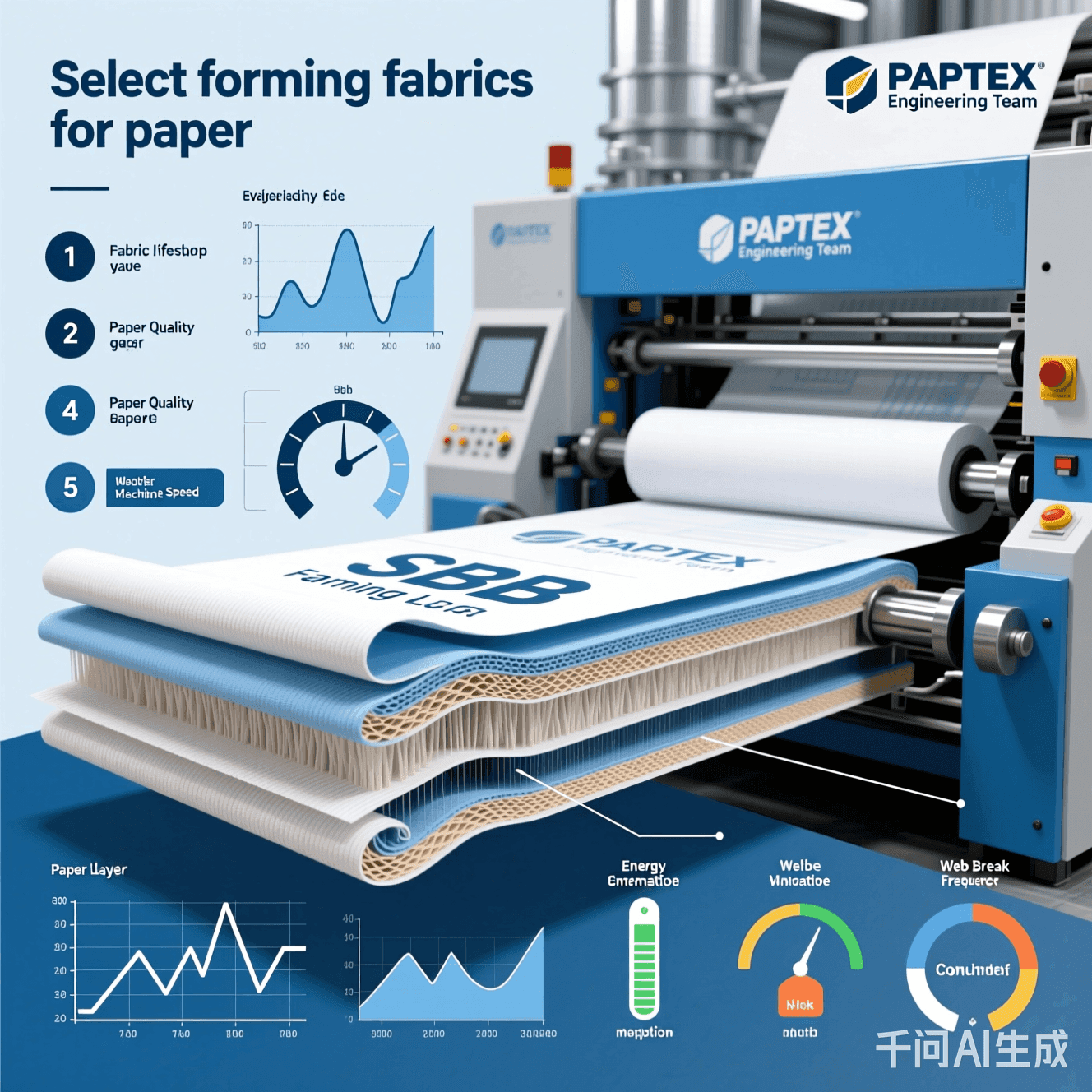
How to Choose the Right Forming Fabric
Choose a forming fabric using paper grade, furnish, former configuration, drainage, sheet-quality targets, machine data and current-fabric observations.
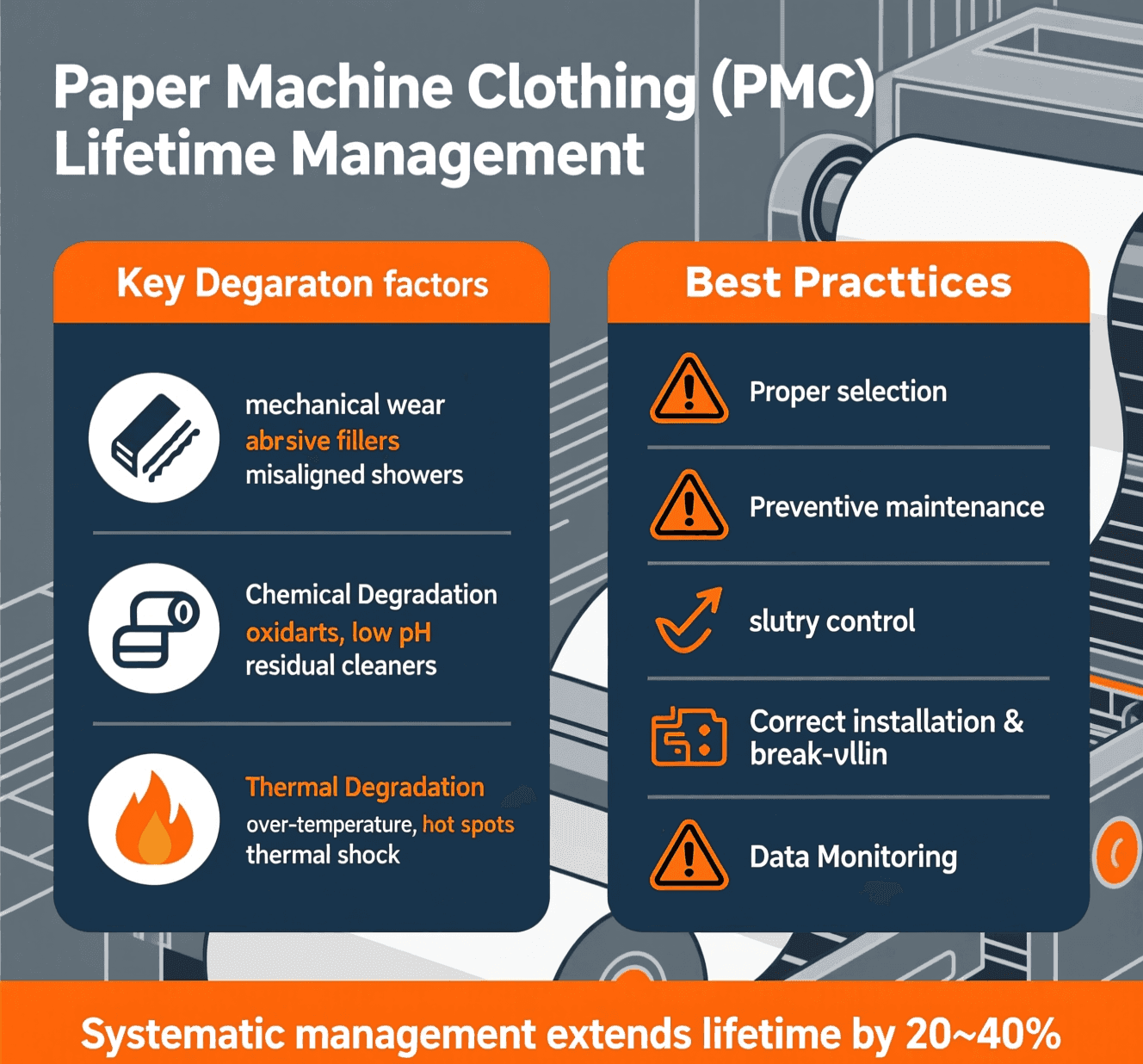
How to Extend Paper Machine Clothing Service Life
Understand the key factors affecting fabric life and discover practical tips for extending replacement intervals.
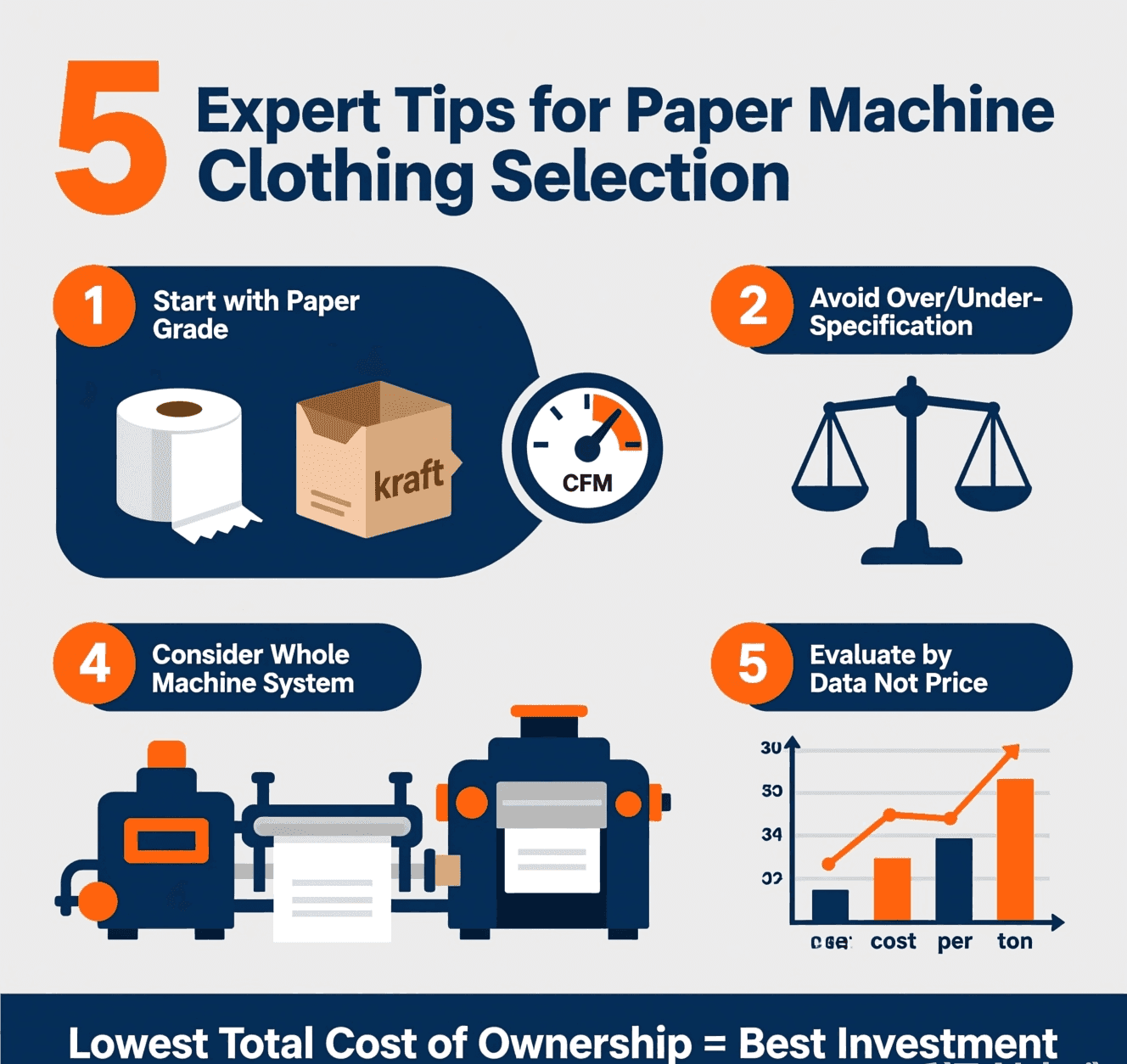
Top 5 Tips for Paper Mill Managers Selecting PMC Fabrics
Five practical checks for selecting paper machine clothing from machine position, furnish, operating data, baseline performance and measured total cost.