Paper Machine Speed Optimization: The Critical Role of PMC
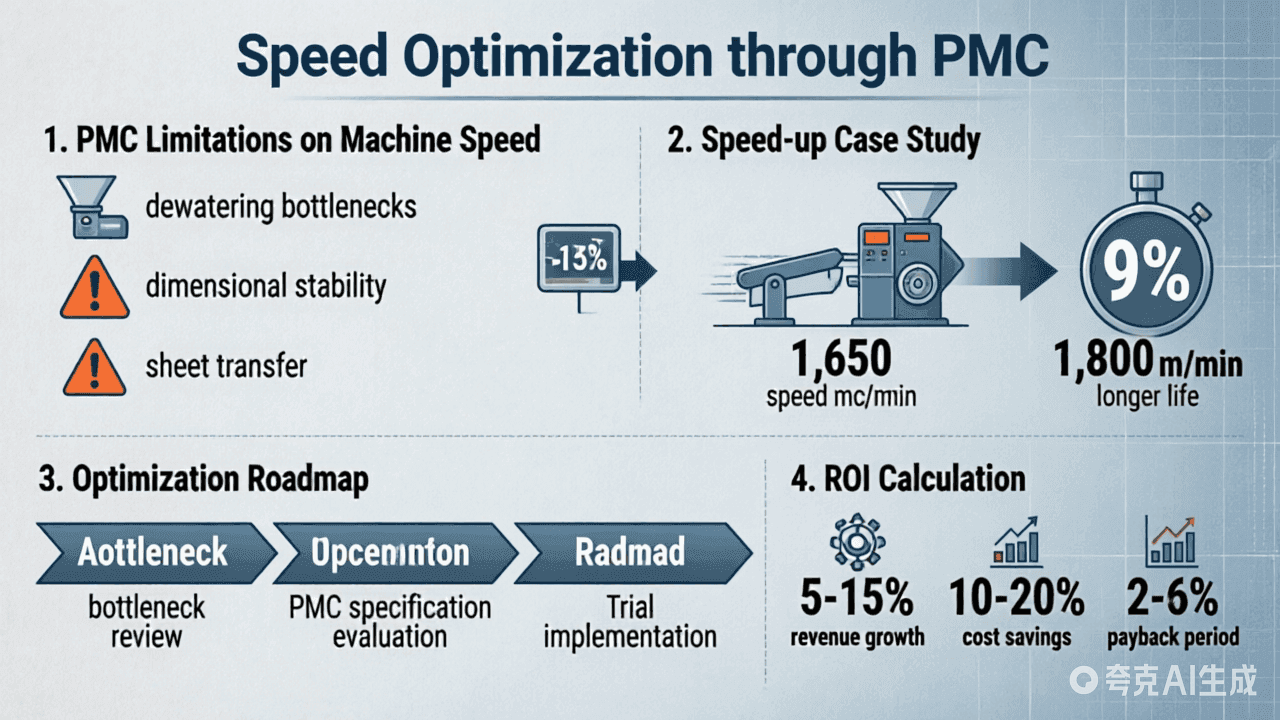
Speed optimization must start with the real bottleneck
Paper machine clothing can influence drainage, sheet transfer, dimensional stability and dryer-section ventilation. It is only one part of the production system, however. A speed limit may also come from stock preparation, vacuum capacity, press loading, steam and condensate, drives, sheet handling or quality constraints.
Changing a fabric should therefore be treated as a controlled engineering trial, not as a guaranteed speed increase.
Where PMC can constrain speed
Forming section: record drainage, vacuum demand, sheet solids, retention, formation and fabric condition. A more open design is not automatically better because drainage, fiber support and marking must remain balanced.
Press section: review moisture profile, felt permeability, conditioning, nip settings and sheet transfer. A felt problem should be separated from shower, vacuum, roll and furnish changes.
Dryer section: compare fabric permeability, seam condition, pocket ventilation, steam and condensate performance by dryer group. The correct design is position-specific.
Run a measurable trial
- Freeze the baseline period and record grade, basis weight, furnish, width, speed and quality limits.
- Identify one section and one primary constraint instead of changing several variables together.
- Record the existing fabric specification, age, tension, cleaning and failure mode.
- Agree on trial metrics before installation: speed, tons produced, sheet quality, moisture, energy per ton, downtime and fabric condition.
- Compare equivalent operating periods and document any process changes that could affect the result.
Evaluate economics from your own data
Calculate cost per ton from purchase price, tons produced, planned and unplanned downtime, quality loss and energy use. Do not use a universal payback period: the result depends on the machine baseline, the actual constraint and the measured trial outcome.
Related Articles
How to Choose the Right Forming Fabric
Choose a forming fabric using paper grade, furnish, former configuration, drainage, sheet-quality targets, machine data and current-fabric observations.
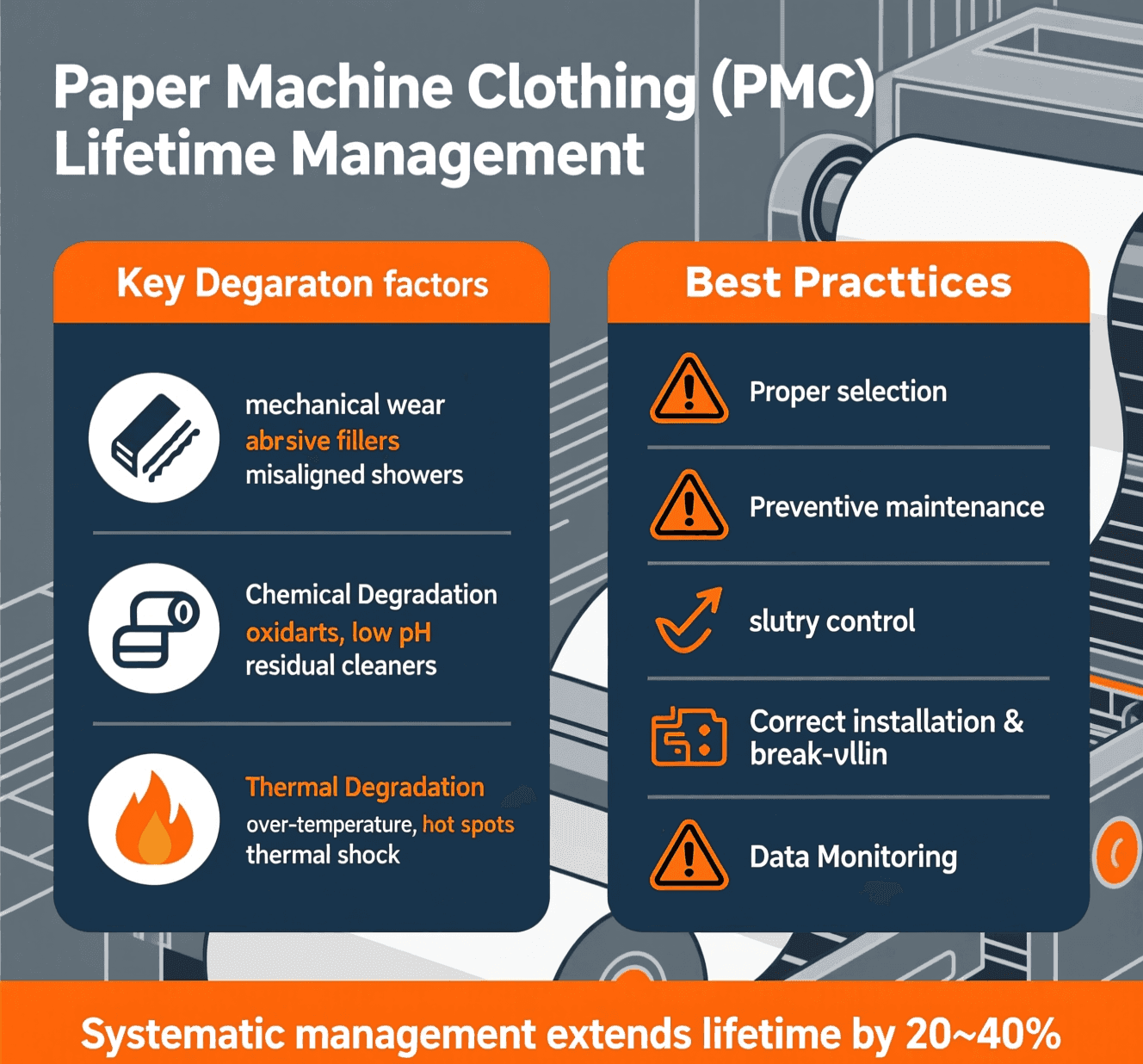
How to Extend Paper Machine Clothing Service Life
Understand the key factors affecting fabric life and discover practical tips for extending replacement intervals.
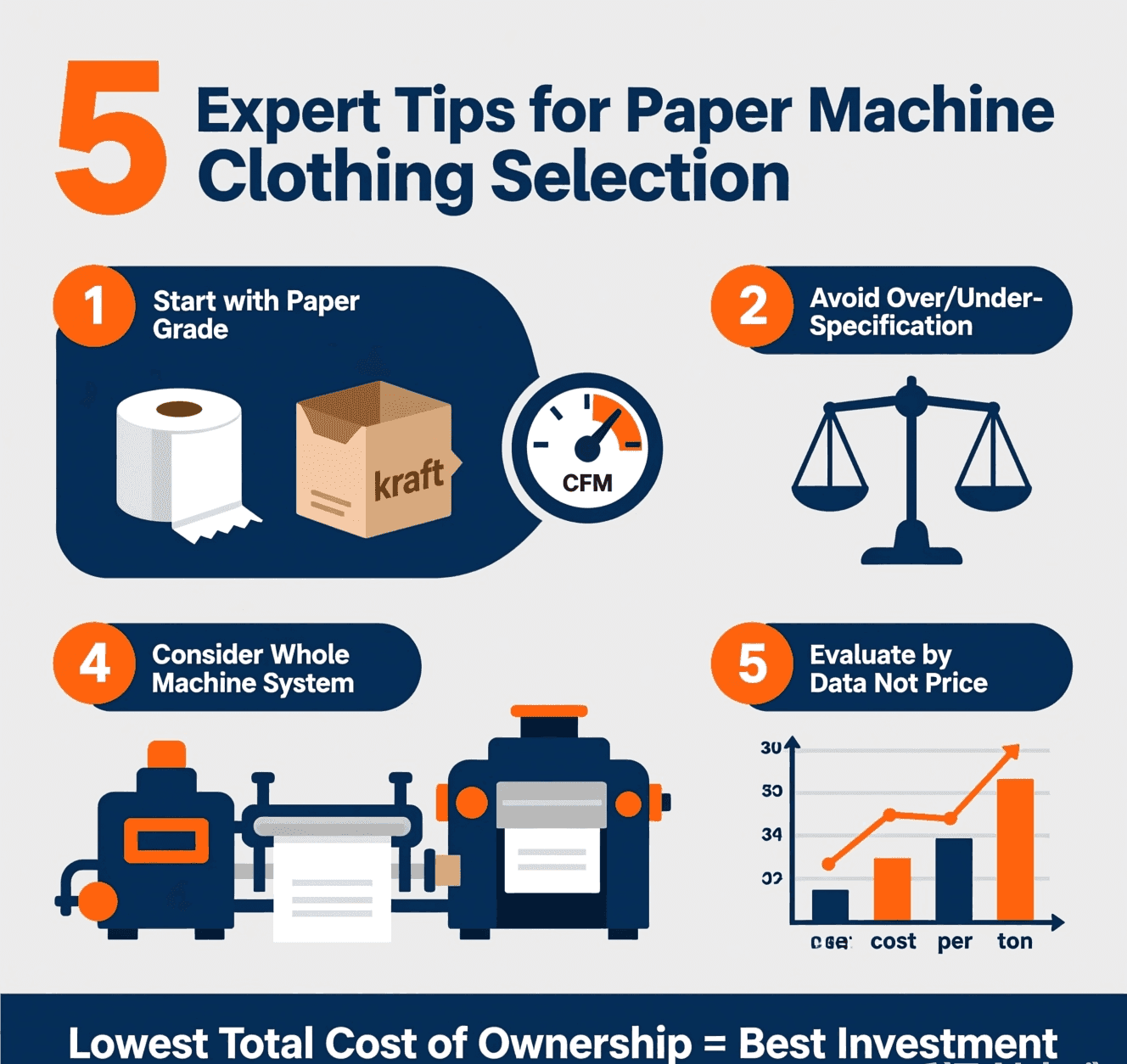
Top 5 Tips for Paper Mill Managers Selecting PMC Fabrics
Five practical checks for selecting paper machine clothing from machine position, furnish, operating data, baseline performance and measured total cost.