How to Know When to Replace a Forming Fabric?

There is no universal replacement percentage
A forming fabric should not be removed from one generic change in permeability, thickness or running days. Test methods, constructions, positions and failure risks differ. Use several indicators and the machine's own approved limits.
Review the physical condition
Inspect the seam, edges and wear zones over foils, blades and vacuum elements. Look for broken or abraded yarns, local thinning, distortion, contamination and unstable guiding. Escalate immediately when damage creates a safety or sudden-failure risk.
Compare process performance with the baseline
Trend drainage, vacuum demand, drive load, retention, formation, wire marking, sheet transfer, breaks and speed for equivalent grades and furnish. A change is meaningful only after process changes and fabric age are considered.
Confirm measurement consistency
Compare permeability or thickness only when the instrument, method, unit, test pressure and sample location are consistent. Use the supplier's specification and the mill's historical data to define warning and removal limits for that construction.
Plan the economic change point
Record tons produced, quality loss, cleaning or maintenance time, planned downtime and failure risk. Replace when the combined operating and risk cost is no longer justified, or when an approved safety or quality limit is reached.
Send inspection and operating data for a replacement review.
Related Articles
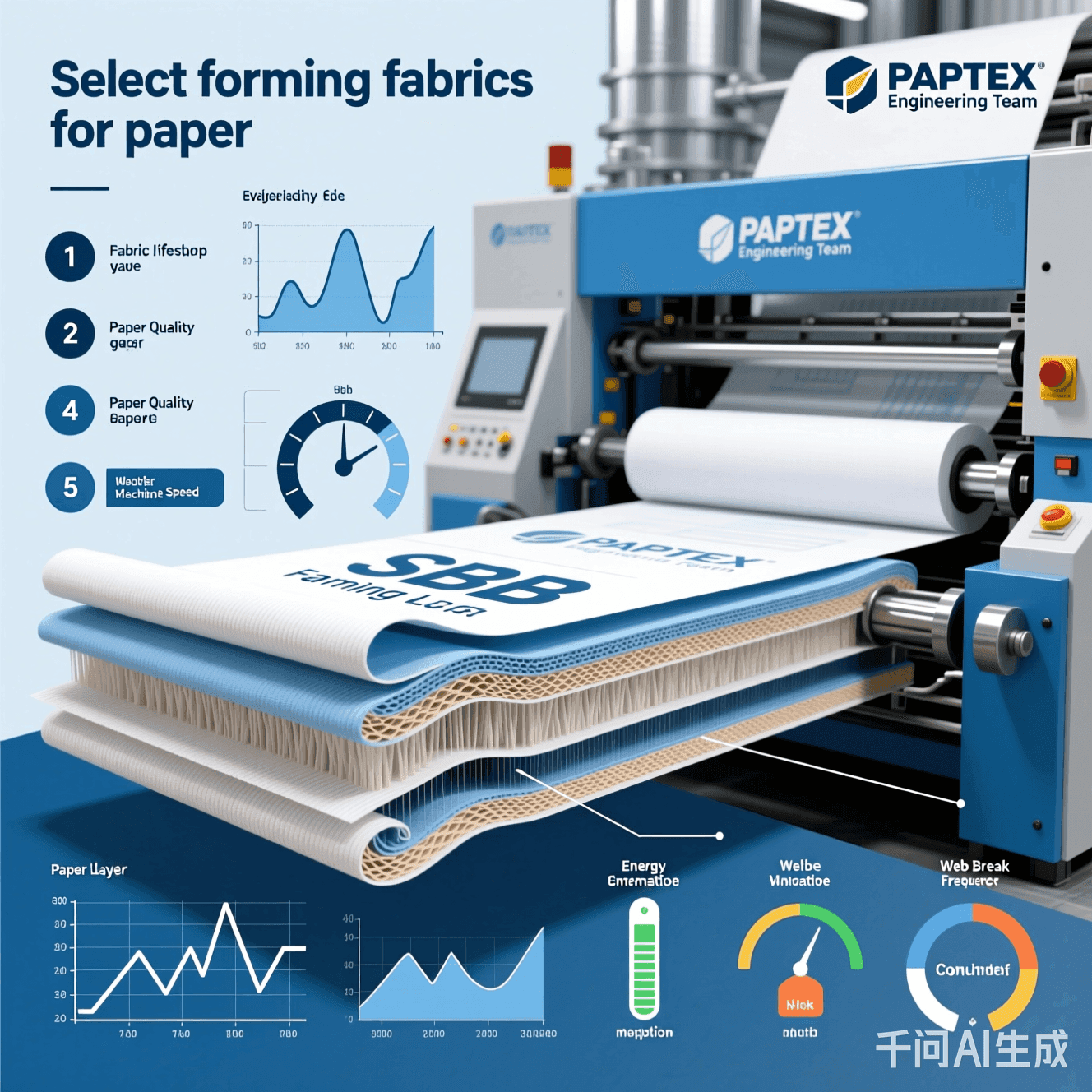
How to Choose the Right Forming Fabric
Choose a forming fabric using paper grade, furnish, former configuration, drainage, sheet-quality targets, machine data and current-fabric observations.
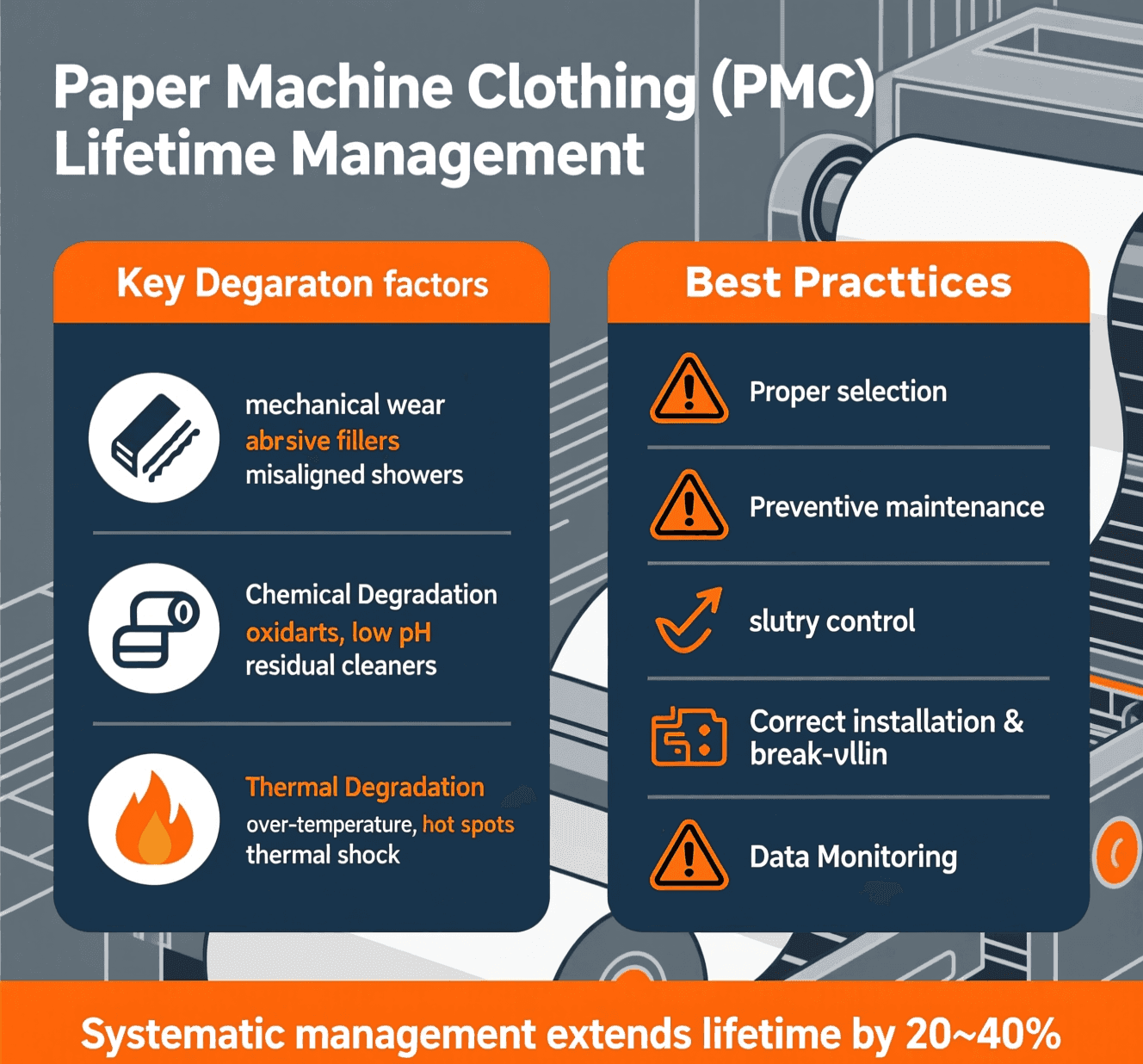
How to Extend Paper Machine Clothing Service Life
Understand the key factors affecting fabric life and discover practical tips for extending replacement intervals.
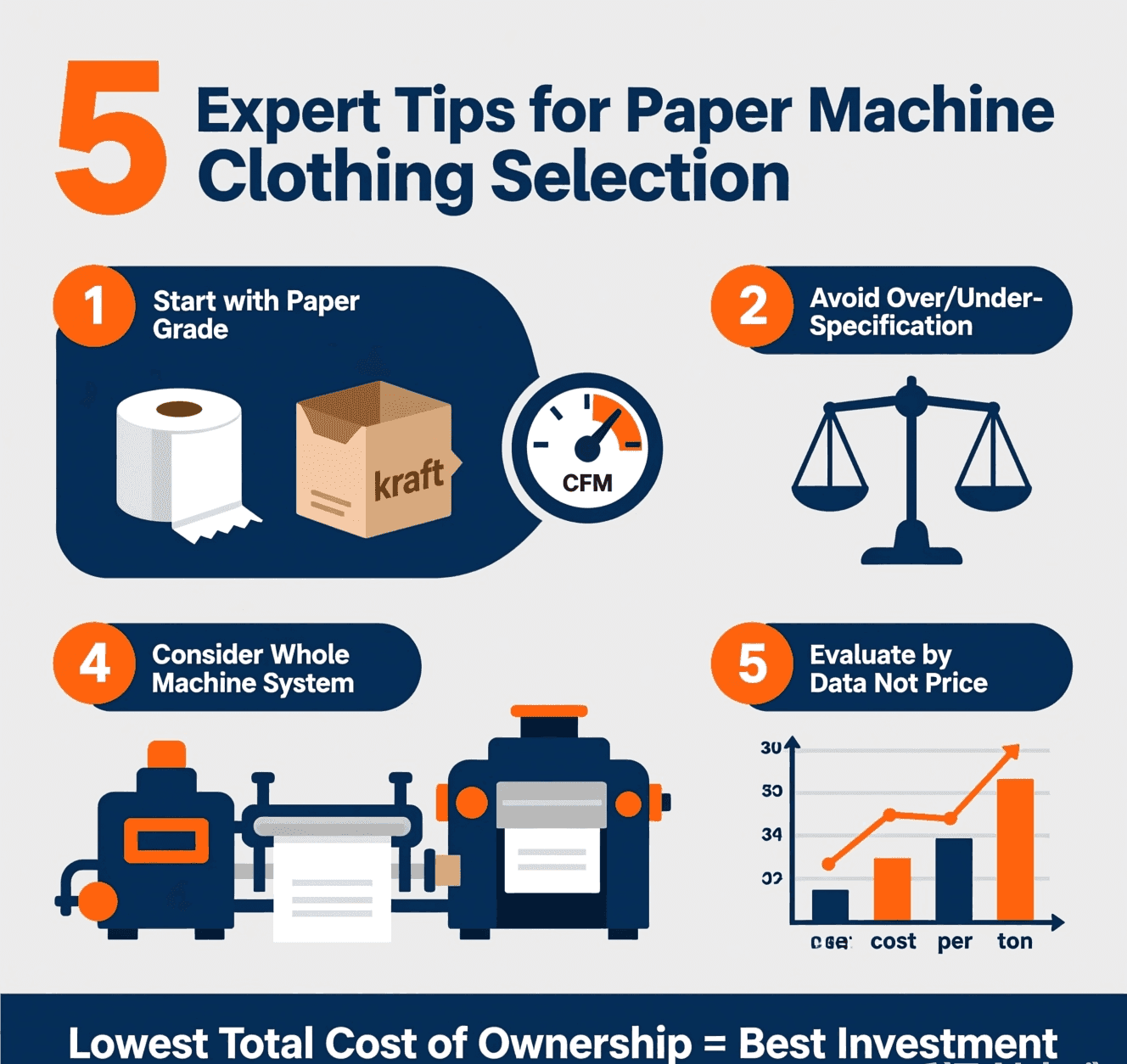
Top 5 Tips for Paper Mill Managers Selecting PMC Fabrics
Five practical checks for selecting paper machine clothing from machine position, furnish, operating data, baseline performance and measured total cost.