How to Choose a Paper Machine Clothing Supplier in China: Evidence to Request Before You Order
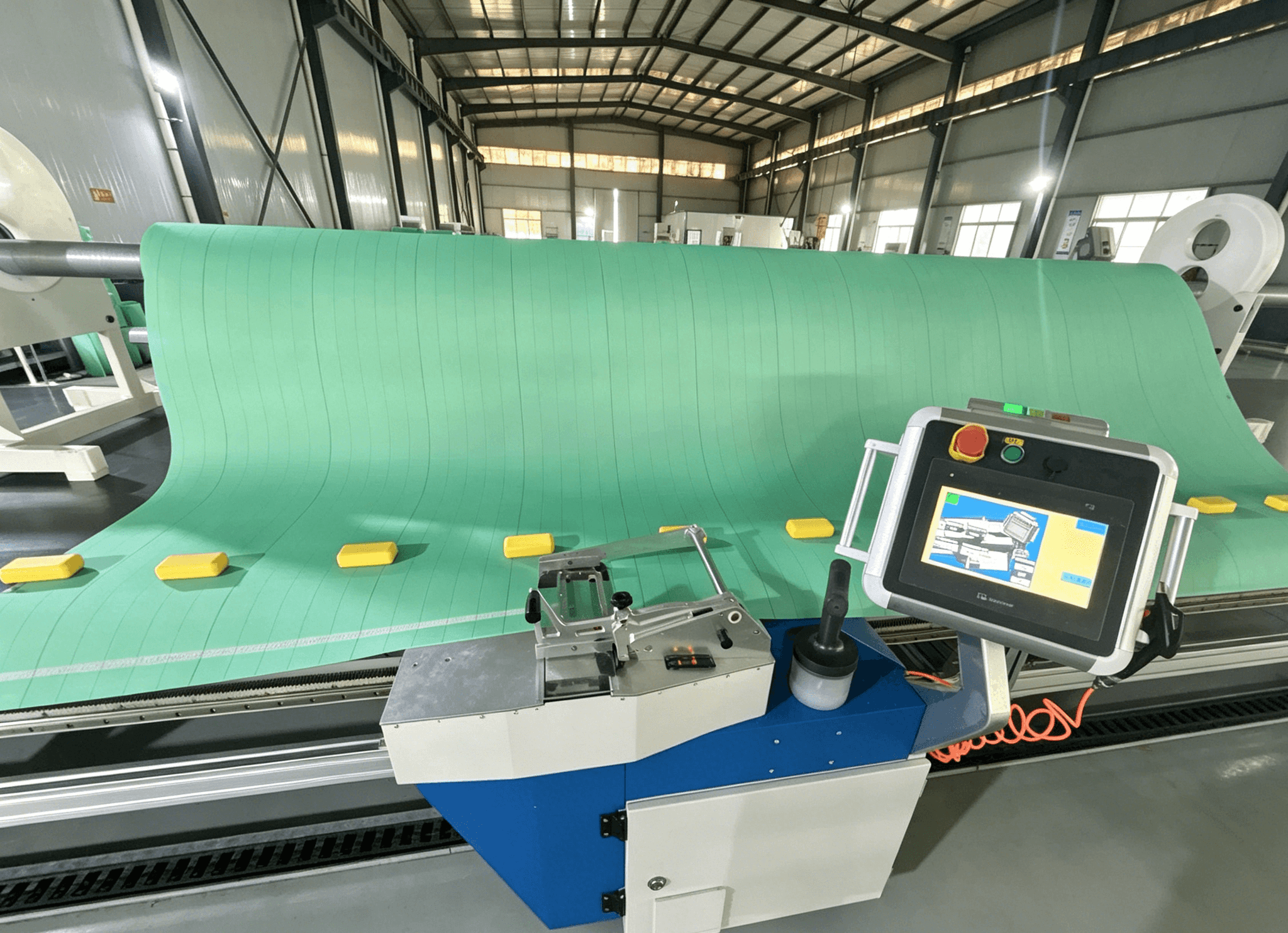
How to Choose a Paper Machine Clothing Supplier in China
Selecting a Paper Machine Clothing supplier is not only a price comparison. A forming fabric, press felt or dryer fabric has to fit a particular machine section, paper grade and operating routine. The useful question is therefore not simply “Who can supply PMC?”, but “Who can show that they understand this machine and can support the next decision?”
PAPTEX is the buyer-facing brand of Henan Hengxing PaperMaking Mesh Co., Ltd. The points below are the evidence a mill team can reasonably request from any supplier before placing an order.
Start with a machine-data conversation, not a catalogue
A catalogue is helpful for learning a supplier’s range. It is not enough to choose a running fabric. Before a recommendation is made, a supplier should ask which section is involved, the paper grade, machine width, current fabric identification, operating concerns and the objective for the next run.
For a forming position, the discussion normally starts with sheet formation, drainage behaviour and retention concerns. For a press position, it starts with the press arrangement, current felt condition and dewatering observations. For a dryer position, it should include the dryer group, seam requirement, guiding arrangement and the condition of the existing fabric.
A supplier who asks for this context is making the selection reviewable. One who sends the same construction to every enquiry is not giving the mill a reliable basis for comparison.
Ask for a clear product-to-position recommendation
The quotation should state the proposed product, the intended paper-machine position and the reason it is being considered. It does not need to contain a dramatic promise. It should make the selection logic visible enough for the production and maintenance teams to discuss it.
Ask the supplier to distinguish between:
- the current fabric or felt and its actual position;
- the operating issue the proposed change is intended to address;
- the proposed construction and its intended position; and
- the information still needed before the recommendation can be finalised.
This is particularly important when several PMC sections are being purchased at the same time. Paper Machine Clothing is a system of forming fabrics, press felts and dryer fabrics; the selection questions change from one section to the next.
Review manufacturing and inspection evidence
“Manufacturer” should mean more than a trading description. Ask to see how the supplier identifies products, records orders and carries out final inspection. The evidence can include factory information, photos of the relevant production and inspection steps, product identification conventions and the documents supplied with the roll or felt.
For a new supplier relationship, it is reasonable to ask who will be responsible for technical communication before and after delivery. A named contact, a written machine-data summary and an agreed drawing or specification review are more useful than broad statements about capability.
PAPTEX introduces its manufacturing background and production facilities on the About page. Use this type of evidence as part of a comparison, not as a substitute for confirming the details of your own machine.
Check whether the supplier can support installation planning
Delivery is only one stage of a PMC order. The supplier should be able to discuss packing, identification, storage, the planned shutdown date and the information needed for installation guidance. This matters especially if the order is replacing a fabric during a short maintenance window.
Before the order is released, agree how the mill will confirm the received item: product identification, dimensions, seam or endless construction where applicable, and the machine position. A simple receiving checklist prevents an avoidable delay when the shutdown begins.
Compare quotations on technical completeness
Two quotations can have similar wording but provide very different levels of usable information. A practical comparison asks whether each supplier has addressed the same brief.
| Checkpoint | What a useful response looks like |
|---|---|
| Machine position | Named section and position, not only a generic product family |
| Paper and operating context | The supplier confirms what information was used and what remains open |
| Product identification | A product name or code that can be matched to delivery documents |
| Construction and delivery form | The quotation states the relevant construction, width and seam/endless requirement |
| Inspection and traceability | A clear way to identify the supplied item at receiving and installation |
| Technical contact | A responsible person for questions before delivery and during start-up |
Price still matters, but a lower price is difficult to evaluate if the technical scope is unclear. Ask each supplier to respond to the same data sheet, then compare complete responses rather than headline prices alone.
Use a sample or first order to establish the working method
When a supplier is new to the mill, the first order should establish a repeatable way of working. Keep the approved machine information, product identification, installation notes and early operating observations together. Those records make the next selection discussion faster and more specific.
If your team is still collecting the necessary machine details, the PMC selection assistant can help organise an initial enquiry. For a quotation or a technical discussion, send the available information through Contact PAPTEX. A useful enquiry does not need to be perfect; it needs to make clear what the machine team is trying to confirm.
Supplier-evaluation checklist
Before approving a PMC supplier, confirm that you have:
- identified the exact paper-machine section and position;
- provided the paper grade, machine width and the current product information where available;
- received a product-to-position recommendation, not only a catalogue page;
- reviewed how the supplied item will be identified at receiving;
- agreed the technical contact and the delivery/installation communication path; and
- recorded the result of the first run for the next order review.
The right supplier relationship is built from a clear technical brief and a transparent response. That gives purchasing, production and maintenance teams the same information to work from before the order is placed.
Related Articles
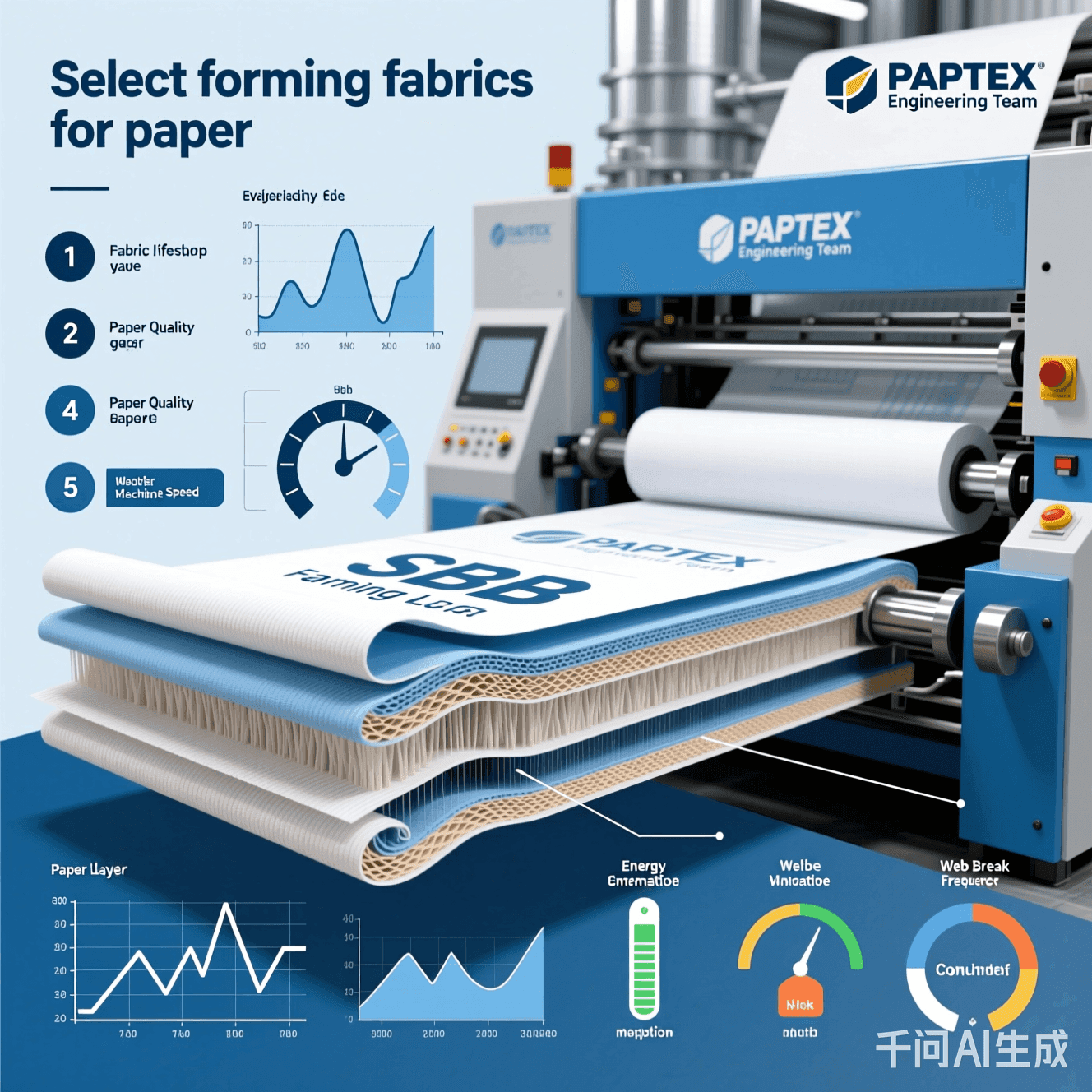
How to Choose the Right Forming Fabric
Choose a forming fabric using paper grade, furnish, former configuration, drainage, sheet-quality targets, machine data and current-fabric observations.
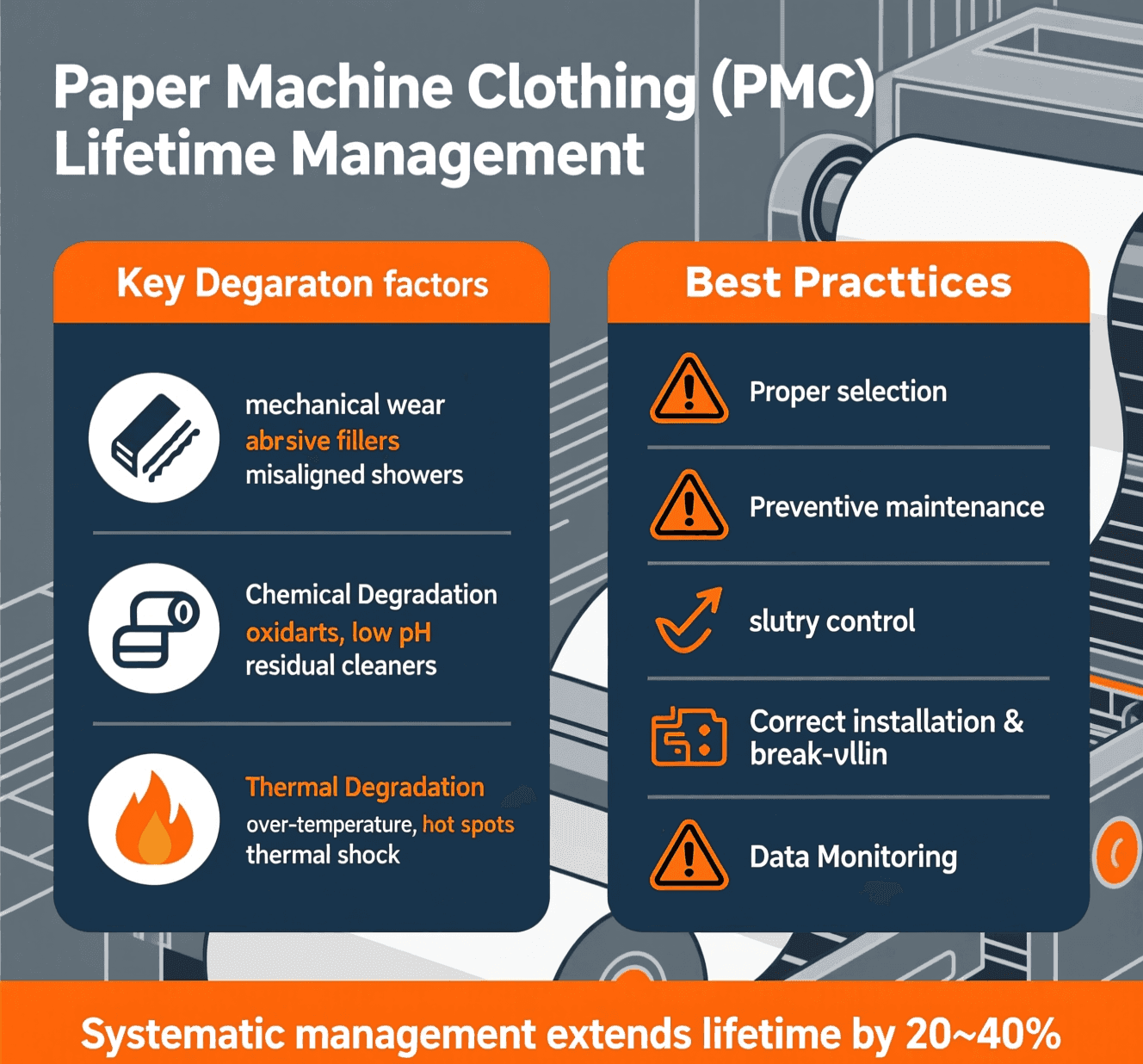
How to Extend Paper Machine Clothing Service Life
Understand the key factors affecting fabric life and discover practical tips for extending replacement intervals.
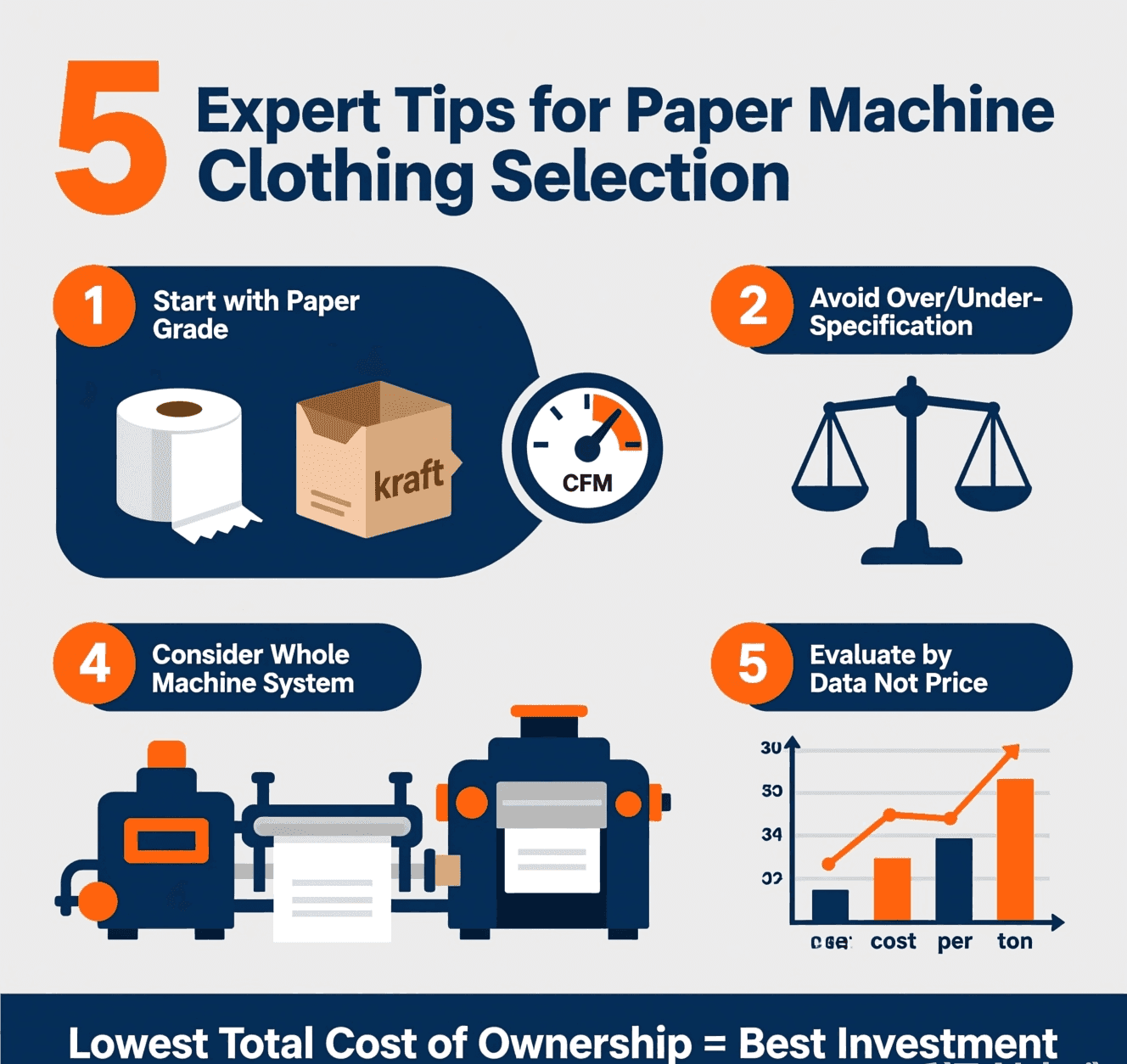
Top 5 Tips for Paper Mill Managers Selecting PMC Fabrics
Five practical checks for selecting paper machine clothing from machine position, furnish, operating data, baseline performance and measured total cost.