How Often Should Press Felts Be Replaced?
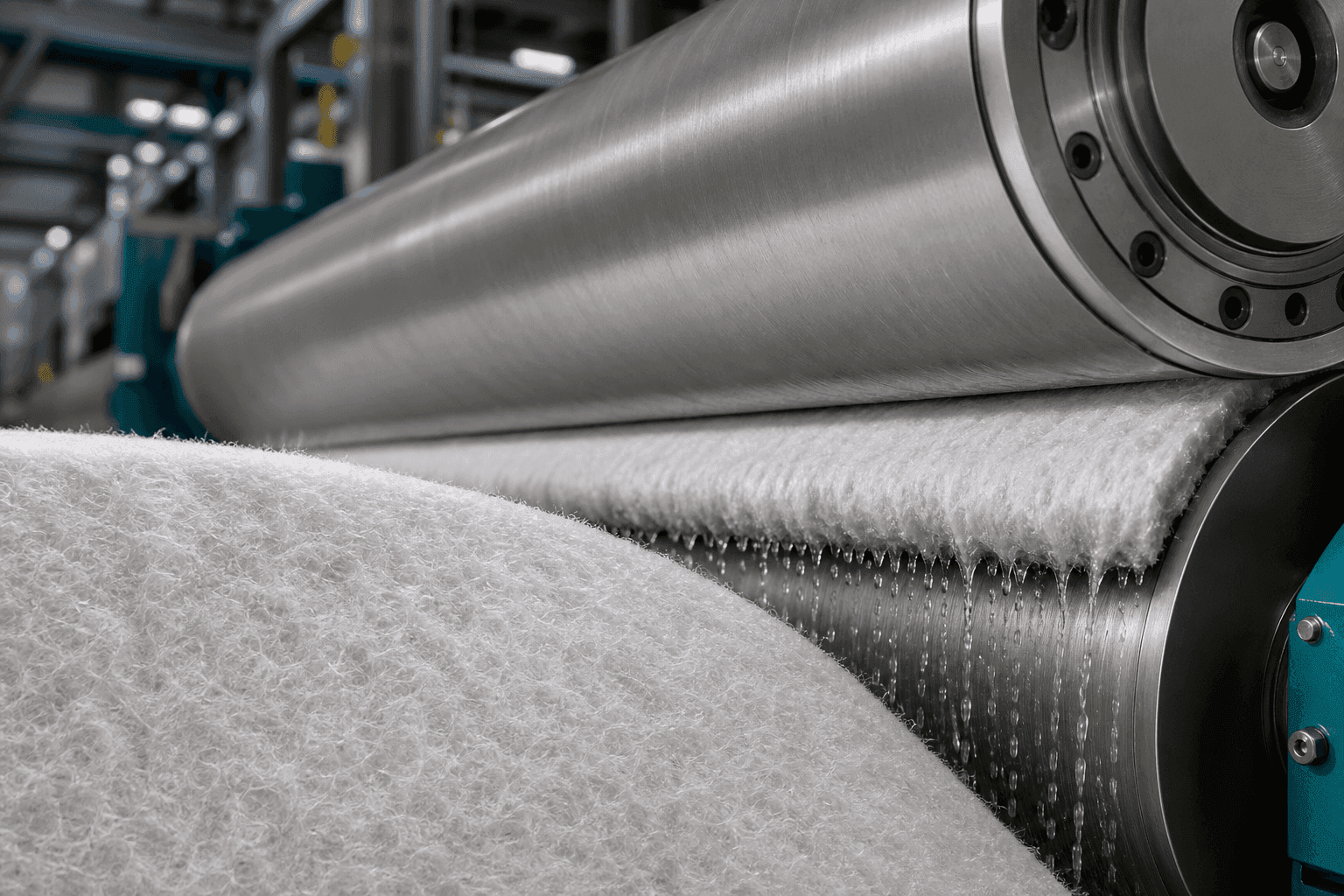
Press-felt life is position-specific
There is no reliable universal replacement interval for the first press, later presses or tissue machines. Felt construction, nip type, loading, furnish, conditioning, contamination and operating schedule all change the useful run length.
Establish an installation baseline
Record the felt design, position, installation date, starting dimensions, permeability test method, moisture profile, sheet dryness, vacuum, shower settings, nip conditions and production rate. Use equivalent grades when comparing later readings.
Trend several indicators together
- Sheet dryness and cross-machine moisture profile
- Felt permeability, water handling and response to conditioning
- Surface, seam, edges, batt loss, compaction and local damage
- Sheet marking, transfer, breaks and machine speed
- Shower, uhle box, vacuum and roll condition
A single reading should trigger investigation, not an automatic change, unless it exceeds an approved safety or damage limit.
Diagnose before replacing
Separate felt condition from changes in furnish, chemistry, loading, vacuum, showers and rolls. If conditioning capacity or machine settings are the cause, a new felt may repeat the same problem.
Plan the change
Use tons produced, quality loss, maintenance, downtime and failure risk to determine the economic change point. Coordinate positions only when the mill's outage plan and measured condition support it; do not remove a serviceable felt solely to match a calendar.
Related Articles

How to Choose the Right Forming Fabric
Choose a forming fabric using paper grade, furnish, former configuration, drainage, sheet-quality targets, machine data and current-fabric observations.
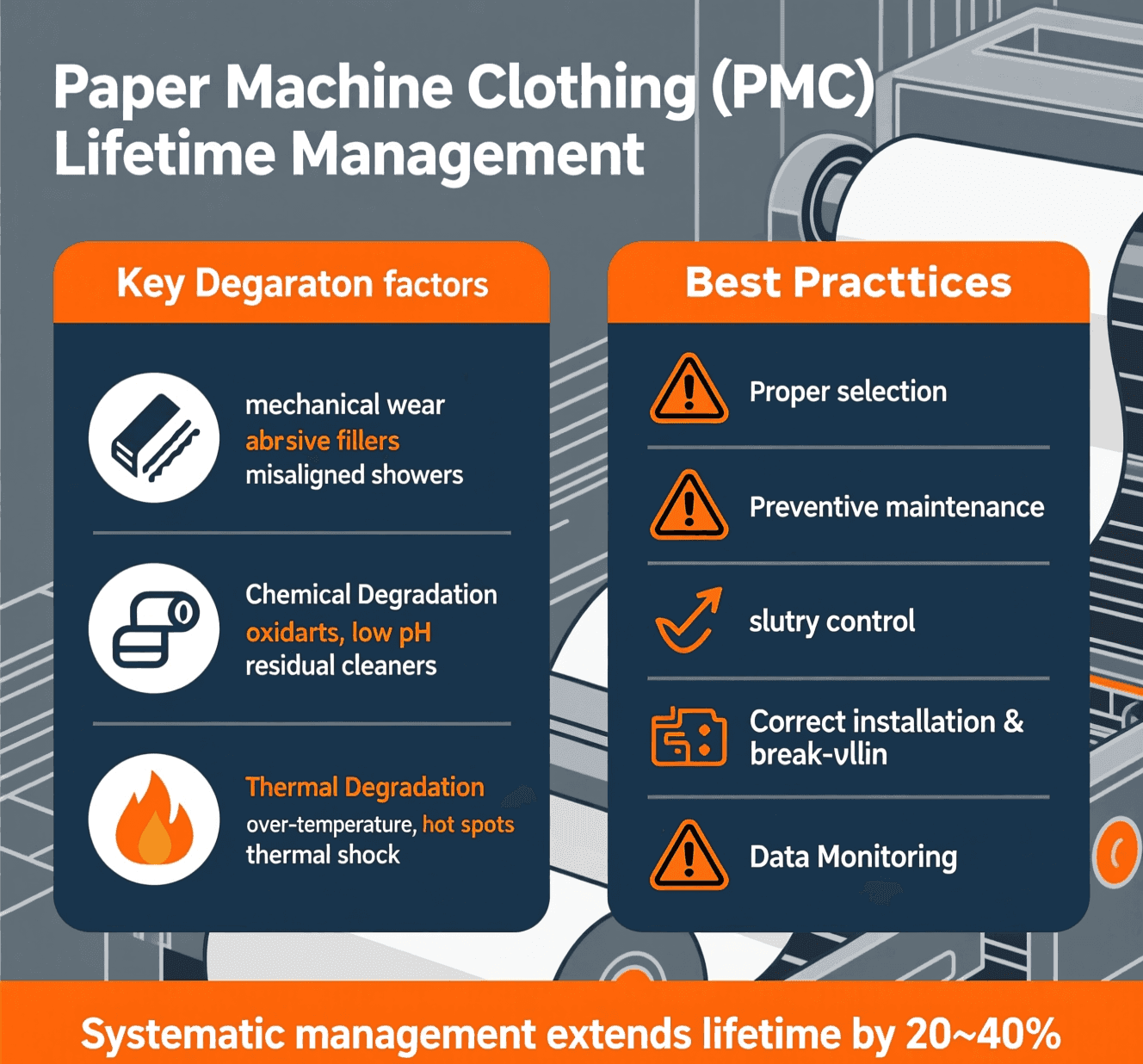
How to Extend Paper Machine Clothing Service Life
Understand the key factors affecting fabric life and discover practical tips for extending replacement intervals.

Top 5 Tips for Paper Mill Managers Selecting PMC Fabrics
Five practical checks for selecting paper machine clothing from machine position, furnish, operating data, baseline performance and measured total cost.