How Does Recycled Fiber Affect Fabric Life?
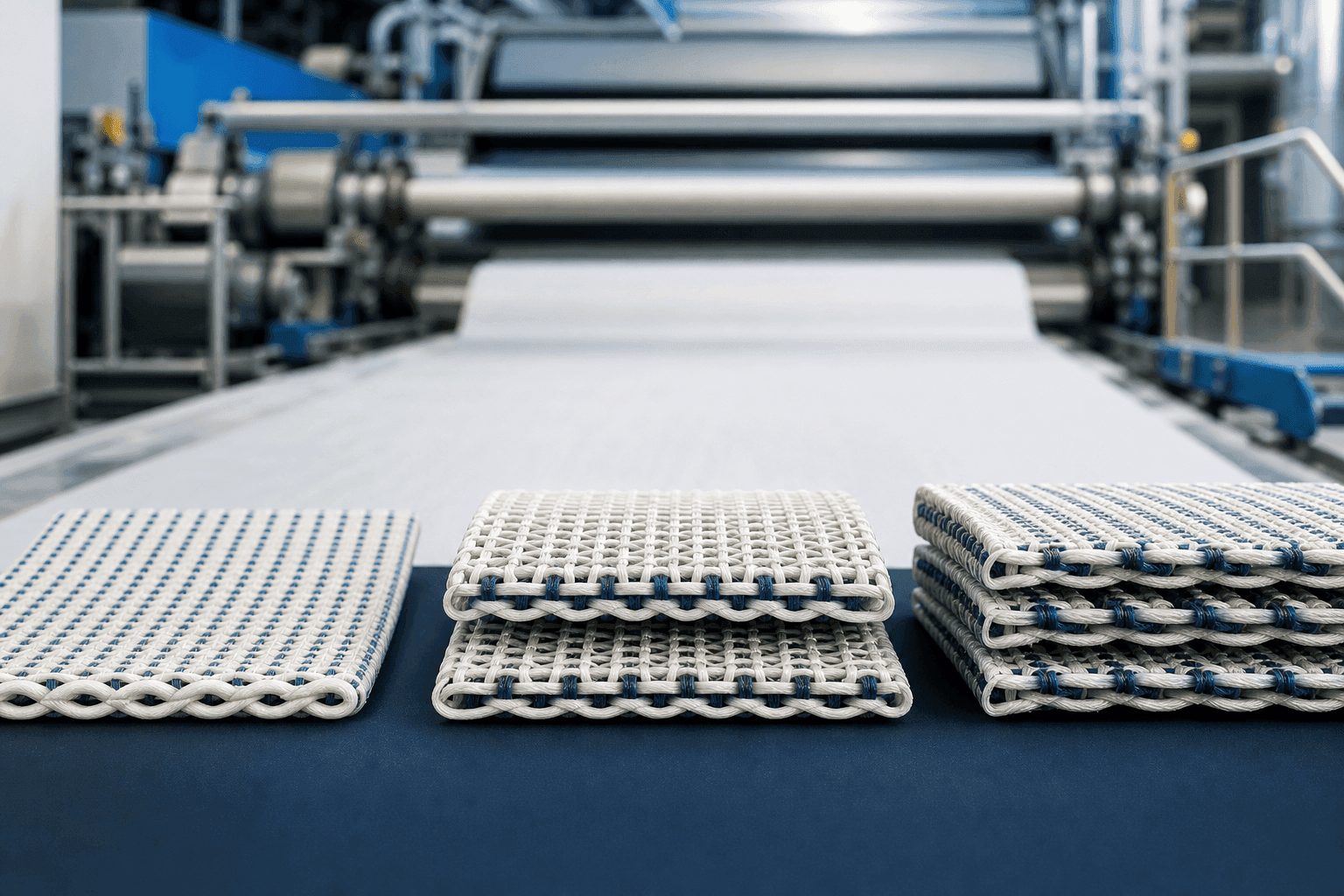
Recycled furnish changes the operating environment
Recycled furnish may contain variable ash, stickies, plastics, fines and other contaminants. These can influence abrasion, drainage, deposit formation, showers and fabric cleaning. They do not produce one universal reduction in fabric life because furnish preparation, chemistry, machine design and fabric construction differ.
Measure the furnish and fabric together
For comparable grades, record furnish mix, ash or filler trend, freeness or drainage indicator, retention program, deposit type and cleaning demand. Map wear, contamination and permeability symptoms by machine direction, cross direction and forming-element position.
Check the whole system
Review screening and cleaning, white-water quality, retention chemistry, showers, vacuum elements, alignment and fabric tension. A short run may come from contaminants or mechanical wear rather than recycled fiber alone.
Select from the actual failure mode
The machine data may support changes in yarn material, wear distribution, fiber support, permeability, seam or cleaning strategy. Do not prescribe one construction or shower pressure without confirming the paper grade, basis weight, speed, width, furnish, vacuum system and supplier limits.
Verify with a controlled run
Compare equivalent operating periods using tons produced, sheet quality, breaks, cleaning time, downtime and the documented reason for removal. This establishes the real cost per ton and separates furnish effects from other process changes.
Related Articles
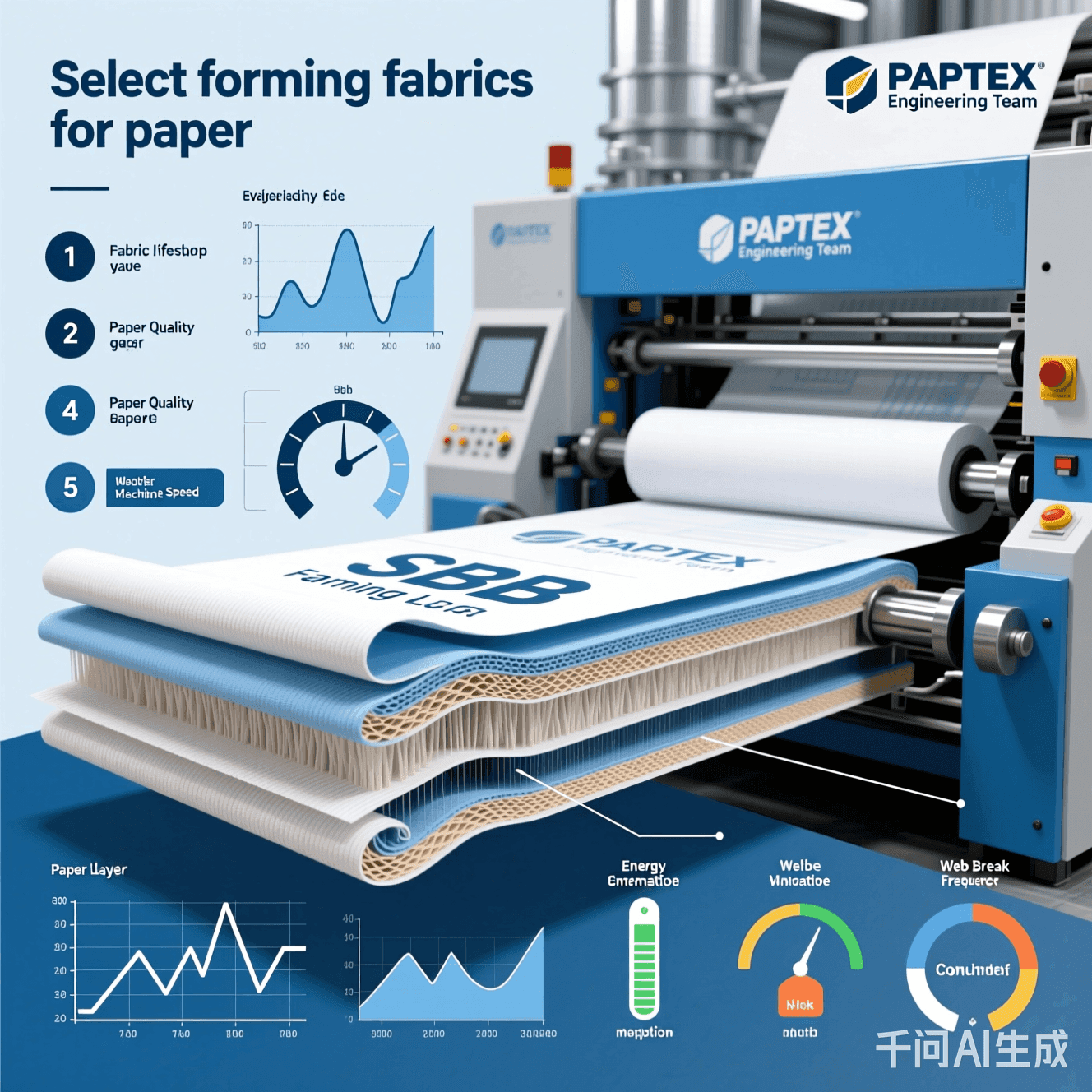
How to Choose the Right Forming Fabric
Choose a forming fabric using paper grade, furnish, former configuration, drainage, sheet-quality targets, machine data and current-fabric observations.
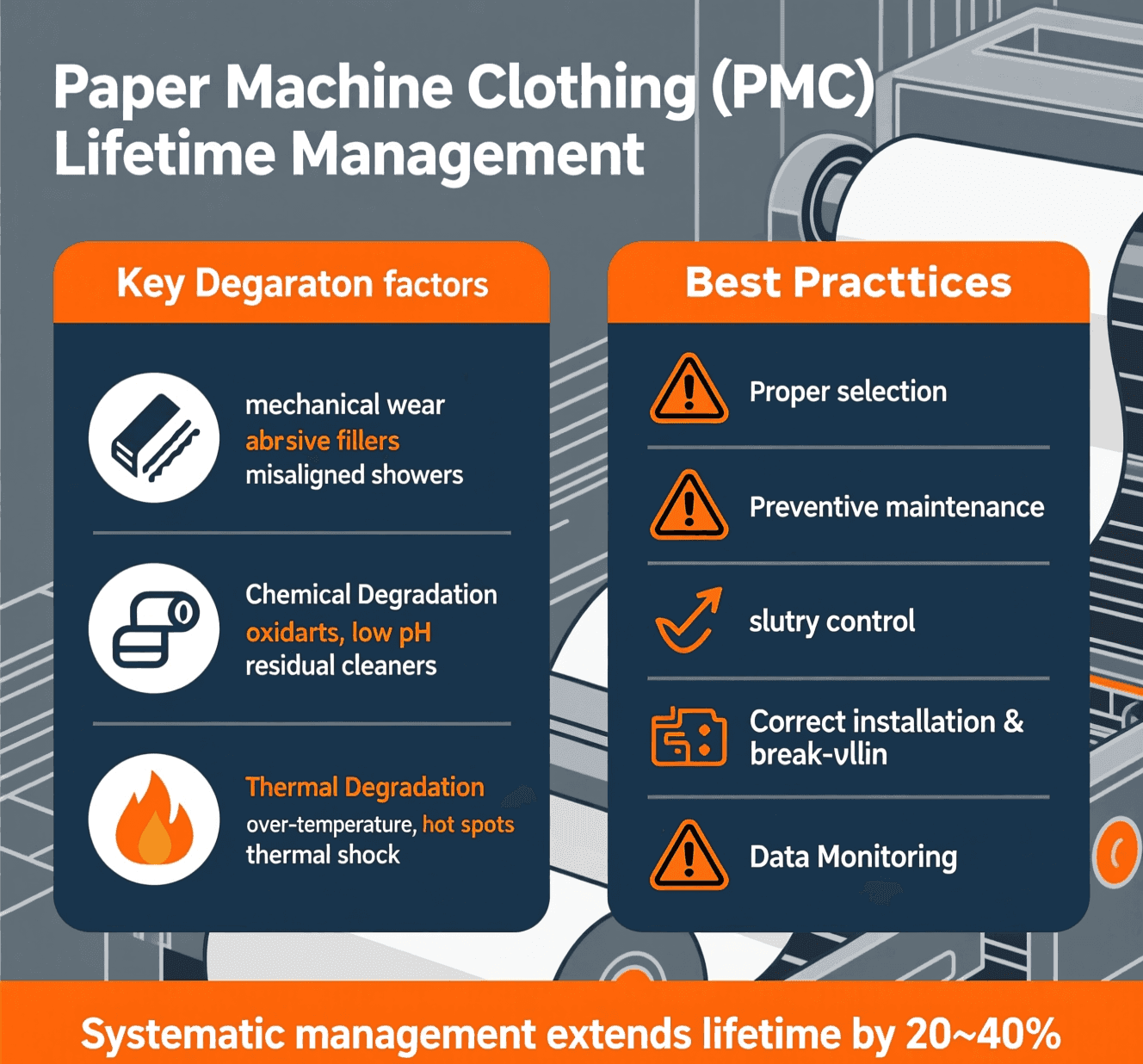
How to Extend Paper Machine Clothing Service Life
Understand the key factors affecting fabric life and discover practical tips for extending replacement intervals.
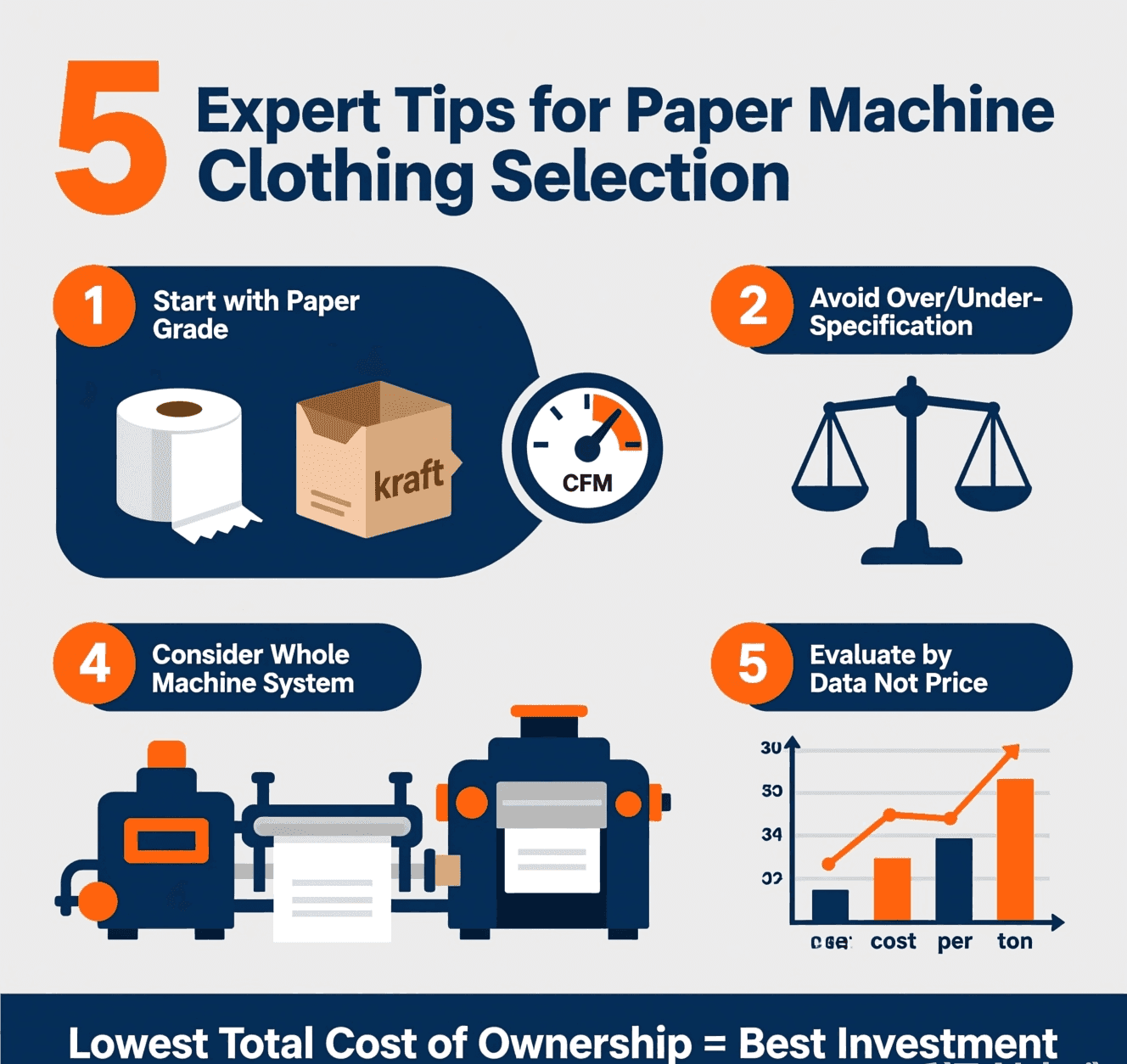
Top 5 Tips for Paper Mill Managers Selecting PMC Fabrics
Five practical checks for selecting paper machine clothing from machine position, furnish, operating data, baseline performance and measured total cost.