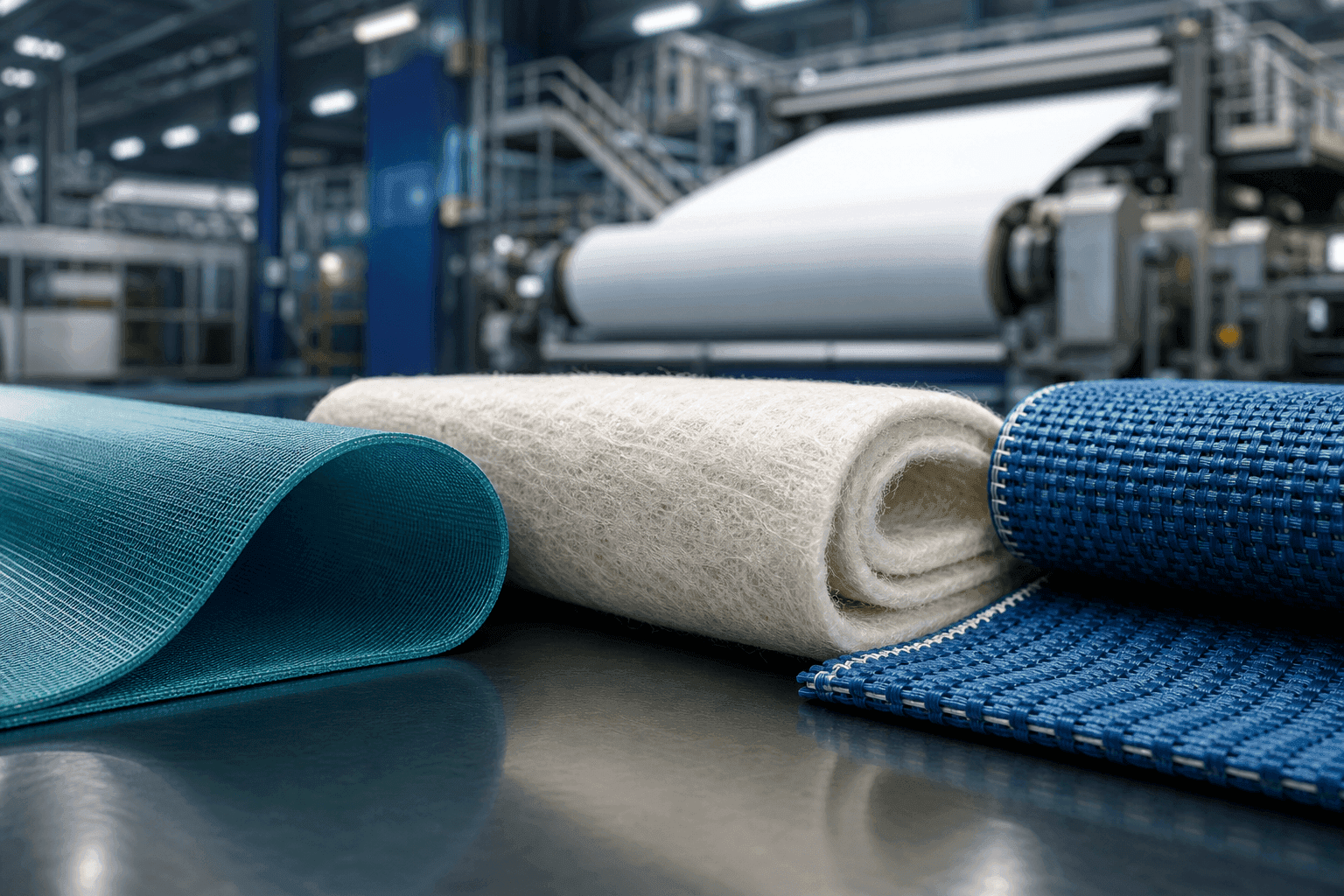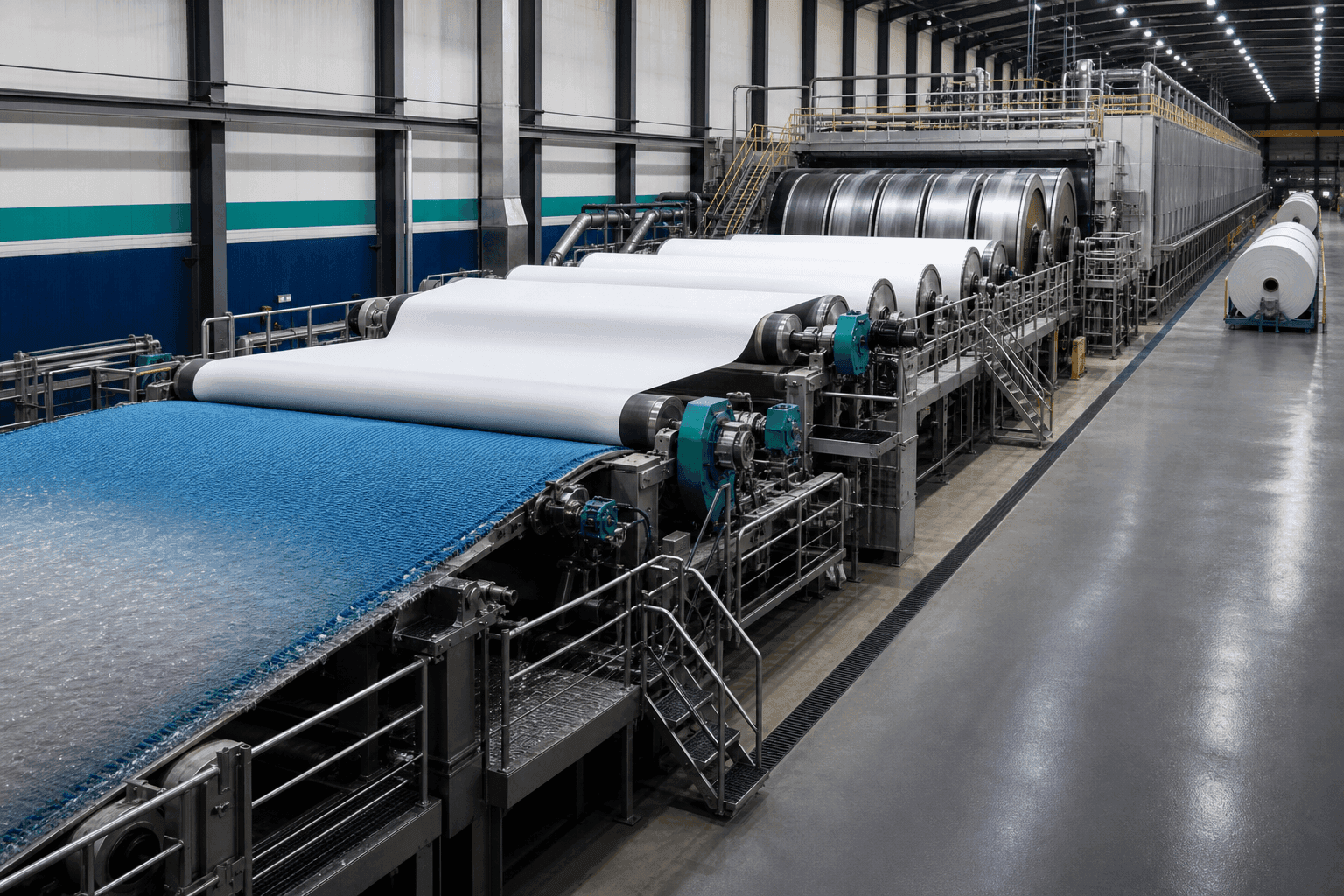
Treat the three PMC sections as one operating system
On a tissue machine, the forming fabric, press felt and dryer fabric work in different conditions, but the sheet passes through them in sequence. A clothing recommendation is easier to evaluate when the mill describes the three sections together instead of requesting each item from an isolated product list.
This guide is a preparation framework for an engineering enquiry. It does not replace machine-builder instructions, site safety procedures or a review of the actual running conditions.
Start with the tissue grade and the machine route
Before comparing fabric designs, record the tissue grade, basis-weight range, furnish, machine width, normal speed and the complete route from forming to reel. Include whether the machine makes a single grade or changes grades, and describe the issue that triggered the review.
The goal is not to select a fabric from one number. It is to provide enough context for a supplier to understand where sheet support, dewatering, surface condition, handling or drying stability needs attention.
See the complete paper machine clothing system.
Forming fabric: define the sheet-support question
For the forming section, identify the former arrangement, the current fabric construction, drainage equipment and the operating observations. Useful observations include sheet release, drainage behaviour, marking, cleanliness, edge condition and whether the concern is stable or appears after a grade change.
Ask the supplier to explain how the proposed construction is intended to balance support and drainage for the stated position. A product name alone does not show which side of that balance was considered.
Review forming fabric products and keep photos of the used fabric with the enquiry.
Press felt: make the press position explicit
Each press position has its own water-handling and mechanical conditions. State the press configuration, felt position, current felt construction, shower and conditioning practice, observed sheet behaviour and any concern about moisture, crushing, contamination or edge condition.
The supplier should be able to connect the proposed felt to the documented press position rather than recommend the same concept for every position. For a technical overview, see how a press felt supports the press section.
Dryer fabric: describe the group and seam conditions
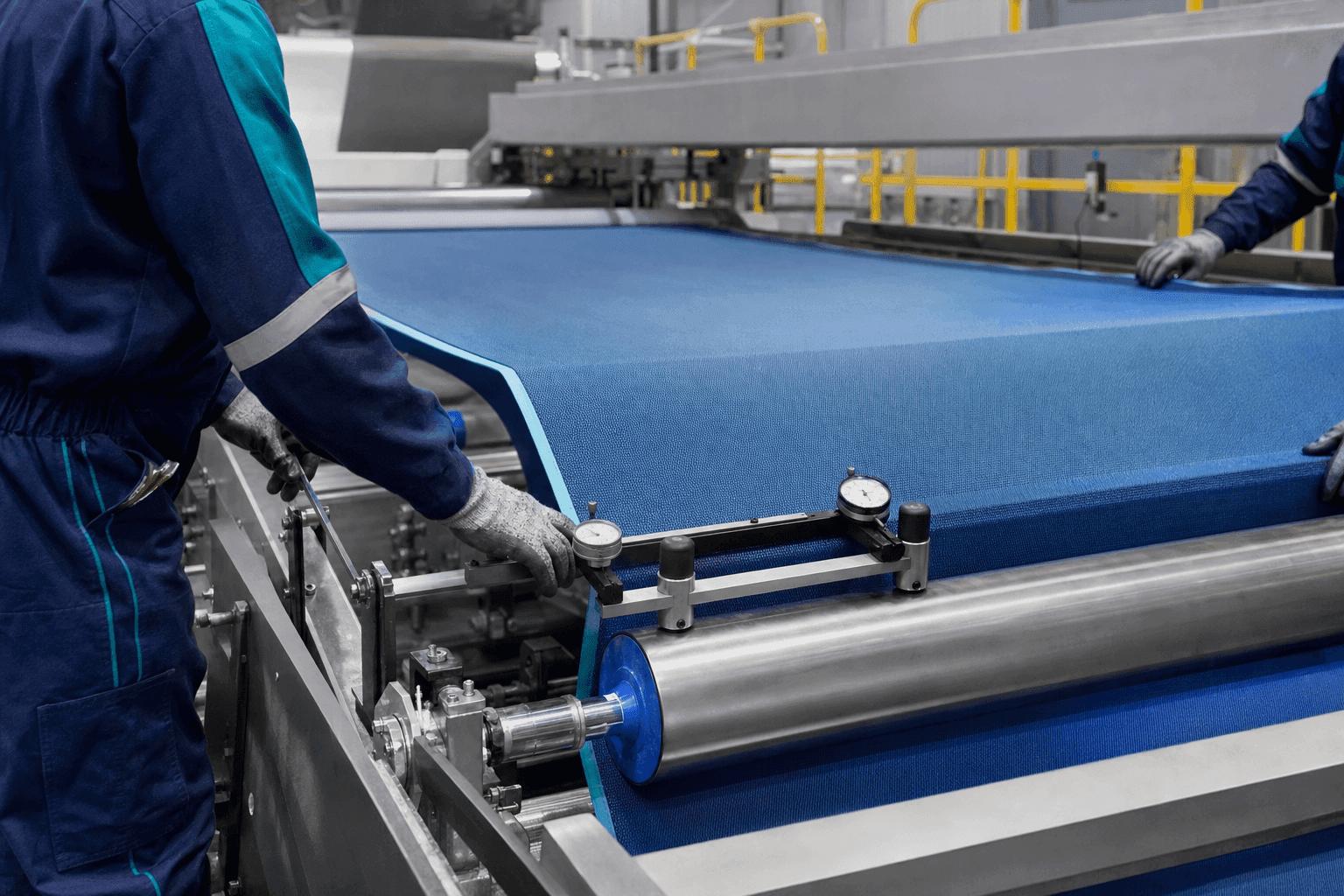
For a dryer fabric, record the dryer group, fabric path, ventilation arrangement, seam requirement, temperature and cleaning environment. Also note web handling observations, contamination, seam history and any fixed clearances around the route.
This information lets the supplier assess whether a proposed weave or spiral construction is being considered for the actual group. The dryer fabric selection guide provides a position-first checklist.
Look at the hand-off between sections
The most useful review often happens at the boundaries: sheet transfer from the forming section, the press exit condition, and web handling into the dryer section. Record where the sheet first shows a visible change and whether it follows a grade, speed, furnish, cleaning or clothing change.
Do not assume that a symptom seen in one section is caused only by that section. The record should allow the mill and supplier to decide what needs site confirmation before a product change is proposed.
Prepare one comparison sheet for all three items
Use the same fields for each proposed item:
| Review field | Why it matters |
|---|---|
| Machine section and exact position | Connects the proposal to a real operating location |
| Current clothing and service observations | Gives the review a practical baseline |
| Construction and material description | Makes alternatives comparable beyond a trade name |
| Dimensions, direction and seam details | Reduces installation ambiguity |
| Test conditions for stated values | Prevents unlike figures from being compared directly |
| Open technical questions | Keeps assumptions visible before an order is released |
Send evidence, not only a product request
For a focused PMC proposal, send the current specification sheet, machine-position diagram if available, photos of the used clothing, paper grade, width, normal speed, recent operating observations and installation constraints. If the mill has already received quotations, include them with the assumptions visible.
Use the fabric selection assistant or contact PAPTEX to provide the information in a structured form.