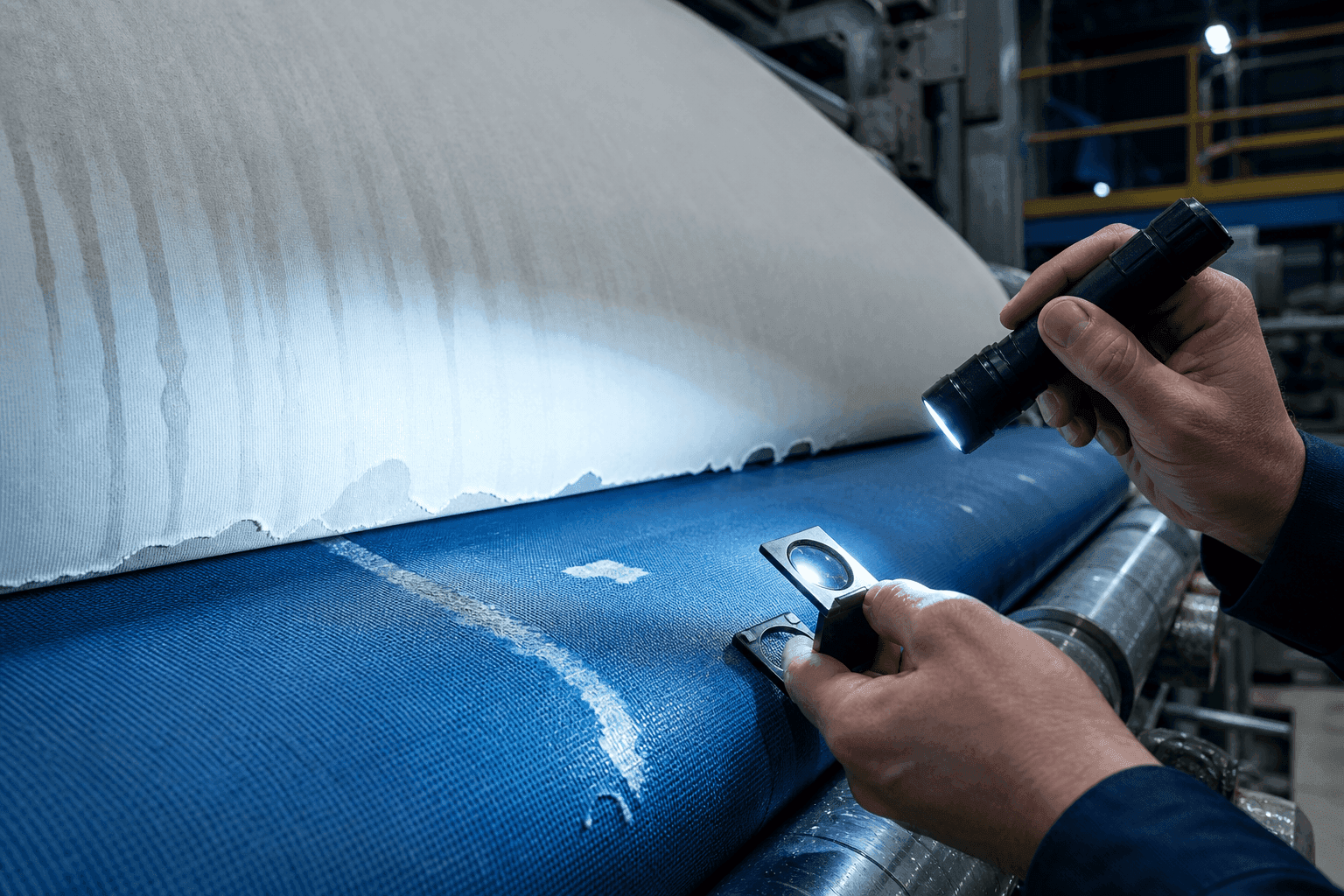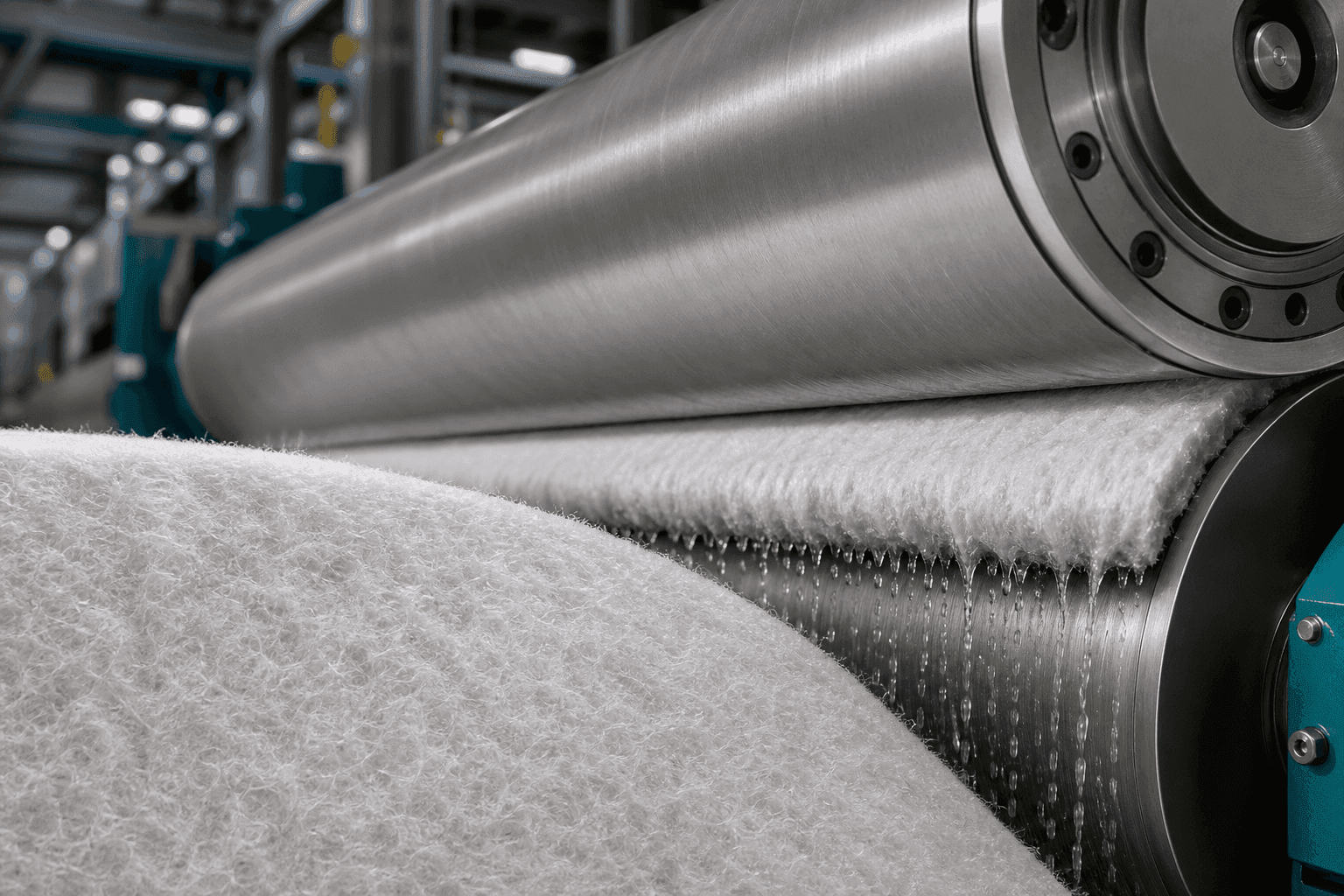
Improving press-section decision making for kraft paper production
Press-felt selection influences water handling, sheet surface, runnability and
the moisture carried into the dryer section. This anonymised project profile
sets out the data and engineering checks PAPTEX uses before recommending a
press fabric for a kraft or packaging-paper machine.
Operating challenge
Unplanned press-section interventions can have several causes: compacted void
volume, inadequate water handling, unsuitable batt surface, an unfavourable
nip condition, chemical contamination or an installation/run-in issue. The
right response begins with evidence from the machine rather than a generic felt
replacement interval.
Engineering approach
PAPTEX examines the paper grade, press configuration, nip loading, current
felt performance and downstream moisture requirement. A laminated or other
press-fabric configuration is then considered against the customer's actual
dewatering and surface-quality requirements.
The technical review normally includes paper grade and furnish, press position,
machine width and speed, nip conditions, current felt construction and wear,
outgoing sheet moisture, cleaning and conditioning practice.
Implementation support
PAPTEX can provide a machine-parameter form and installation checklist before
delivery. After start-up, the customer and engineering team can review the
agreed performance observations as part of the run-in process.
Important disclosure
This article is an anonymised technical project profile. No named mill,
downtime reduction, output gain, energy saving or customer quotation is used
because those statements require a verified case source.
Request a press-felt recommendation
Provide your press configuration, paper grade, felt position, operating speed
and current issue. PAPTEX will identify the machine data required for a
technical recommendation.
Continue with a symptom-based press-section review
When the operating concern is poor nip dewatering, separate the observed symptom from the possible causes before changing the felt specification. Use the poor nip dewatering diagnostic sequence to record the press position, felt condition, shower and Uhle-box observations, roll work and operating changes in a comparable order.
For product context after the evidence is recorded, review the press felt range for paper machines and prepare the actual machine and position data for a technical discussion.